

Discover the world of how to make homemade probiotics for beginners as you better understand probiotics. There are online recipes galore – if you choose to search for them!
Here are three of our tried and tested recipes to improve your digestive health! But first, what are the basics?
How to Make Homemade Probiotics – The Essentials
Making homemade probiotics can be a fun and rewarding project. For beginners, you don’t need many specialized items to get started, however, the specific equipment and ingredients you need will depend on the type of probiotic you want to make.
To see the different equipment and ingredient options available to you, make sure you CLICK on all the links as you read!
Whether it’s yogurt, kefir, sauerkraut, kimchi, or kombucha, you can find simple recipes online that outline the necessary items for each. Here are the general essential things you will need:
- Glass Jars or Fermentation Vessels: You’ll need clean and sterilized glass jars or fermentation vessels to culture your probiotics. Mason jars or glass containers with airtight lids work well. Weighted lids are sold separately. Make sure they are big enough to hold the ingredients and allow some space for expansion during fermentation.
- Fresh Ingredients: The main ingredients to make homemade probiotics are food that will be fermented and the probiotic culture or starter. For example, if you are making yogurt, you will need milk (dairy or plant-based) and a yogurt starter with live cultures.
- Probiotic Starter or Culture: To kickstart the fermentation process, you will need a probiotic starter or culture. This can be store-bought live-culture yogurt for yogurt making, a kefir starter for kefir, or a specific probiotic supplement for fermenting other foods. Make sure the starter contains live and active cultures.
- Clean Kitchen Utensils: Use clean and sanitized utensils to handle the ingredients and transfer them into the fermentation vessels. This helps prevent the growth of harmful bacteria and ensures a successful fermentation.
- Cheesecloth or Coffee Filter: For some probiotic recipes, like making kefir or kombucha, you may need a breathable cover for your fermentation vessels to allow airflow while preventing dust and debris from getting inside. Cheesecloth or coffee filters secured with rubber bands work well for this purpose.
- Rubber Bands: These are useful for securing the cheesecloth or coffee filter over the fermentation vessel.
- Labels and Marker: It’s a good idea to label your jars with the type of probiotic being fermented and the date it started. This way, you can keep track of the fermentation process and know when it is ready.
- Room Temperature: Most probiotics cultures thrive at a specific temperature range, typically around room temperature (70-75°F or 20-24°C). Honestly, you don’t need any special equipment (except PATIENCE) for temperature control, but keeping the jars in a stable environment away from direct sunlight and extreme temperature fluctuations is important.
- Patience: To make homemade probiotics requires some time to ferment and develop the desired flavors and probiotic content. Patience is key, as fermentation times can range from a few hours to several days or even weeks.
- BETTER STILL USE A One Step Appliance: Let us face it, not everyone has the patience for fermentation! Fortunately, there are appliances that come to the the rescue such as yoghurt makers! Check out some popular recommendations below – all of which can make Greek yoghurt, but make sure you choose a good starter.

BEAR 4-in-1 Yoghurt Maker With Strainer and Timer Control

ULTIMATE Yoghurt Maker Lifetime Warranty
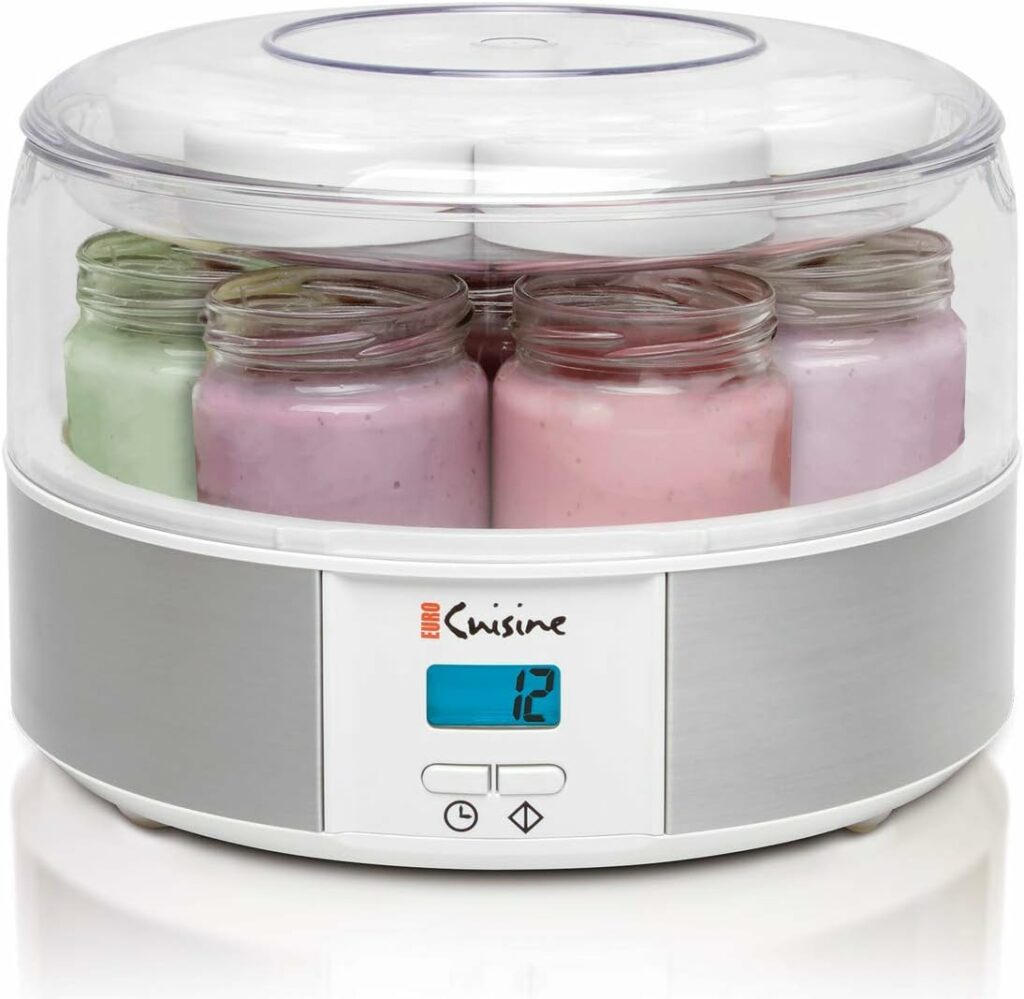
EURO CUISINE Yoghurt Maker 3 Year Warranty
Make Homemade Probiotics – Yoghurt Recipe
Yogurt is one of the most popular and accessible homemade probiotics. All you need is milk and a yogurt starter culture containing live active bacteria, such as Lactobacillus bulgaricus and Streptococcus thermophilus.
Simply heat the milk, cool it down, mix in the starter culture, and let it ferment at a controlled temperature for several hours.
The result is creamy, probiotic-rich yogurt that can be enjoyed plain or customized with fruits and toppings.
Ingredients
- 4 cups (1 liter) of milk (whole or low-fat, depending on your preference)
- 2 tablespoons of plain yogurt with live active cultures (as a starter).
Instructions to Make Your Own Probiotics
- Pour milk into a large saucepan and heat gently, stirring occasionally, until it reaches 180°F (82°C) and steams with small bubbles at the edges. This helps kill any unwanted bacteria and proteins that can interfere with the yogurt-making process.
- Remove from heat and cool the milk to 110°F (43°C), using a cold water bath if desired. You should be able to comfortably touch the milk without scalding your finger.
- Mix 2 tablespoons of plain yoghurt with a little warm milk in a small bowl to make a smooth paste. This step helps ensure that the live active cultures are evenly distributed throughout the yogurt.
- Add this yoghurt mixture to the cooled milk and stir well.
- Cover the saucepan or container with a lid or plastic wrap to maintain warmth and prevent contamination. Keep the mixture in a warm place, ideally around 110°F (43°C), to facilitate fermentation. You can also achieve this by using a yogurt maker, a slow cooker set to low, a warm oven (turned off with the light on), or by wrapping the container in a towel and placing it in a warm spot.
- Allow the mixture to ferment undisturbed for about 6 to 8 hours or until it thickens and sets into yogurt. The longer it ferments, the tangier the flavor will be. If you prefer a thicker yogurt, you can let it ferment for a longer period.
- Once the yogurt has reached your desired consistency and taste, refrigerate to stop fermentation and set the texture
- Enjoy your homemade yoghurt plain or with your favourite toppings.
Remember to reserve a small amount of the homemade yogurt as a starter for your next batch.
The Alternative to the Traditional Long Method Homemade Probiotics
On the other hand, you can use the “set and forget it method” to make your yoghurt. Check out some popular yoghurt makers or simply opt for a starter fermentation kit.
Make Your Own Probiotics – Kefir
Kefir is a fermented milk drink with a tangy flavor and a slightly effervescent quality. It is made using kefir grains, which are a combination of yeast and bacteria cultures.
To make kefir, you combine kefir grains with milk and let the mixture ferment for 24 to 48 hours. The grains can be reused for multiple batches, making kefir a sustainable and ongoing source of probiotics.
Ingredients to Make Your Own Probiotics
- 1 tablespoon of kefir grains
- 2 cups (500 ml) of milk (cow’s milk, goat’s milk, or non-dairy milk like coconut or almond milk)
Instructions
- Place the kefir grains in a clean glass jar.
- Pour the milk into the jar with the kefir grains. Make sure the grains are fully submerged in the milk.
- Cover the jar with a clean cloth or paper towel and secure it with a rubber band or jar lid with holes to allow airflow.
- Let the jar sit at room temperature, away from direct sunlight, for about 24 to 48 hours. The fermentation time can vary depending on the temperature and desired taste. The longer it ferments, the tangier the kefir will become.
- After the desired fermentation time, gently stir the contents of the jar with a non-metal spoon or spatula.
- Strain the kefir by pouring it through a fine-mesh sieve or cheesecloth into another container. This separates the kefir grains from the liquid kefir.
- Transfer the strained kefir to a clean jar or bottle and refrigerate it to slow down the fermentation process and chill the kefir.
- Rinse the kefir grains with filtered water and place them in a new batch of milk to make kefir again. If you are not ready to make a new batch, you can store the kefir grains in a small jar with enough milk to cover them in the refrigerator for a short period (around a week).
- Your homemade kefir is now ready to enjoy! You can drink it plain or add flavorings like honey, fruits, or spices according to your taste preferences.
Remember, as you continue to make kefir, the grains will multiply, and you can adjust the amount of milk you use accordingly. Also, fermentation can be influenced by factors like temperature and health of the kefir grains, so it may take a few batches to achieve the desired taste and consistency.
Make Homemade Probiotics – A Sauerkraut Recipe
Sauerkraut is fermented cabbage and one of the easiest fermented foods to make at home. All you need is cabbage, salt, and time. Shred the cabbage, mix it with salt, and pack it tightly into a jar or fermentation vessel.
Over time, the salt draws out the cabbage’s natural juices, creating an anaerobic environment that encourages the growth of beneficial bacteria.
Ferment the cabbage at room temperature for a few days to several weeks until it reaches your desired flavor and texture.
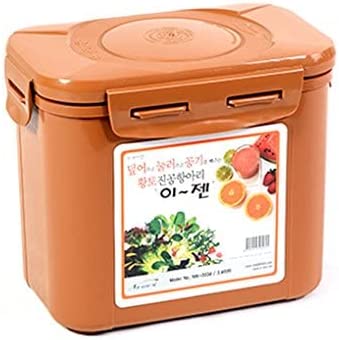
E-JEN Premium Kimchi,
Sauerkraut Container
with Inner Vacuum Lid
Ingredients
- 1 medium-sized head of cabbage (green or red)
- 1 tablespoon of salt (non-iodized, preferably sea salt or pickling salt)
Instructions to Make Homemade Probiotics
- Remove and set aside outer cabbage leaves. Quarter and core the cabbage, then finely shred it.
- Place shredded cabbage in a bowl and sprinkle with salt.
- Massage the cabbage with clean hands for 5–10 minutes until it softens and releases juice.
- Pack cabbage tightly into a clean, wide-mouthed jar, pouring in enough liquid to fully submerge it. Add extra brine (1 tsp salt in 1 cup water) if needed..
- Take one of the reserved outer cabbage leaves and fold it to fit the size of the jar. Place it on top of the shredded cabbage to act as a barrier and keep it submerged under the liquid.
- Cover the jar with a clean cloth or paper towel and secure it with a rubber band or jar lid with holes to allow airflow while keeping contaminants out.
- Cover the jar with a cloth or vented lid and store at room temperature, out of direct sunlight, for 1–4 weeks. Check regularly to ensure cabbage stays submerged and skim off any surface scum.
- Start tasting after a week. Once it reaches your desired flavor, refrigerate to slow fermentation. Enjoy as a condiment or side dish, and store in the fridge for several months.
Remember, the key to successful sauerkraut fermentation is maintaining cleanliness, ensuring the cabbage remains submerged in the brine, and monitoring the fermentation process to prevent spoilage.
Make Homemade Probiotics Bonus – Kimchi
Kimchi is a traditional Korean side dish made from fermented vegetables, mainly cabbage and radishes, combined with a flavorful mixture of seasonings.
Similar to sauerkraut, kimchi is made by salting the vegetables, allowing them to wilt, and then fermenting them with spices and seasonings. The result is a spicy, tangy, and probiotic-rich condiment that adds a kick to various dishes.
Conclusion – How to Make Natural Probiotics
These homemade probiotics are just a starting point, and there are many other options to explore, such as kombucha, sourdough bread, and fermented pickles.
The advantage of making probiotics at home is that you have control over the ingredients and fermentation process, allowing you to customize flavors and adjust the fermentation time according to your taste preferences. Check out this book for more delightful recipes.
Related Articles
- Make Probiotics at Home – 7 Great Recipe Books
- Surprising Connection Between Your Diet and Inflammation – Must Know
FAQs for How to Make Homemade Probiotics
How to make natural probiotics at home?
Ferment foods like cabbage, milk, or tea with natural cultures. Sauerkraut, yogurt, and kombucha are simple ways to create natural probiotics.
What ingredients are needed to make natural probiotics?
Common ingredients include fresh vegetables, milk, tea, sugar, and starter cultures like kefir grains or yogurt. Clean containers are also essential.