

Learn how to organize medications for seniors with 7 practical steps, pill box tips, and safer routines to avoid dangerous mix-ups.
Managing medicines can look easy from the outside. Open a bottle, take a pill, move on with the day. But real life is rarely that neat.
One tablet is taken in the morning, another with food, another at bedtime, and then there is the vitamin, the over-the-counter pain reliever, and the “take only if needed” prescription. It does not take much for the routine to become confusing.
That is why learning how to organize medications for seniors matters so much. Older adults are more likely to take several medicines at once, and Health Canada notes that using five or more daily medications in older adults is associated with potentially undesirable drug interactions and related health effects.
The National Institute on Aging also recommends keeping a complete medication list and using tools like reminders or pill organizers when needed.
A woman I once knew kept her morning pills near the kettle, her evening pills beside the television, and her as-needed medication in a handbag pocket.
It worked until one busy Tuesday when she could not remember whether she had taken her blood pressure tablet or only meant to.
That one moment of doubt left her shaken. The real problem was not carelessness. It was that her system depended too much on memory and not enough on structure.
If your current routine feels messy, you are not failing. You probably just need a safer setup.
Why Learning How to Organize Medications for Seniors Matters So Much
A good medication system does more than keep pills tidy. It reduces stress, lowers the chance of missed doses, and makes it easier to notice when something is not working.
The National Institute on Aging advises older adults to keep a written list of all prescription medicines, over-the-counter drugs, vitamins, and supplements, including the dose, timing, prescriber, and reason for use. It also recommends sharing that list with health care providers.
That may sound simple, but simple is often what works. A clear medication routine is easier to follow than a complicated one, especially when energy is low or the day gets busy.
Challenges in Medication Adherence for Seniors and Why They Happen
The challenges in medication adherence for seniors are not always about forgetting. Sometimes the labels are hard to read. Sometimes bottles are difficult to open.
Sometimes instructions conflict with meals, sleep, or appointments. For people with cognitive changes, vision problems, arthritis, or fatigue, even a basic routine can become harder to manage.
NIA specifically advises asking whether a person uses a pill organizer or has someone overseeing medicine intake to avoid missed doses or overdoses.
There is also a very human problem: once a system becomes confusing, people often start making educated guesses. That is where mix-ups happen!
7 Practical Steps to Organize Medications for Seniors Safely
#1. Keep All Medications in One Main Medication Station
The first step is to stop storing medicines all over the house. Choose one main place that is:
- dry
- well lit
- easy to reach
- away from children and pets
This does not mean every single medicine must live there forever, but your main daily items should. A central spot makes the routine easier to check and easier to trust.
Use that same space for:
- your medication list
- a pen
- refill reminders
- your pill organizer
- doctor or pharmacy notes
That one habit alone can make the routine feel calmer and more manageable.
#2. Use Pill Boxes for Seniors That Match the Daily Routine
Not all pill boxes for seniors are the same, and that is a good thing. The best one depends on how many doses are taken each day.
A simple weekly box may be enough for one-a-day routines. But if medications are taken morning and evening, an AM/PM organizer is usually more useful. If tablets are large or there are many supplements, extra-large compartments matter.
Here is a quick comparison:
| Organizer type | Best for | Main advantage | Possible downside |
|---|---|---|---|
| Weekly pill box | One daily dose | Simple and easy to see | Not ideal for multiple daily doses |
| AM/PM organizer | Morning and evening meds | Helps separate day and night | Slightly bulkier |
| XL pill organizer | Large tablets or many pills | Better capacity | Less portable |
| Automatic dispenser | Complex schedules | Timed reminders and fewer guesswork moments | More setup required |
This is where medication adherence becomes easier. The right organizer reduces decision-making.
#3. Learn How to Choose a Pill Organizer for Seniors
If you are wondering how to choose a pill organizer for seniors, start with these questions:
- How many times a day are medications taken?
- Are the tablets large?
- Does the person have arthritis or weak grip?
- Is memory or dementia a concern?
- Is travel portability important?
- Would a timed reminder help?
A good organizer should feel easy, not annoying. If it is hard to open, hard to read, or too small to use comfortably, it will probably sit unused in a drawer. Also look for specialty ones – pill organizers for dementia or arthritic hands.
#4. Check What Are the Features of a Good Pill Box for Seniors
So, what are the features of a good pill box for seniors?
Look for:
- large, readable labels
- compartments that open easily
- enough space for all daily pills
- strong closure so pills do not spill
- color contrast for easier visibility
- portable daily sections if needed
- reminder features for more complex schedules
For some seniors, “easy-open” matters more than fancy alarms. For others, an automatic dispenser with sound and light reminders is worth the extra cost. NIA notes that weekly pill organizers, phone alerts, charts, calendars, and automatic dispensers can all help with medication management, depending on the person’s needs.
#5. Build a Simple Refill and Review Routine
Organization is not only about daily doses. It is also about staying ahead of refills.
A good habit is to choose one weekly moment to check:
- what is running low
- whether anything has expired
- whether instructions have changed
- whether your medication list is still accurate
NIA recommends keeping a written list current and bringing it to health care visits. That makes medication reviews much easier and helps doctors or pharmacists catch duplicates, outdated prescriptions, or confusion around dose timing.
#6. Use Reminders to Reduce Missed Doses and Mix-Ups
Alarms are not just for people with memory problems. They are useful for anyone with a complicated schedule.
Helpful reminder options include:
- phone alarms
- calendar alerts
- written charts
- caregiver check-ins
- automatic dispensers with sound or light prompts
The point is not to make life feel like a medical pill run in a hospital, but to reduce avoidable uncertainty. If you find yourself often asking, “Did I already take that?” then your system needs another layer of support.
#7. Ask for Help Before the System Becomes Confusing
This is one of the smartest steps, not the last resort.
Ask for help if:
- labels are hard to read
- bottles are hard to open
- your schedule keeps changing
- you cannot tell similar pills apart
- you have missed or doubled doses
- a caregiver has concerns
The NIA advises discussing whether a person uses a pill organizer and whether someone helps oversee medication intake when needed, especially when cognitive issues are in the picture.
Benefits of Using Pill Boxes for Elderly Adults
The benefits of using pill boxes for elderly adults are practical more than flashy:
- they reduce guesswork
- they make missed doses easier to spot
- they simplify routines
- they help caregivers check quickly
- they reduce stress around medicine time
A clear system also improves confidence. That matters more than people sometimes realize.
Top Rated Pill Organizers for Seniors: Pros and Cons of Each Type
Here are four Amazon.ca options that fit different needs which we use to compare the pros and cons
1. AUVON Weekly Pill Organizer (Arthritis friendly)
Best for: simple weekly use
Why it stands out: Popular, with a spring-open design and large compartments. It is a good fit for seniors who want something easy to open and easy to check.
2. AUVON XL Weekly Pill Organizer 2 Times a Day
Best for: larger tablets or multiple daily doses
Why it stands out: Another popular Amazon.ca listing as an extra-large AM/PM organizer, which is especially useful for vitamins, fish oils, and bulkier pills.
3. LIVEFINE 28-Day Automatic Pill Dispenser with Alarm
Best for: more complex routines or caregiver support
Why it stands out: Highlights features like alarms, upgraded LCD display, key lock, sound & light for prescriptions, medication, vitamins, supplements and more. This is the kind of product that can help reduce missed doses and double-dosing when schedules are more complicated. There are 4 models to choose from.
4. FULLICON Moisture Proof 7 Day Pill Case / Airtight Pill Organizer
Best for: travel, humid environments, or people who want extra protection
Why it stands out: Amazon.ca currently highlights moisture-resistant and airtight pill case options in this category, including a moisture-proof 7-day pill case and larger airtight cases. This type is especially useful when it is important to keep your pills dry.
Helpful Day and Alarm Clocks for Seniors With Multiple Medication Reminders
For some seniors, a pill organizer is only half the solution. The other half is remembering when to take each dose. That is where a large-display alarm clock with multiple reminders can be helpful, especially for people who take medications at different times of day.
These clocks are worth considering because they combine:
- large, easy-to-read displays
- multiple daily alarms
- medication reminder features
- simpler day/date visibility for seniors
Popular Amazon.ca Options to Review
1. AMERICAN LIFETIME Dementia Large Digital Clock
A strong option for seniors who need a large display and multiple daily reminders. It supports up to 5 daily alarms for medication or appointments.
2. MESQOOL Digital Dementia Alarm Clock for Seniors A good fit for seniors who want a large screen with more reminder flexibility. This style of Mesqool clock has 20 separate alarms and 20 events & reminders. A great option for a larger number of reminders.
3. RAYNIC Digital Calendar Clock – Dementia & Alzheimer Clock for Seniors A strong option for seniors who want a larger display and more reminder capacity. This model has 20 alarms and 20 reminders.
4. Véfaîî 8″ Calendar Day Clock with 26 Alarms & 20 Custom Reminders, Dementia & Alzheimer Clock for Seniors
A practical choice for seniors who want medication reminders built into a simpler day clock format. Amazon.ca says this model includes 26 Alarms and 20 reminders, which makes it useful for multiple daily doses.
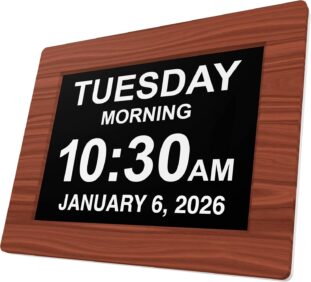
AMERICAN LIFETIME Dementia /Alzheimer Large Digital Clock with Multiple Alarms
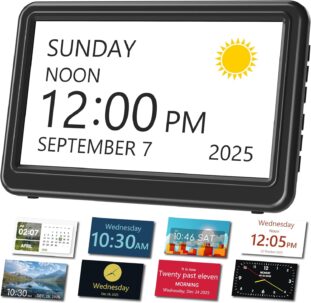
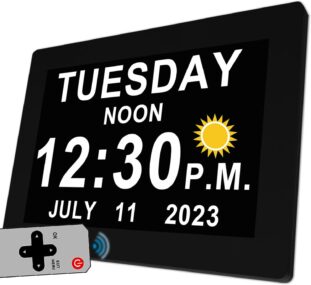
Véfaîî 8″ Calendar Day Clock with 26 Alarms & 20 Custom Reminders, Dementia & Alzheimer Clock for Seniors
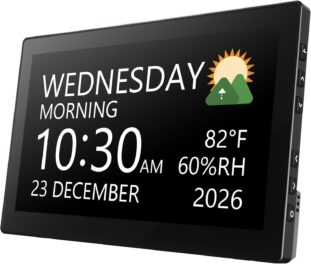
If medication bottles are taking over the counter or the daily routine has started to feel confusing, the right organizer can take a lot of pressure off. It will not replace a medication review with your doctor, but it can make the routine easier to see, easier to follow, and much harder to mix up.
Warning Signs a Medication System Is No Longer Working
Watch for:
- missed doses
- doubled doses
- uncertainty about what was taken
- pills in several locations
- refill surprises
- frequent label confusion
- side effects that go unnoticed because the routine feels messy
These are signs your system needs to be simplified, not signs that you are incapable.
Conclusion: A Simple System Can Make Medication Safety Easier
Learning how to organize medications for seniors is not about becoming perfect. It is about creating a routine that is clear enough to follow and safe enough to trust.
A simple system often includes:
- one medication station
- one accurate medication list
- one organizer that fits the real schedule
- one weekly refill check
- one willingness to ask for help before confusion becomes dangerous
That is how safer habits usually start.
FAQs
How do I organize medications for seniors safely?
Keep medicines in one main spot, use a clear pill organizer, maintain an updated medication list, and build a weekly refill check.
What are the main challenges in medication adherence for seniors?
Common challenges include memory changes, hard-to-open bottles, confusing instructions, vision problems, and taking several medicines at different times.
How do I choose a pill organizer for seniors?
Choose one based on dose timing, pill size, grip strength, portability needs, and whether reminders or alarms would help.
What are the benefits of using pill boxes for elderly adults?
Pill boxes can reduce missed doses, lower mix-ups, simplify routines, and make it easier to see whether medicines were taken.
When should an automatic pill dispenser be considered?
An automatic dispenser is worth considering when the schedule is complex, doses are often missed, or caregiver oversight is needed.
References
- National Institute on Aging. Medicines and Medication Management https://www.nia.nih.gov/health/medicines-and-medication-management/
- Health Canada. A Path to Improving Medication Appropriateness in Canada. https://www.canada.ca/en/health-canada/corporate/about-health-canada/activities-responsibilities/canadian-drug-agency-transition-office/path-improving-medication-appropriateness-canada.html/