
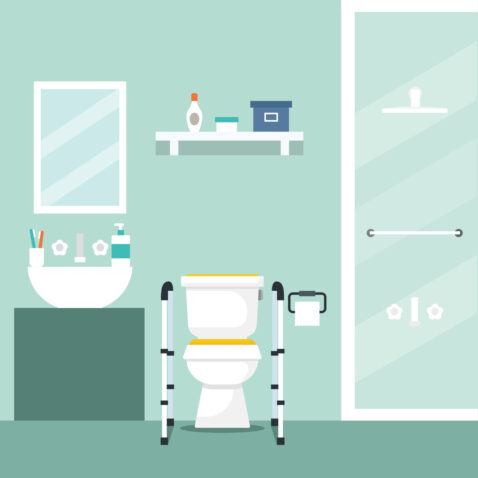
Discover 9 bathroom safety products for seniors that may help prevent falls and make daily routines safer and easier.
The bathroom may be one of the smallest rooms in the home, but for older adults it can also be one of the riskiest. Wet floors, tight spaces, low seating, and the need to step, turn, reach, and balance all in a small area can make accidents more likely.
The National Institute on Aging recommends installing grab bars near toilets and on both the inside and outside of the tub or shower, and using nonskid mats or strips on slippery surfaces. The CDC’s home fall-prevention checklist makes many of the same points.
Bathroom safety products are not random gadgets. They are tools that can reduce risk, improve confidence, and make daily routines easier for seniors and caregivers.
They cover non-slip mats, grab bars, raised toilet seats, shower chairs, walk-in tubs, toilet safety frames, anti-scald devices, and emergency alert systems.
My mother told me the first warning sign was not an actual fall. It was hesitation. My father started pausing before stepping into the tub, then reaching for things that were not stable, then trying to hide how uncomfortable the whole routine had become.
That was the moment they realized the bathroom did not need more encouragement. It needed better support.
Why Bathroom Safety Products Matter More With Age
As people get older, everyday bathroom tasks can become more demanding. Sitting down on a low toilet, standing in a slippery shower, reaching for a faucet, or stepping over a bathtub edge may not seem like a big deal until balance, strength, vision, or joint mobility begin to change.
That is why senior safety in the bathroom becomes a bigger issue with age. Falls in the bathroom can lead to bruises, fractures, head injuries, fear of bathing alone, and loss of confidence.
MedlinePlus also notes that the bathroom is one of the rooms where falls often happen and recommends simple changes like grab bars, bath seats, and non-slip surfaces.
The goal is not to go overboard with safety gadgets for the bathroom. It is to make basic routines feel safer again.
Senior Safety in the Bathroom Starts With the Right Support
Bathroom safety is not just about one product. It is about matching the right products to the real risks.
For some seniors, the biggest issue is slipping on wet flooring. For others, it is difficulty getting on and off the toilet. For someone else, the issue may be not being able to call for help quickly if something goes wrong.
That is why the best bathroom safety products are the ones that reduce the specific strain points in the room, not just the ones with the most features.
9 Bathroom Safety Products for Seniors That Help Prevent Falls
1. Non-Slip Bath Mats and Rugs
This is where many bathroom safety upgrades should begin. Non-slip mats are one of the basics of bathroom safety. They provide better traction in wet areas and reduce the risk of slipping when stepping out of the tub or shower.
Types of Non-Slip Mats
There’s a wide variety of non-slip mats and rugs available, catering to different needs and bathroom aesthetics. Some are small, designed for the shower or beside the toilet, while others are larger and cover a more significant portion of the bathroom floor.
You can choose from different materials, colors, and patterns, allowing you to find the perfect fit for your bathroom.
Choice involves size, presence of strong suction cups on the bottom to keep them securely in place and, of course, your style.
The CDC recommends nonskid mats or self-stick strips in tubs and on shower floors.
Look for:
- strong grip or suction
- flat edges
- textured surfaces
- a size that actually fits the space
2. Grab Bars and Handrails
Grab bars and handrails are cornerstones of bathroom safety for seniors. Their ability to provide stability, support, and confidence can make the bathroom a safer place for elderly individuals.
They are specifically designed to provide seniors with a firm grip, offering balance and support when they need it most. Whether it is getting in and out of the shower or tub, or rising from the toilet, these bars are essential aids in preventing slips, trips, and falls.
Types of Grab Bars Available
Grab bars come in various types and styles, allowing you to choose the ones that best suit your bathroom’s design and the senior’s specific needs. Some common variations include straight bars, angled bars, flip-up bars, and even ones with textured surfaces for added grip.
Proper installation of grab bars is essential to ensure they are secure and can effectively support a person’s weight. For optimal safety, it’s advisable to have a professional install them. This will help prevent accidents resulting from improperly installed bars.
They are typically made of sturdy materials like stainless steel, which can support a person’s weight without issue.
They should be strategically installed in areas where seniors are most vulnerable to slipping or falling, such as near the shower or bathtub, next to the toilet, and along any pathways within the bathroom.
A well-thought-out arrangement of grab bars ensures that seniors can maintain their balance and feel secure while navigating the bathroom.
Grab bars are one of the most important best bathroom safety solutions because they support standing, sitting, and turning in places where slips happen most often.
NIA specifically advises mounting grab bars near toilets and on both the inside and outside of tubs and showers. The key detail is proper installation. A weak or incorrectly placed bar can create a false sense of security.
3. Raised Toilet Seats
For seniors with limited mobility, the act of sitting down and standing up from a standard-height toilet can be difficult and uncomfortable. Low toilet seats are harder on the knees, hips, and balance.
Raised toilet seats address this issue by elevating the toilet, making it easier for seniors to sit down and get up without straining their muscles or joints. This not only improves comfort but also reduces the risk of falls.
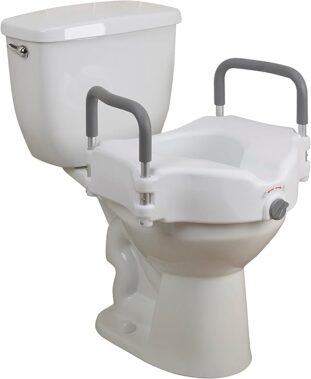
Some models include handles for extra support.This is especially useful for seniors with arthritis, weak legs, balance problems, or recovering mobility.
Styles and Height Options – Safety Products in the Bathroom
Raised toilet seats come in various styles and heights to accommodate different needs. Some models offer a moderate elevation, while others provide a more substantial raise.
The choice of height depends on the senior’s specific requirements and the toilet’s existing height. For bathroom safety, some raised seats also come with added features like handrails for extra support.
Installing a raised toilet seat is usually a straightforward process that doesn’t require extensive tools or expertise. Most models attach securely to the existing toilet bowl and can be easily removed or replaced if needed.
It is important to ensure that the seat is firmly attached and does not wobble. When using a raised toilet seat, seniors should be aware of proper techniques for sitting down and standing up, such as using armrests or grab bars for added support.
4. Shower Chairs and Benches
Shower chairs and benches reduce the need to stand for long periods while washing. They are a strong option for seniors with mobility problems, weakness, or poor balance.
A good shower chair should have:
- non-slip feet
- drainage holes
- an appropriate weight capacity
- a stable seat size for the shower space
..
Types of Shower Chairs for Bathroom Safety
There are a variety of shower chairs and benches available to cater to different needs and preferences. Some are compact, designed for smaller showers, while others are more spacious for added comfort.
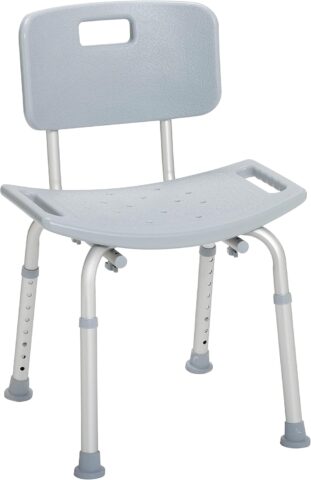
In addition, you can choose between fixed or portable models, depending on whether you want a permanent fixture or an option that can be easily moved as needed.
When selecting a shower chair or bench, consider factors like the senior’s mobility, the shower’s layout, and the chair’s weight capacity.
The seat should be non-slip and have drainage holes to prevent water buildup. For added convenience, some models come with arms, backs, or even swivel seats.
5. Walk-In Tubs and Barrier-Free Showers
This is the renovation-level option, but for some households it is worth it. The biggest benefit is that they reduce or remove the need to step over a tub edge.
These modifications are ideal for seniors who face significant mobility challenges and require a bathroom that accommodates their needs.
Before installing a walk-in tub or barrier-free shower, there are essential factors to consider, such as bathroom space, plumbing requirements, and budget.
It is advisable to consult with a professional to assess your specific needs and determine the most suitable design and features.
Walk-In Tubs
These tubs have easy accessibility as they feature a low-entry threshold and a door that swings open, allowing seniors to step in rather than climb over the side, reducing the risk of falling.
Built-in grab bars and non-slip flooring ensure that seniors can bathe comfortably and securely.
Many walk-in tubs come equipped with therapeutic features like whirlpool jets, offering relief from joint pain and muscle stiffness.
Barrier-Free Showers
These showers have no curb or lip, creating a seamless entry and exit, ideal for seniors who use mobility aids like wheelchairs or walkers.
They are spacious and provide ample room for maneuverability, making them comfortable and convenient for seniors and can also be customized with various fixtures, benches, and handrails to meet individual needs.
Barrier-free showers are especially helpful for seniors using walkers or wheelchairs, while walk-in tubs may help people who still bathe traditionally but need safer access.
6. Toilet Safety Frames and Rails
Toilet safety frames and rails are designed to assist seniors with mobility limitations, arthritis, or other physical challenges.
These bathroom safety products for seniors provide sturdy armrests on both sides of the toilet, helping seniors maintain their balance while lowering themselves onto the toilet seat and rising afterward.
Proper installation of toilet safety frames and rails is required to ensure they are secure and reliable. Installation guidelines may vary depending on the product, so it’s essential to follow the manufacturer’s instructions carefully.
Additionally, consider consulting with a professional if needed, to ensure the equipment is correctly positioned and anchored.
They are a good fit when a full raised toilet seat is not enough or when extra arm support is needed.
Types of Frames and Rails for Bathroom Safety
There are several options to choose from when it comes to toilet safety frames and rails:
Toilet Safety Frames: These are freestanding or attachable frames with armrests that fit around the toilet. They provide support for sitting and standing and can be easily adjusted to match the individual’s height and bathroom setup.
Toilet Safety Rails: These are fixed or foldable grab bars that attach to the wall beside the toilet. They provide additional support for seniors while offering more stability.
Combination Systems: Some products combine safety frames and rails, offering both free-standing support and wall-mounted bars for extra assistance.
7. Anti-Scald Devices
Bathroom safety is not only about falls. Your current draft makes an important point here: seniors may react more slowly to sudden hot-water changes, and anti-scald devices help regulate temperature to reduce burn risk.
This is one of the most overlooked safety products in the bathroom, but it matters.
…
As you age, your skin becomes more sensitive, and seniors may struggle to react quickly to sudden changes in water temperature. This can result in painful burns or discomfort when using the shower or sink.
Anti-scald devices, also known as thermostatic mixing valves, address this issue by automatically regulating water temperature to a safe and consistent level, reducing the risk of scalding.
These devices work by mixing hot and cold water to maintain a steady, preset temperature. If the cold water supply decreases or fails, the device reduces the hot water flow to prevent scalding.
They are typically installed at the water source, often within the plumbing system, and can be adjusted to set the desired temperature.
Installation of anti-scald devices is best handled by a professional plumber to ensure proper functioning. Regular maintenance, such as checking for leaks and ensuring that the device is calibrated correctly will guarantee ongoing safety and effectiveness.
8. Emergency Alert Systems
This section also deserves to stay. Emergency alert systems, wearable response devices, and pull-cord or call-button setups matter because the bathroom is one of the most common places where a senior may need help quickly.
These are especially useful for seniors who live alone or are at high risk of falling.
…
Accidents can happen, and for seniors, the bathroom is a common location for slips, falls, or other health emergencies making bathroom safety important.
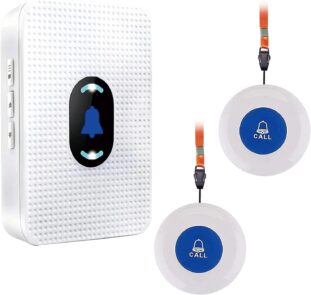
Emergency alert systems, often in the form of pendants or wall-mounted buttons, offer a direct line of communication to alert caregivers, family members, or emergency services when immediate assistance is required.
Types of Emergency Alert Systems
Emergency alert systems come in various types to suit different needs:
Personal Emergency Response Systems (PERS): These wearable devices, typically worn as pendants or wristbands, allow seniors to call for help by pressing a button.
They are connected to a base unit that dials a pre-programmed number or contacts a monitoring center when the button is pressed.
Bathroom Pull Cords: Some bathrooms are equipped with pull cords that, when activated, send an emergency signal to a central monitoring station or a designated caregiver’s phone.
9. Handheld Showerheads
A handheld showerhead gives better control over the water stream and reduces the need for awkward turning and reaching. It is a practical support product that improves comfort and makes seated bathing easier.
This is one of those products people often underestimate until they try it.
Choose the first product category that matches your biggest risk.
Best Bathroom Safety Solutions for Different Mobility Needs
Different seniors need different levels of support.
If the main issue is slipping:
- non-slip bath mats
- grab bars
- better flooring grip
If the main issue is transfers:
- raised toilet seat
- toilet rails
- shower bench
If the main issue is more advanced mobility limitation:
- barrier-free shower
- walk-in tub
- caregiver alert system
That is what makes top senior bathroom safety products different from one another. They solve different problems.
How to Choose Bathroom Safety Products Without Wasting Money
If you are wondering how to choose bathroom safety products, start with the risk, not the product category.
Ask:
- What part of the bathroom feels hardest right now?
- Is the biggest problem slipping, sitting, standing, or reaching?
- Does the senior need independence support, caregiver support, or both?
- Is this a low-cost fix or a renovation-level issue?
Your current draft already gives useful selection criteria: mobility, comfort, ease of installation, durability, and cost.
That is the right framework.
Safety Products in the Bathroom: What to Prioritize First
If the bathroom needs several upgrades, do not try to do everything at once.
Start with the products that reduce the highest-risk problems first:
- non-slip surfaces
- grab bars
- toilet support
- shower seating
- emergency help access
These five usually do the most to reduce immediate risk.
Product Examples Worth Considering
Here are four popular Amazon.ca options that fit this article well:
Medline Bathtub Safety Grab Bar — Good for added tub-side support.
PELegon Adjustable Toilet Safety Rails — Strong fit for toilet transfer support.
Carex Toilet Seat Riser — Good option when toilet height is part of the difficulty.
PEPE Mobility Raised Toilet Seat 6 Inch with Lid (Fits Round and Elongated Toilets up to 15″) — Another strong raised-seat option.
The right bathroom safety product does not need to be dramatic to be useful. Sometimes one strong grab bar, one safer toilet setup, or one better shower seat is enough to take the room from stressful to manageable.
Conclusion – Bathroom Safety Products for Seniors
The bathroom is one of those spaces where small changes often matter more than people expect. A better mat, steadier support, easier transfers, or faster access to help can make the room safer without making it feel unfamiliar.
That is why bathroom safety products matter. They are not only about fall prevention. They are about preserving comfort, confidence, and day-to-day independence for as long as possible.
Related Products
- How to Prevent Falls in Seniors – Home Safety
- How to Prevent Seniors Falling – The Effects of Osteoporosis
- Senior Safety in the Bedroom – What are the Risks?
- Safety in the Bedroom – 11 Best Senior Products
FAQ
What are the best bathroom safety products for seniors?
The best bathroom safety products for seniors often include grab bars, non-slip mats, raised toilet seats, shower chairs, and emergency alert systems.
Why are bathroom safety products important for seniors?
Bathroom safety products are important for seniors because wet floors, tight spaces, and difficult transfers can increase the risk of falls and injuries.
How do you choose bathroom safety products for seniors?
Choose bathroom safety products based on mobility, balance, bathroom layout, ease of use, and whether extra caregiver support is needed.
What are the best bathroom safety solutions for fall prevention?
The best bathroom safety solutions for fall prevention include grab bars, non-slip flooring, shower seating, raised toilet supports, and better lighting.
Which safety products in the bathroom help most with independence?
Grab bars, raised toilet seats, handheld showerheads, shower benches, and anti-scald devices can all help seniors stay safer and more independent.
References
CDC STEADI — Check for Safety: A Home Fall Prevention Checklist for Older Adults https://www.cdc.gov/steadi/pdf/steadi-brochure-checkforsafety/
National Institute on Aging — Preventing Falls at Home: Room by Room. https://www.nia.nih.gov/health/falls-and-falls-prevention/preventing-falls-home-room-room/
National Library of Medicine. MedlinePlus. Bathroom Safety for Adults https://medlineplus.gov/ency/patientinstructions/000021.htm