
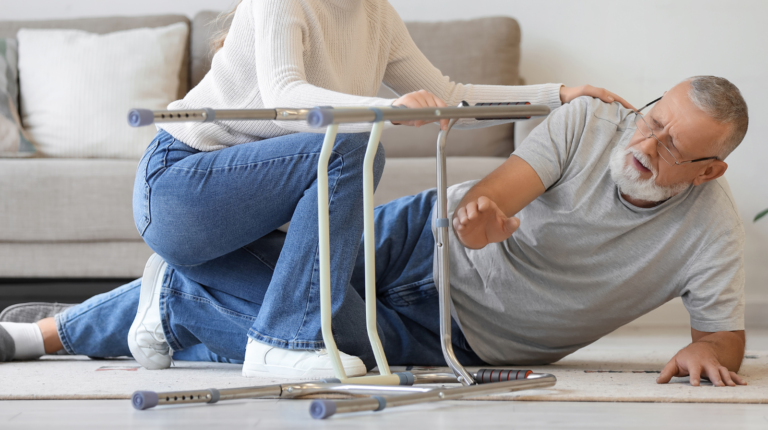
Wondering how to prevent falls in seniors is futile without a plan. Falls pose a significant risk to the health and well-being of seniors, often resulting in injuries and a loss of independence.
Understanding the common causes of falls among older adults is necessary if you desire to implement any meaningful preventive measures.
By addressing these causes and creating a safe living environment, we can significantly minimize the risk of falls and help seniors maintain their safety and independence.
This guide is for seniors, caregivers, and family members who want practical ways to make the home safer without overcomplicating daily life.
The general home safety overview is the first in a four-post series. It provides a simple high-level checklist you can use for general safety planning for the most often used rooms in your home. with links out to:
- bedroom safety
- kitchen safety
- bathroom safety
How to Prevent Falls in Seniors – Common Hazards in Senior Living Spaces
Falls are a significant concern for seniors, and understanding the common causes can help in implementing preventive measures to reduce the risk of falls. Several factors contribute to falls among older adults.
One of the primary causes is muscle weakness and balance issues. As seniors age, their muscles and bones tend to weaken, compromising their ability to maintain stability and recover from a stumble. Osteoporosis is worthy of mention.
Balance problems can also arise due to conditions such as arthritis or neurological disorders, increasing the likelihood of falls.
Medication side effects can also contribute to falls in seniors. Certain medications commonly prescribed for seniors can have side effects that impact balance, coordination, or blood pressure regulation, increasing the risk of falls.
Medications that cause dizziness, drowsiness, or confusion can significantly impair an individual’s ability to navigate their surroundings safely.
How to Improve Safety in the Home
How to Prevent Falls in Seniors – Start with a Checklist
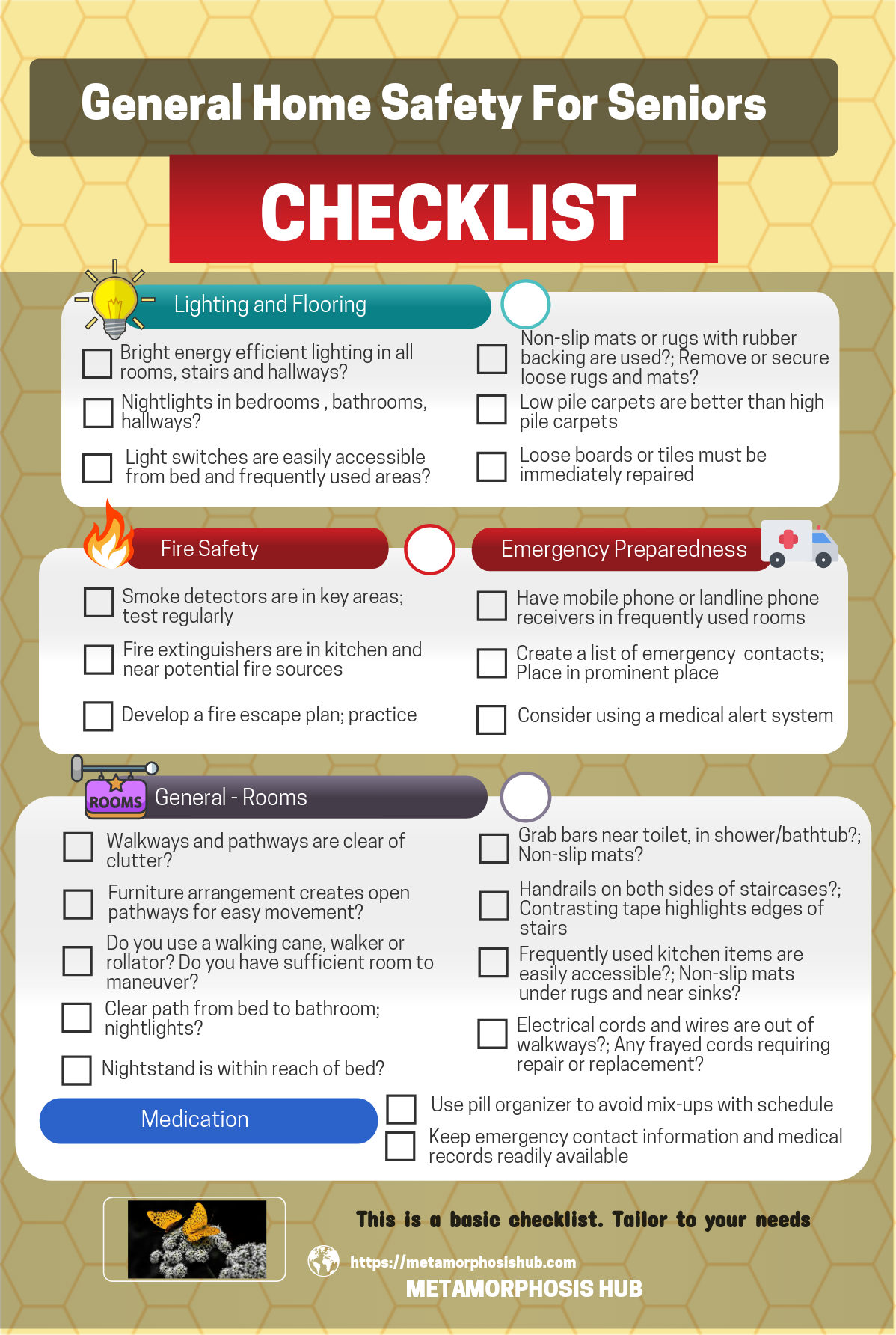
Start with a Checklist otherwise you might overlook some important areas in this exercise. Print out the one on this page.
Keep in mind that everyone has a unique living environment, so use the checklist as a foundation for your home safety plan and tailor it to the specific needs and layout of your home.
There are five key areas you will need to focus on: Lighting & flooring, fire safety, emergency preparedness, individual rooms in the home, and managing medication.
Once you identify the biggest fall risks at home, the right safety products can help make daily movement easier and reduce avoidable hazards.
Install Bright Lights and Motion Sensors
Proper lighting is essential for preventing falls and accidents. Ensure that all areas of the house, including hallways, entrances, stairways, kitchen and bathrooms, are well-lit.
Replace dim or burnt-out bulbs with brighter and energy-efficient options. Consider installing motion sensor lights to automatically illuminate high traffic areas at night.
This will provide seniors timely visibility, especially during nighttime trips to the bathroom or kitchen.
Remove or Replace Potential Hazards from Flooring Materials
Specific type of flooring and slip-resistant surfaces play a significant role to reduce the risk of slips and falls for seniors. Secure rugs and carpets by using double-sided adhesive tape or non-slip backing.
Check the condition of floors and surfaces to eliminate potential tripping hazards. Secure loose rugs or remove them altogether to prevent slips and falls.
Repair or replace damaged flooring, loose tiles, or floorboards that could pose a risk. Ensure that all surfaces are kept clean and free from spills or clutter that could lead to accidents.
In areas prone to moisture, such as bathrooms and kitchens, consider using slip-resistant mats or applying anti-slip treatments.
Fire Safety
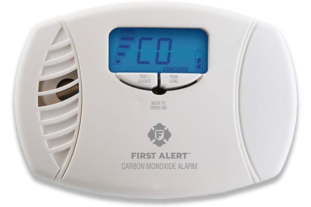
Install smoke detectors in strategic areas in the home – kitchen, hallways, landing. and make sure that you test them regularly.
Place a fire extinguisher in the kitchen and near potential areas where there could be a fire outbreak. Most people (>90%) often overlook this.
Finally develop a fire escape plan. Do not say that it can never happen to you! It does not have to be an intricate one. The goal is to know what steps to take in the event of a fire outbreak.
Emergency Preparedness
Many seniors and their caregivers use fall alert devices with a wearable component for the senior in addition to paging buttons in different rooms.
It is recommended that seniors carry their mobile phone with them at all times.

Unfortunately, this is an uphill task for most seniors, which is why many of them and their caregivers choose to invest in medical alert systems.
When activated, these devices immediately connect the senior with a call center, where trained professionals can assess the situation and dispatch appropriate assistance if needed.
Medical alert systems provide seniors with a quick and reliable means to summon help, even if they are unable to reach a phone, especially if they live alone.
Another alternative if landlines are in use in the home is to install telephone receivers in the most used rooms.
This eliminates the rush to pick up the landline which could bring about a trip or fall.
How to Prevent Falls in Seniors in Each Room in the Home
Each room in the home will have unique requirements, but there are some general considerations you should apply to them all.
Organize Surroundings and Remove Clutter
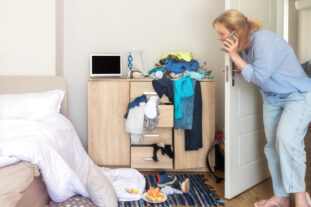
Declutter all rooms, hallways, and pathways within the house from any unnecessary furniture, cords, or loose rugs that can obstruct mobility and cause falls.
Ensure that your furniture arrangement is not restrictive, especially if you use a walking cane, walker or rollator as you will need to maneuver.
Use storage solutions to keep belongings organized to help with easy movement around the home.
Kitchen and Bathroom
Kitchen
Organize the kitchen so that frequently used items are easy to access and most importantly, store heavy items at waist level.
This will ensure that you are not tempted into reaching for them at a higher level.
Use non- slip mats under rugs and near the sink. An optional safety tip in the kitchen is to use appliances with automatic shut off features.
Bathroom
Install grab bars near the toilet and use non-slip adhesive strips in the tub or shower
Ensure that the bathroom is well lit and boasts of either motion sensors or night lights. Most frequently used accessories should be easily accessible.
Manage Medication
Consider using a pill organizer to prevent mix-ups with the scheduling of pills you currently use.
In addition, keep emergency contact information and medical records readily at hand should the need ever arise.
Prevent Falls in Elderly with Dementia
Caring for seniors with dementia requires additional attention to home safety.
Individuals with dementia may experience memory loss, confusion, and difficulty with judgment, increasing their vulnerability to accidents and hazards within their living environment.
To ensure the safety and well-being of the elderly with dementia, consider implementing the following additional best practices for senior home safety:
Secure and Monitor Entrances
Install secure locks on exterior doors to prevent the elderly with dementia from wandering outside unsupervised. Consider using keyless locks or alarm systems that alert caregivers when a door is opened.
Place decals or signs near exits to help these seniors recognize the door they should not open. In addition, installing door alarms or motion sensors can provide an added layer of protection by alerting caregivers when a door is opened.
Remove Potential Hazards
Minimize the risk of falls and injuries by removing clutter, loose rugs, and furniture that may obstruct pathways. Keep floors clear of objects that could be tripping hazards.
Secure cords and wires to prevent entanglement or tripping accidents. Use non-slip mats or adhesive strips in the bathroom to reduce the risk of slipping.
Conclusion – How to Prevent Falls in Seniors
Now that you have a good idea of how to prevent falls in seniors and the elderly with dementia, print off this first checklist for a general home safety overview and get started making your living environment a safer place for you or a loved one.
Related Articles
- 8 Essential Senior Citizen Safety Tips Guide for Independence
- How to Prevent Seniors Falling – The Effects of Osteoporosis
- Safety in the Bedroom – 11 Best Senior Products
- How to Maintain Independence – Prevent Causes of Falls in Seniors
- Senior Safety in the Bedroom – What are the Risks?
- Why is Senior Safety in the Bathroom Important? – Facts
- How to Ensure Safety in the Kitchen – 11 Point Checklist
FAQs for How to Prevent Falls in Seniors?
How to prevent falls in seniors at home?
To prevent falls in seniors at home, improve lighting, remove trip hazards, add grab bars, use non-slip mats, and support safe movement.
What are the main causes of falls in older adults?
Common causes include poor balance, weak muscles, clutter, poor lighting, unsafe footwear, medication side effects, and health conditions.
Which room is most dangerous for senior falls?
Bathrooms are often the most dangerous because wet floors, tight spaces, and difficult transfers can increase the risk of slipping.
Can small home changes really reduce fall risk?
Yes. Simple changes like better lighting, grab bars, handrails, and clearing clutter can make a meaningful difference in daily safety.
When should a senior see a doctor after a fall?
A senior should see a doctor after a fall if there is pain, swelling, head impact, dizziness, weakness, or repeated falls.
References
Home Safety for Seniors Aging in Place. (n.d.). Www.aplaceformom.com. https://www.aplaceformom.com/caregiver-resources/articles/home-safety-tips
Home Safety Tips For Elderly. (2019). Kuakini.org. https://www.kuakini.org/wps/portal/public/Health-Wellness/Health-Info-Tips/Geriatrics/Home-Safety-Tips-For-Elderly