
What happens when ordinary garlic spends up to 20 months aging? Surprisingly, it becomes something quite different from the pungent cloves sitting in your kitchen.
Aged garlic extract has attracted scientific interest for its potential to support cardiovascular health, particularly blood pressure management. But while the research offers some encouraging findings, there are important questions worth asking before adding another supplement to your daily routine.
For older adults, those questions become especially relevant when prescription medications, existing health conditions, and supplement quality enter the picture.
This guide to aged garlic extract for seniors explores seven essential questions, from what makes the aging process special to possible side effects, medication interactions, and choosing a suitable product in Canada.
The goal isn’t to convince you to take another supplement. It’s to help you decide whether aged garlic extract deserves a place in a conversation with your healthcare provider.
What Makes 20-Month Aged Garlic Extract Different From Regular Garlic?
Twenty months sounds like a long time to prepare a garlic supplement. Yet that extended aging period is one of the defining features of certain extensively studied aged garlic extracts.
Unlike fresh garlic or conventional garlic powder, these extracts undergo a controlled process that changes their chemical composition.
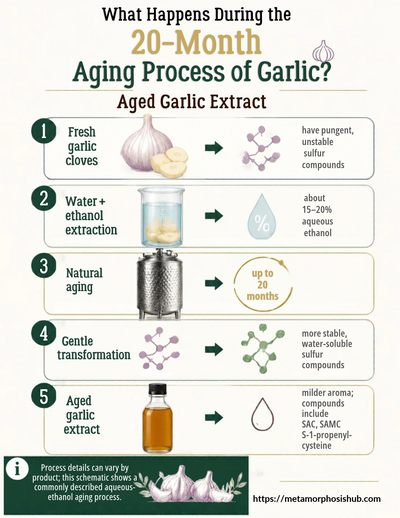
What Happens During the 20-Month Aging Process?
Fresh garlic is typically sliced or crushed and immersed in a solution of water and alcohol, then left to age at room temperature for up to 20 months.
During this period, chemical and natural enzymatic reactions gradually transform some of garlic’s pungent, unstable compounds into more stable, water-soluble substances.
One of the best studied is S-allylcysteine (SAC), a sulfur-containing compound commonly used to help standardize aged garlic extract preparations.
According to a scientific review published in 2020, these transformations produce a chemical profile that differs considerably from fresh garlic.
Why Does the Aging Process Matter?
The most noticeable difference is the milder odour. For anyone who enjoys garlic’s flavour but not its lingering smell, that may be welcome news!
More importantly, the aging process creates a preparation with a different combination of sulfur compounds from those found in fresh garlic, garlic oil, or ordinary garlic powder.
This distinction matters because clinical research often uses specific, standardized aged garlic extracts. The results cannot automatically be applied to every product labelled “garlic supplement.”
A 20-month aging claim also doesn’t guarantee that a supplement is more effective or appropriate for everyone. Its ingredients, formulation, and quality remain important considerations.
Can Aged Garlic Extract Support Heart Health in Older Adults?
Maintaining cardiovascular health becomes increasingly important with age, particularly for seniors managing high blood pressure or elevated cholesterol.
Researchers have investigated whether aged garlic extract may offer additional support for certain cardiovascular risk factors. Although findings are encouraging in some studies, the benefits appear modest and are not consistent across every outcome.
What Research Says About Aged Garlic Extract for High Blood Pressure
One frequently cited study is the 2016 AGE at Heart clinical trial, which evaluated aged garlic extract in adults with uncontrolled hypertension.
The researchers analysed results from 88 participants, whose average age was approximately 62 years. Over 12 weeks, those receiving a standardized aged garlic extract experienced an average reduction of about 5 mmHg in systolic blood pressure compared with the placebo group.
Systolic pressure is the top number in a blood pressure reading.
However, not everyone responded to supplementation, and the study was relatively small. Its findings should not be interpreted as proof that aged garlic extract works equally well for all seniors.
What About Cholesterol and Cardiovascular Health?
A more recent 2025 systematic review and meta-analysis examined 19 clinical trials involving different forms of aged garlic supplementation.
Across the studies, researchers reported average reductions of approximately 2.5 mmHg in systolic blood pressure and 4.4 mg/dL (0.11 mmol/L) in LDL cholesterol, often called bad cholesterol.
These improvements were relatively small, and not all cardiovascular measurements showed significant changes.
Importantly, improvements in blood pressure or cholesterol do not establish that aged garlic extract prevents heart attacks or strokes.
For seniors, the practical takeaway is that aged garlic extract may have a complementary role in cardiovascular care for some individuals. However, it should never replace prescribed blood pressure or cholesterol medications, regular monitoring, or other recommended treatments.
How Long Does Aged Garlic Extract Take to Work?
If you’re considering aged garlic extract for heart health, you may wonder how soon you can expect results. The answer? Patience is important, and results aren’t guaranteed.
Unlike medications intended to produce relatively rapid effects, aged garlic extract has generally been studied over several weeks or months.
Clinical trials examining blood pressure have commonly assessed participants at four, eight, and twelve weeks. However, these timelines don’t mean everyone will experience improvements at the same rate.
What Research Shows About the Timeline
The following table summarizes what researchers have observed and what seniors should understand about the timing of possible benefits.
| Timeframe | What Research Suggests |
|---|---|
| First 2 weeks | Compounds from aged garlic extract are absorbed after consumption, but there is no established evidence of a reliable blood pressure benefit within this short period. |
| Weeks 4–8 | Clinical studies have monitored blood pressure during this period. One dose-response trial detected improvements in a particular treatment group by week eight. |
| Weeks 8–12 | Several clinical trials have reported measurable reductions in systolic blood pressure over approximately 12 weeks, although not everyone responded. |
| Beyond 12 weeks | Some studies have investigated longer-term use, but there is insufficient evidence to establish when benefits reach their maximum or whether continued use produces additional improvements. |
Sources: 2013 dose-response trial and 2016 AGE at Heart trial.
The important takeaway is that 8–12 weeks is a commonly studied period, not a guaranteed time to results.
How Can Seniors Tell Whether It’s Helping?
Blood pressure changes often produce no noticeable symptoms. Therefore, relying on how you feel isn’t a reliable way to judge whether a supplement is having an effect.
If your healthcare provider agrees that aged garlic extract is appropriate, ask how often you should monitor your blood pressure and review the readings together.
Individual responses may vary depending on existing health conditions, the supplement’s formulation, and other treatments.
Most importantly, never stop or adjust prescribed blood pressure medications because you’re taking a supplement.
Helpful Tools for Monitoring Blood Pressure at Home
Keeping track of blood pressure readings can help seniors and their healthcare providers identify changes over time. A validated upper-arm blood pressure monitor makes this easier.
Two options worth considering are the OMRON Bronze BP5150, with simple one-touch operation, and the OMRON Platinum BP5465, offering a large backlit display and advanced tracking features for seniors and caregivers.
Whichever monitor you choose, make sure the cuff fits properly and follow your healthcare provider’s instructions for recording and reviewing readings.


What Aged Garlic Extract Side Effects Should Seniors Know About?
Aged garlic extract is generally well tolerated in clinical studies, but that doesn’t mean it’s completely free of side effects.
Individual reactions can vary, especially among older adults managing several health conditions or taking multiple medications.
Common Digestive and Other Side Effects
According to the National Institutes of Health, oral garlic products may cause several unwanted effects, including:
- Digestive discomfort: Nausea, abdominal pain, gas, or an upset stomach.
- Garlic odour: Although aged garlic extract is typically less pungent than fresh garlic, some odour may still occur.
- Allergic reactions: People who are allergic to garlic may experience reactions.
Some participants in clinical trials involving aged garlic extract have also reported gastrointestinal discomfort.
These effects don’t occur in everyone, and their frequency may differ between formulations.
Can You Take Too Much Aged Garlic Extract?
Yes. Taking more aged garlic extract than recommended isn’t necessarily better and may increase the risk of unwanted effects.
In a 2013 dose-response study, researchers compared several daily doses and found that the highest dose did not produce greater blood pressure improvements than a lower dose.
However, this small trial doesn’t establish an ideal dose for everyone.
There is also no single, well-established maximum safe daily dose that applies to every aged garlic extract product.
Excessive intake may increase digestive discomfort and could raise concerns about bleeding or medication interactions.
For seniors, the safest approach is to:
- Follow the dosage instructions on the licensed product label.
- Avoid combining multiple garlic supplements without professional advice.
- Never increase the dose in an attempt to obtain faster results.
- Ask a pharmacist or healthcare provider whether the product and dosage are suitable for your health conditions and medications.
When Should Side Effects Raise Concern?
Mild digestive discomfort may be manageable, but persistent or worsening symptoms shouldn’t be ignored.
More importantly, unusual bruising, prolonged bleeding, or black, tarry stools require prompt medical assessment because they may indicate a bleeding problem.
Severe bleeding, fainting, or symptoms of a serious allergic reaction, such as difficulty breathing or swelling of the throat, require emergency medical care.
If you’ve accidentally taken substantially more than the recommended amount, contact a pharmacist or poison centre for advice rather than waiting for symptoms.
For Canadians, the national poison information number is 1-844-764-7669 (1-844-POISON-X).
Before starting a supplement, it’s worth discussing your current medications and health conditions with your pharmacist or healthcare provider.
That brings us to another essential question: Can aged garlic extract interact with prescription medications?
Can Aged Garlic Extract Interact With Prescription Medications?
If your medicine cabinet seems to grow a little more crowded every year, you’re certainly not alone!
Many seniors take medications to manage blood pressure, cholesterol, diabetes, or other ongoing health conditions. Adding a supplement may seem harmless, but even natural products can affect how certain medications work.
Aged garlic extract deserves particular attention when prescription medications are involved.
Blood Thinners and Bleeding Risks
One of the most important concerns involves medications that reduce blood clotting.
According to the National Institutes of Health (NIH), garlic supplements may increase bleeding risk, particularly when combined with anticoagulants or antiplatelet medications.
Examples include warfarin, apixaban, rivaroxaban, clopidogrel, and aspirin.
Although the degree of risk may differ between formulations, seniors taking these medications should consult their pharmacist or healthcare provider before using aged garlic extract.
Another important precaution: Always inform your surgical or dental care team about garlic supplements before a planned procedure, even if the product is labelled natural or odourless.
Blood Pressure Medications and Other Precautions
Because some studies suggest that aged garlic may modestly reduce blood pressure, taking it alongside prescribed blood pressure medications could potentially increase blood-pressure-lowering effects.
This may be especially concerning for older adults who already experience dizziness, weakness, or low blood pressure.
People managing diabetes or several chronic conditions should also discuss supplement use with their healthcare provider.
The safest approach is straightforward: Keep an updated list of your medications and supplements, and ask your pharmacist to review possible interactions before adding anything new.
For additional practical advice, read our guide on How to Manage Multiple Prescriptions.
How Can Seniors Choose a Quality Aged Garlic Extract in Canada?
Not all garlic supplements are created equal. In fact, two bottles sitting side by side on a pharmacy shelf may contain very different ingredients.
For Canadian seniors considering aged garlic extract, understanding a few label details can help prevent unnecessary purchases and potentially unsafe choices.
Check the Formulation and Active Ingredients
Start by checking whether the product contains aged garlic extract alone or combines it with other ingredients.
Some formulations include additional substances marketed for cardiovascular support. These extra ingredients may introduce their own precautions or medication interactions.
Also look for information about S-allylcysteine (SAC), a stable sulfur-containing compound found in certain standardized aged garlic extracts.
SAC content can help identify a formulation, but a higher amount doesn’t automatically mean better results.
Ideally, the product being considered should resemble the formulation evaluated in relevant clinical studies, although this alone cannot guarantee similar outcomes.
Check the Natural Product Number (NPN)
In Canada, licensed natural health products carry an eight-digit Natural Product Number (NPN) issued by Health Canada.
An NPN indicates that Health Canada has assessed the product’s safety, quality, and efficacy for its authorized conditions of use.
You can verify a product using the Health Canada Licensed Natural Health Products Database.
However, an NPN doesn’t guarantee that a supplement is suitable for everyone or support every claim made in an advertisement.
Before purchasing, use this quick checklist:
| What to Check | Why It Matters |
|---|---|
| Type of aged garlic extract | Different preparations may contain different compounds. |
| SAC standardization | Helps identify and compare certain formulations. |
| Additional ingredients | May introduce extra precautions or interactions. |
| Health Canada NPN | Helps verify licensing, authorized uses, and warnings. |
| Cost per daily serving | Reveals the potential ongoing expense. |
A little label-reading can go a long way. After all, the most expensive supplement isn’t necessarily the most appropriate one.
Is Aged Garlic Extract Worth Taking After 60?
With so many supplements promising healthier aging, it’s reasonable to wonder whether aged garlic deserves a place in your daily routine.
The research offers some encouraging findings, particularly for blood pressure, but the effects are generally modest and may not occur in everyone.
There is currently no convincing reason for every healthy senior to take aged garlic extract simply because of their age.
Instead, consider these questions:
- Do you have a specific health goal? A supplement should address an identifiable need rather than become another item in your medicine cabinet.
- Are you already taking medications? Review possible interactions before making a decision.
- Does the research apply to the product you’re considering? Different garlic preparations aren’t necessarily interchangeable.
- Can you justify the ongoing expense? Even modest monthly supplement costs add up over time.
- Have you discussed it with your healthcare provider? This is particularly important when managing cardiovascular conditions.
For some older adults, aged garlic extract may be worth discussing as a possible addition to an existing health management plan.
For others, the potential benefits may not justify the cost, inconvenience, or risks.
Ultimately, healthy aging depends on a much bigger picture, including nutritious meals, regular physical activity, appropriate medical treatment, and preventive care.
A supplement should complement that foundation, not replace it.
Conclusion: Aged Garlic Extract for Seniors — Make an Informed Decision
The transformation of ordinary garlic into a carefully aged extract is fascinating, and scientific research suggests that some preparations may offer modest cardiovascular benefits.
However, choosing aged garlic extract for a senior involves more than understanding its potential health benefits.
Medication interactions, side effects, product quality, and individual health needs all deserve careful consideration.
Before purchasing a supplement, review the evidence, examine the label, and consult your healthcare provider.
After all, healthy aging isn’t about collecting the most supplements. It’s about making thoughtful choices that support your well-being.
Frequently Asked Questions
Is Aged Garlic Extract the Same as Black Garlic?
No. Although both begin as ordinary garlic, they’re processed differently. Black garlic typically undergoes controlled heating and humidity, producing dark, soft cloves with a sweeter flavour. Aged garlic is generally produced through prolonged extraction at room temperature. Their chemical compositions and supporting research are not identical.
Can Eating Fresh Garlic Provide the Same Benefits as Aged Garlic Extract?
Fresh garlic is a nutritious addition to meals, but it isn’t chemically equivalent to standardized aged garlic extract. The processing methods produce different concentrations of sulfur-containing compounds. Therefore, findings from clinical studies using aged garlic extract cannot automatically be applied to fresh garlic.
Can Seniors Take Aged Garlic Extract Every Day?
Some clinical trials have investigated daily supplementation of aged garlic over several weeks or months. However, daily use isn’t necessarily appropriate for everyone. Seniors should follow the authorized product instructions and consult a pharmacist or healthcare provider, particularly if they take prescription medications or have existing health conditions.
Authority References
Ried et al. (2016) — The AGE at Heart Trial — clinical evidence relating to blood pressure.
Bashiri et al. (2025) — Systematic Review and Meta-Analysis — broader evidence on aged garlic supplementation, blood pressure, and lipids.
Kodera et al. (2020) — Chemistry of Aged Garlic — the composition and aging process.
NIH NCCIH — Garlic: Usefulness and Safety — adverse effects and interaction precautions.
Health Canada’s Licensed Natural Health Products Database — Canadian product licensing and label verification.