
Seniors living with chronic back pain need a plan for the whole day, because pain tends to flare at the same moments: getting out of bed, sitting too long, reaching for something low, and lying down at night.
This guide follows one ordinary day from waking to sleeping and puts gentle movement, heat, cold and a few support tools where they help most. It also says plainly when home care is not enough.
Disclosure: As an Amazon Associate, this site earns from qualifying purchases. Some links in this article may lead to Amazon products, and if you buy through them the site may earn a small commission at no extra cost to you.
Finding Relief for Chronic Back Pain: What Home Management Can and Cannot Do
Back pain in later life often has more than one cause. Discs lose some of their cushioning, the small joints of the spine can become arthritic, muscles weaken from less activity, and the spinal canal can narrow. These changes tend to build slowly, which is why the pain often lasts for months or years rather than days.
While age-related changes can contribute, persistent pain is often multi-factorial and imaging changes do not always correspond to symptoms. For more information on why back pain lingers in older adult, refer to our Causes of Chronic Lower Back Pain Guide.
For a better understanding of back pain and how it affects seniors, refer to our Guide to Back Pain in Seniors.
Home care can reduce stiffness and chronic back muscle pain, make everyday movements easier and cut down on flare-ups. It can help you rely less on pain medication, though it is not a reason to stop any medication your doctor prescribed without talking to them first.
Home care cannot diagnose the cause of your pain or treat a fracture, a nerve problem or an infection. That is why the next section comes before any exercise.
Living With Chronic Back Pain: Red Flags That Mean “Call Your Doctor”!
There is a distinction between seeking an ordinary reassessment and getting urgent neurological symptoms checked
Contact your doctor promptly, or seek urgent care for the first three neurological symptoms, if you notice any of the following:
- New difficulty controlling your bladder or bowels (nhs.uk)
- Numbness in the groin, inner thighs or buttocks (nhs.uk)
- Leg weakness that is new or getting worse
- Back pain after a fall or a knock, even a minor one
- Fever, unexplained weight loss or feeling generally unwell along with the back pain
- Chronic back muscle pain that is severe at night and does not ease when you change position
- Pain that is clearly different from your usual pattern
If you have osteoporosis, ask your doctor which bending and twisting movements are safe for you before you try the exercises below. A physical therapist can also set a personal program to provide relief for chronic back pain, and that is worth asking for if your pain has lasted more than a few weeks without improving.
Now, let’s see changes you can make to your daily routines to bring support and comfort to daily living.
1. Getting Out of Bed and Starting the Day Without Pain
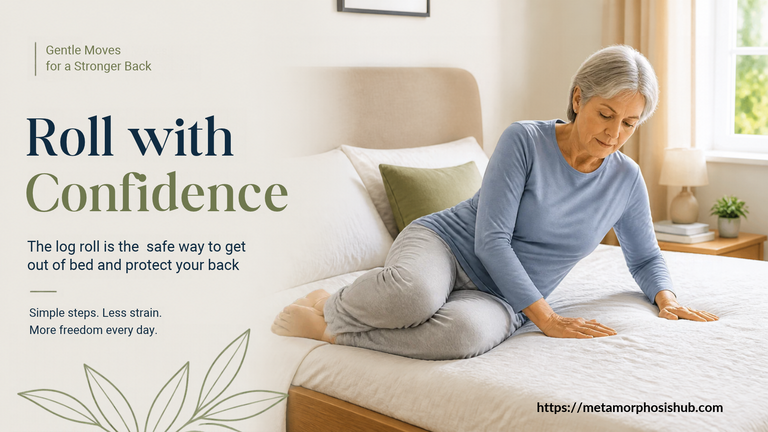
The first movements of the morning are often the most painful, because the spine and the muscles around it have been still for hours. Many people find rolling onto the side before sitting up more comfortable than trying to sit straight up from lying flat. Sitting straight up from lying flat puts a sudden load on the lower back. The log roll avoids that.
- Before you move, bend both knees with your feet flat on the mattress.
- Roll onto your side as one unit, shoulders and hips turning together, without twisting the waist.
- Let your legs slide over the edge of the bed while you push up with your top arm and bottom elbow.
- Sit on the edge for a minute or two before you stand. This also helps if you feel lightheaded.
- Stand by pushing through your legs, keeping your chest up and your back long.
While you are still sitting on the bed, you can do a few ankle circles and a few slow shoulder rolls. A short walk to the bathroom is a gentle first bit of movement, and a rollator or cane can help if you feel unsteady at that hour.
2. Chronic Back Pain Exercise: Gentle Movement That Fit into a Chair Routine
Staying still tends to make chronic back pain worse, and short bouts of gentle movement spread across the day are usually easier to keep up than one long session. Use a sturdy chair without wheels, with your feet flat on the floor. Move slowly, breathe normally, and stop if anything causes sharp or shooting pain.
- Seated pelvic tilts: Sit tall, then gently roll your pelvis back to flatten the curve in your lower back, then forward to arch it slightly. Do 8 to 10 slow repetitions.
- Seated marching: Lift one knee a few inches, lower it, then switch sides. Do 10 on each side to wake up the hip muscles that support the spine.
- Shoulder blade squeezes: Draw your shoulder blades together and hold for 3 to 5 seconds. Repeat 8 to 10 times to counter a rounded upper back.
- Gentle seated twist: Cross your arms over your chest and turn your upper body a short way to each side. Stay in a comfortable range.
- Sit-to-stand: Stand up from the chair without using your hands if you can, then sit down slowly. Start with 5 repetitions and build up gradually.
Do a short round of two or three of these in the morning and again in the afternoon. A slow walk around the house or garden, even for five minutes, counts as well. These are general suggestions, so check with your doctor or physical therapist if you are unsure which suit your condition.
3. Heat, Cold and Rest: Use Each at the Right Time
Heat and cold do different jobs, and either can be used at home for chronic back muscle pain with little cost or risk if you follow a few rules (nhs.uk).
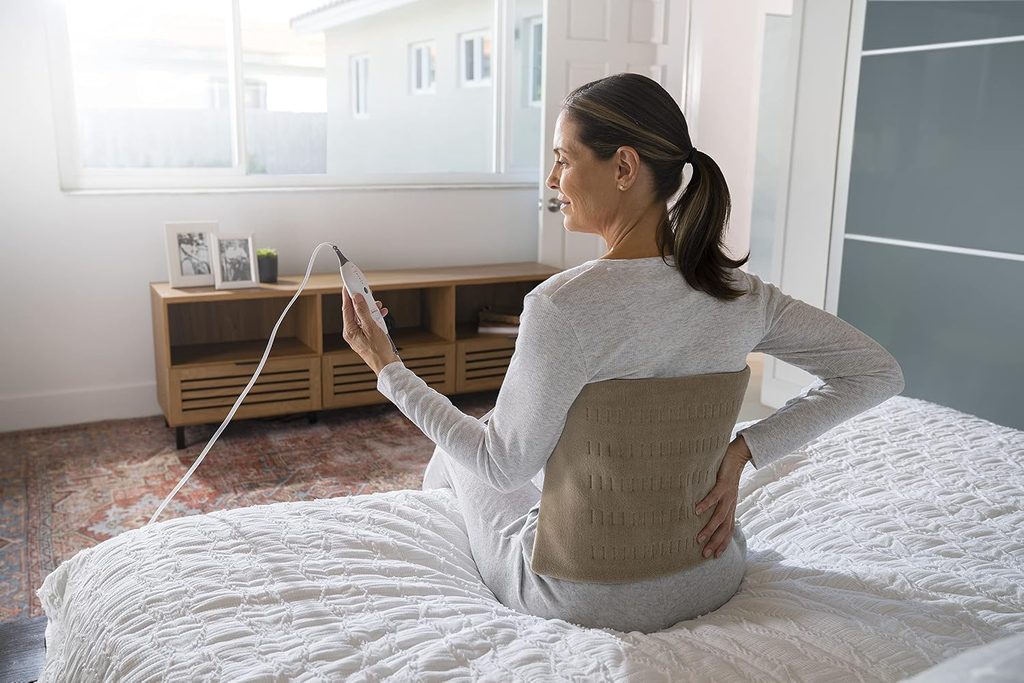
Heat relaxes tight muscles and eases stiffness. It suits the start of the day and the period before gentle exercise. Use a warm pack or heating pad for 15 to 20 minutes, with a layer of cloth between it and your skin.
Cold may temporarily numb soreness after activity on a day that asked too much of your back. Wrap an ice pack or a bag of frozen vegetables in a thin towel and apply it for 10 to 15 minutes.

Take extra care if you have reduced sensation, for example from diabetes or nerve damage, because you may not feel a burn or frostbite developing. Never fall asleep on a heating pad, and check your skin afterward. If you are unsure which suits you, ask your doctor.
Rest works best in short, planned breaks rather than long stretches in a chair or bed. Lying down on your back with your knees bent and a pillow under them for 10 to 15 minutes in the afternoon takes load off the spine without letting it stiffen.
Long periods of bed rest generally make back pain worse, so keep moving!
4. Support Tools Worth Having to Manage Chronic Back Pain: Lumbar Cushions, Reachers, and Sit-to-Stand Aids
A few inexpensive tools can help remove or minimize the movements that most often set off pain. Choose them for specific tasks rather than buying everything at once.
- Lumbar cushion: A small cushion or rolled towel behind the lower back keeps the spine’s natural curve when you sit in a dining chair, armchair or car seat. Put it where you sit longest, and adjust it until the support feels comfortable rather than pushing you forward.
- Reacher or grabber: Bending to pick up dropped items, reach low cupboards or pull on socks is a common trigger. A reacher with a lightweight handle makes these tasks possible from a standing position.
- Sit-to-stand aids: A chair with firm seat and arms makes standing easier, since you can push through your arms and share the effort with your legs. A raised seat cushion or toilet seat riser can also reduce the depth you have to lower yourself.
- Walking aid: If balance or leg fatigue limits your walking, a cane, walker or rollator allows more daily movement with less strain. A physical therapist can check the height and fit.
Note that cushions and reachers are comfort or task aids and not something correcting the spine. Keep the items you use often within easy reach, between waist and shoulder height, so you do not have to bend or stretch for them.
5. What to Do for Chronic Back Pain at Night to Improve Sleep With Less Pain
Sleep position affects how the spine rests for eight hours or more, so small changes can matter.
- On your back: Place a pillow under your knees. This lets the lower back rest more flat against the mattress.
- On your side: Put a pillow between your knees so the top leg does not pull the pelvis and lower spine out of line. Draw the knees up slightly if that feels comfortable. A thicker pillow under your head keeps the neck level with the spine.
- On your stomach: This position tends to arch the lower back and twist the neck, so try moving to your back or side if you can. If you cannot sleep any other way, a thin pillow under the hips may reduce the strain.
For more on choosing between knee pillows and leg pillows, see our guide to knee pillows for night relief. A mattress that sags in the middle or is very old may also be part of the problem, so it is worth checking.
If you wake in the night with stiffness, use the same log roll you use in the morning rather than twisting or pulling yourself up.

6. Build a Routine You Will Actually Follow to Manage Chronic Back Pain on Good and Bad Days
Pain varies from day to day, and a routine that only works on your good days will be abandoned on your bad ones. Plan two versions.
On a good day, do your full chair routine twice, take a short walk, and use heat before and cold after if you need them. Resist the urge to catch up on every chore, because overdoing it on a good day is a common cause of the bad day that follows.
On a bad day, shrink the plan: the log roll in the morning, pelvic tilts and marching, one heat session, and two short rests lying down. Keeping some movement going is better than stopping entirely.
Pacing means breaking simple tasks into short blocks. Yes, everyday tasks also count as movement too towards your chronic back pain exercise! Fold laundry sitting down, divide cooking into stages, and alternate sitting and standing about every 20 to 30 minutes.
Write down what you did and how your back felt for two weeks. Keep a Seniors Journal. The pattern often shows which activity or time of day is the trigger, and it gives your doctor something concrete to work from.
Family members can help by placing tools within reach, setting up a comfortable chair, and walking with the person rather than doing everything for them.
Conclusion: Finding Daily Relief for Chronic Back Pain
Living with chronic back pain does not mean every day has to revolve around pain.
A simple routine can make daily life more manageable: move gently when you wake, stay active in short intervals, use heat or cold when it helps, make difficult tasks easier, and set yourself up for more comfortable sleep.
Some days will naturally be better than others. On difficult days, scale the routine down rather than abandoning movement altogether. On good days, resist the temptation to do everything at once.
Most importantly, measure progress by what you are able to do—not only by whether every ache has disappeared.
If pain is becoming more limiting or changing from its usual pattern, have it reassessed. For a broader approach to chronic back pain management, see our guide to managing chronic back pain.
FAQs About Living With Chronic Back Pain
What is the best way to manage chronic back pain at home as a senior?
Gentle daily movement, short walks, comfortable sitting and sleeping positions, pacing activities, and heat or cold for temporary comfort may help. Persistent or changing pain should still be discussed with a healthcare professional.
Is it better to rest or stay active with chronic back pain?
In most cases, staying gently active is preferable to prolonged bed rest. Short walks and manageable everyday activities can help maintain mobility and strength. Reduce activity temporarily during a flare rather than stopping movement altogether.
What chronic back pain exercise is suitable for seniors?
Walking, sit-to-stand practice, gentle mobility exercises, and appropriate strengthening may be useful. The best exercises depend on your health and abilities, particularly if you have osteoporosis, balance problems, or significant nerve symptoms.
Should a senior use heat or cold for chronic back muscle pain?
Heat may temporarily ease stiffness or tight muscles, while cold may help numb soreness after activity. Protect your skin and use extra caution if you have reduced sensation, circulation problems, or other conditions affecting temperature awareness.
When should an older adult see a doctor about back pain?
Seek medical advice if pain becomes substantially worse, changes from its normal pattern, increasingly limits walking or daily activities, or is accompanied by weakness, numbness, fever, unexplained weight loss, or bladder or bowel changes.
References
NHS UK (2026) Back Pain (reviewed) https://www.nhs.uk/conditions/back-pain/