

Back pain in seniors can make everyday activities such as walking, gardening, driving, sleeping, or carrying groceries more difficult. When pain keeps returning, it can also affect mobility, confidence, and independence.
But back pain is not an inevitable part of aging. Changes in the spine become more common over time, yet many older adults have age-related changes without significant pain.
Conditions such as osteoarthritis, spinal stenosis, osteoporosis-related fractures, muscle weakness, and nerve irritation may contribute, but the cause is often influenced by several factors rather than one damaged structure.
This guide explains 10 common causes of back pain in seniors, symptom patterns worth noticing, warning signs that need medical attention, and practical ways to manage or reduce future problems.
Important: New, severe, worsening, or unexplained back pain should not automatically be blamed on age. A healthcare professional can help determine whether it is a common musculoskeletal problem or something requiring further investigation.
Disclosure: As an Amazon Associate, this site earns from qualifying purchases. Some links in this article may lead to Amazon products, and if you buy through them the site may earn a small commission at no extra cost to you.
Back Pain in Seniors: Why Does It Become More Common With Age?
The spine naturally changes throughout life. Discs may lose some water and flexibility, joints can become stiffer, bone density may decline, and muscles supporting the trunk can lose strength—particularly when activity decreases.
These changes can make some seniors more vulnerable to back problems, but they do not automatically cause pain.
How the Spine Changes With Age
Several age-related changes may affect the back:
- Spinal discs may become thinner and less flexible.
- Facet joints can develop osteoarthritis, sometimes contributing to stiffness or discomfort.
- The spinal canal may narrow, producing spinal stenosis and possible nerve symptoms.
- Bone density may decline, increasing the risk of vertebral compression fractures.
- Muscle strength may decrease, reducing support during walking, lifting, and other daily movements.
Many of these findings also occur in older adults who have little or no pain. That is why symptoms, function, medical history, and physical examination matter more than an imaging result alone!
Why Muscle Strength and Mobility Matter
Muscles in the abdomen, back, hips, and legs help support everyday movements such as standing, walking, bending, and getting out of a chair.
When pain leads to less activity, strength and mobility may gradually decline. Everyday tasks then require more effort, which can lead to even greater inactivity creating an unhelpful cycle:
Pain → less movement → reduced strength and mobility → everyday activities become harder → even less movement.
Appropriate movement and strengthening can help interrupt that cycle. The goal is not to “protect” the back from normal movement, but to maintain enough strength and mobility to remain active and independent.
Age-related changes may increase the likelihood of back problems, but they are only part of the picture. The more useful question is what is contributing to the pain now.
That brings us to the 10 common causes of back pain in seniors.
10 Common Causes of Back Pain in Seniors
Because back pain in seniors can have more than one contributor, finding the likely cause often means looking at symptoms, medical history, mobility, and overall health together.
There is rarely one explanation that applies to everyone. Back pain in seniors may come from muscles, joints, discs, bones, or nerves, and several factors can sometimes contribute at the same time.
Most lower back pain is considered nonspecific, meaning that a healthcare professional cannot confidently identify one particular structure as the source. Older adults, however, have a greater likelihood of certain conditions—including spinal stenosis and osteoporotic vertebral fractures—that deserve particular attention.
Here are 10 common causes and contributors to know about.
1. Degenerative Disc Changes
Between the vertebrae of the spine are flexible discs that act as cushions and help the back move smoothly. With age, these discs commonly lose water, become thinner, and change in shape and flexibility.
These changes are often described as disc degeneration. They may contribute to stiffness or back pain in some people, particularly when other joints or nerves are also affected.
However, an important point is often overlooked: degenerative disc changes do not automatically cause pain. Many older adults have disc degeneration on an X-ray or MRI without experiencing significant symptoms. For that reason, doctors generally interpret imaging findings alongside symptoms and physical examination rather than assuming that an aging disc is the culprit.
2. Osteoarthritis and Facet Joint Changes
Osteoarthritis can affect the small facet joints at the back of the spine just as it affects knees, hips, and hands. Over time, cartilage within these joints may deteriorate, and changes such as joint enlargement or bone spurs can develop.
When facet joints become painful, discomfort may be felt across the lower back and can sometimes extend into the buttocks or upper thighs. Stiffness may be more noticeable after prolonged sitting or inactivity.
Osteoarthritis becomes more common with age, but—as with disc degeneration—the presence of arthritis on imaging does not necessarily tell us how much pain a person will experience.
3. Spinal Stenosis
Lumbar spinal stenosis occurs when spaces within the lower spine narrow enough to place pressure on nerves. Degenerative changes in discs, joints, ligaments, and surrounding bone can all contribute to this narrowing.
It is particularly relevant when discussing lower back pain in seniors because degenerative spinal stenosis becomes more common with age. Symptoms may include back pain, numbness, tingling, heaviness, or weakness in one or both legs.
A particularly characteristic pattern is discomfort that becomes worse after prolonged standing or walking and improves when sitting or leaning forward. This is called neurogenic claudication.
Not everyone with narrowing seen on an MRI has symptoms, however. A diagnosis depends on the combination of symptoms, examination, and—when appropriate—imaging.
4. Osteoporosis and Vertebral Compression Fractures
Osteoporosis causes bones to become weaker and more vulnerable to fracture. When the vertebrae are affected, one or more bones of the spine can partially collapse, producing a vertebral compression fracture.
Some compression fractures produce sudden, significant back pain, while others develop more subtly. Multiple fractures can eventually contribute to loss of height, a more rounded upper back, and changes in posture.
Older age, osteoporosis, corticosteroid use, and significant trauma increase concern for vertebral fracture when someone develops new back pain.
This is one reason sudden or unexplained back pain in an older adult should not automatically be dismissed as ordinary “wear and tear,” particularly after a fall or other injury.
5. Herniated or Damaged Discs
A spinal disc has a tougher outer layer surrounding softer material in its centre. If part of the disc protrudes or herniates, it may irritate or compress a nearby nerve.
A herniated disc can cause pain in the back itself, but nerve involvement may also produce pain, numbness, tingling, or weakness that travels into the buttock or leg.
Disc herniation is not unique to seniors, and it is actually more commonly associated with younger and middle-aged adults than with advanced age. In older adults, nerve symptoms may instead occur alongside several age-related spinal changes, including stenosis and arthritis.
This distinction is useful because leg pain does not automatically mean that a “slipped disc” is responsible.
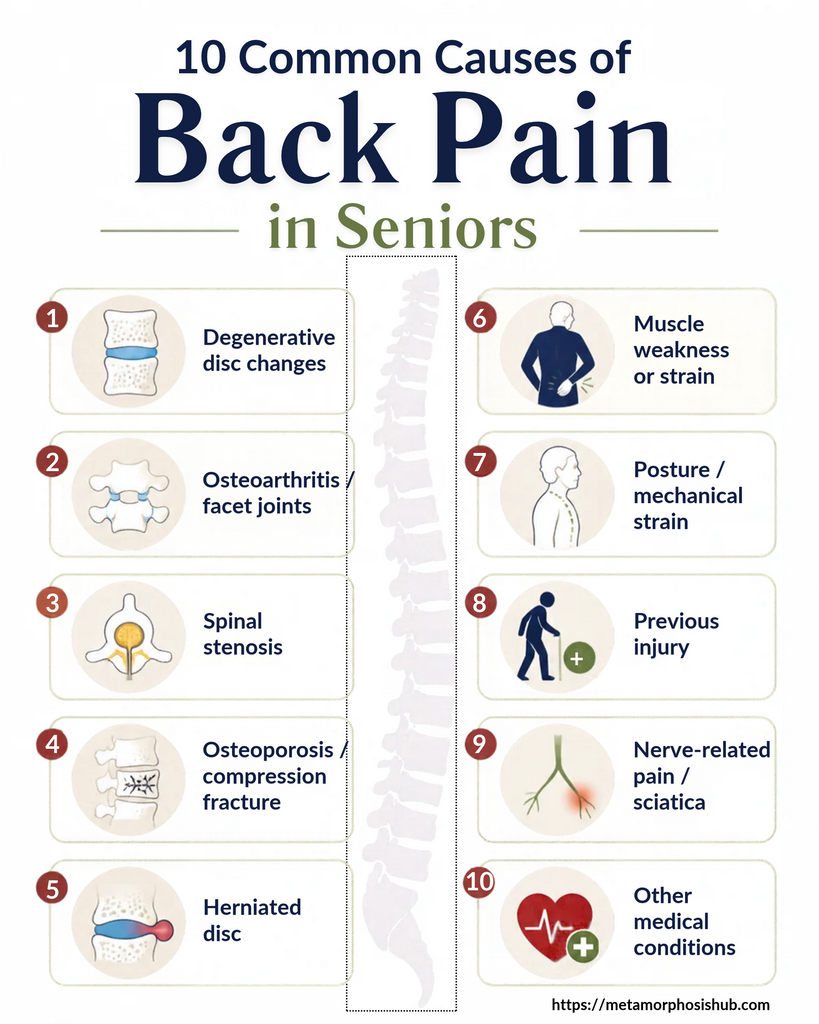
6. Muscle Weakness, Strain, and Deconditioning
Not every painful back has a damaged disc or arthritic joint. Muscles, tendons, ligaments, and other soft tissues can also contribute to pain.
A sudden awkward movement, unfamiliar activity, lifting, or overexertion may strain these tissues. At the other extreme, long periods of inactivity can lead to deconditioning, reducing the strength and endurance of the muscles that support the trunk and hips.
This can create a frustrating cycle. Pain leads to less movement; less movement contributes to weakness and stiffness; and everyday tasks then require more effort.
Physical inactivity is one of several factors associated with persistent lower back problems in older adults. Maintaining appropriate strength and mobility therefore matters—not because stronger muscles “cure” every cause of back pain, but because they help the body handle daily movement more effectively.
7. Poor Posture and Repeated Mechanical Strain
Back pain may also develop or worsen when the spine and surrounding muscles are repeatedly placed under uncomfortable loads.
Long periods spent sitting in an unsupportive chair, bending over a desk, repeatedly lifting with poor technique, or remaining in one position for too long may aggravate muscles and joints.
The issue is not that there is one perfect posture everyone must maintain throughout the day. In fact, backs are designed to move. The bigger problem may be prolonged or repetitive loading without enough variation in position or movement.
For seniors whose mobility has already become limited, small ergonomic changes—such as adjusting seating, work surfaces, or lifting habits—can sometimes make everyday activities more comfortable.
8. Previous Injuries
A history of falls, workplace injuries, sports injuries, motor vehicle accidents, or previous spinal fractures can sometimes influence how the back functions years later.
An old injury does not necessarily mean that pain will become chronic. However, previous damage can occur alongside joint changes, reduced mobility, muscle weakness, altered movement patterns, or fear of reinjury—all of which may affect how a person experiences and responds to later back pain.
Older adults may also be more vulnerable to injury after a fall because declining bone density can increase fracture risk.
If back pain begins suddenly after a fall or accident—particularly in someone with osteoporosis—it deserves medical assessment rather than being treated as routine age-related discomfort.
9. Nerve-Related Pain and Sciatica
Sometimes the problem is not confined to the structures of the back. A spinal nerve can become irritated or compressed by changes such as a herniated disc, spinal stenosis, or other narrowing around the nerve.
This can cause radicular pain, which may travel from the lower back or buttock down the leg. Depending on the nerve involved, a person may also experience numbness, tingling, burning sensations, or weakness.
Sciatica is a commonly used term for pain associated with irritation of the sciatic nerve or its nerve roots. It is therefore different from ordinary muscular lower back pain.
Because we have separate guides devoted to sciatica, this pillar only needs to introduce the distinction before directing readers to those more detailed resources.
10. Other Medical Conditions That Can Feel Like Back Pain
Not every pain felt in the back actually originates in the spine.
Problems involving the hip or sacroiliac joint can sometimes be perceived as lower back pain. Kidney stones or kidney infections, gastrointestinal or pelvic conditions, and certain vascular problems can also cause pain that is felt in or around the back.
Less commonly, spinal infection, cancer, and other serious conditions may cause back pain. These problems account for only a small proportion of cases, so developing back pain does not mean that something dangerous is likely.
What matters is recognizing when the pattern does not look like ordinary musculoskeletal pain—for example, when back pain occurs alongside significant neurological symptoms, fever, unexplained illness, trauma, or other warning signs.
We will look at those warning signs in more detail later in this guide. Knowing the possible causes is useful, but the pattern of your symptoms can provide additional clues about what may be contributing to the pain.
What If the Pain Has Lasted for Months?
The causes above can contribute to either short-term or persistent pain, but chronic lower back pain is more complicated than simply finding one damaged structure. Multiple physical, psychological, social, and health-related factors can influence why pain continues and how disabling it becomes.
For that reason, we will keep the discussion here broad.
If your lower back pain has persisted for several months, our separate guide to the causes of chronic lower back pain looks more closely at why pain can continue and the conditions that may contribute to it.
Lower Back Pain in Seniors: What Your Symptoms May Tell You
The location and pattern of back pain can provide useful clues about what may be contributing to it. Does the discomfort remain in the lower back? Does it travel into the buttock or leg? Is it worse when walking, or did it begin suddenly after a particular movement?
These details matter because lower back pain in seniors can arise from muscles and joints, age-related spinal changes, irritated nerves, fractures, or sometimes conditions outside the spine.
Symptoms alone cannot confirm a diagnosis, but noticing when the pain occurs, where it travels, and what makes it better or worse can help a healthcare professional narrow down the possibilities. A careful history and physical examination remain important parts of evaluating lower back pain in older adults.
Pain That Stays in the Lower Back
Pain confined mainly to the lower back is often described as aching, stiffness, soreness, or discomfort that becomes more noticeable with certain activities or positions.
It may be associated with muscles, ligaments, spinal joints, or other structures in the lower back. Sometimes there is no single identifiable source. In fact, much lower back pain is classified as nonspecific, meaning that the symptoms cannot be confidently traced to one particular anatomical structure.
You may notice that the pain:
- increases after sitting or standing for a long time;
- appears after lifting, bending, gardening, or another physical activity;
- feels stiff when you first start moving;
- improves after changing position or gently moving around; or
- comes and goes rather than remaining constant.
This type of pattern can occur with mechanical back pain, muscle strain, deconditioning, or changes affecting the discs and facet joints.
However, the intensity of pain does not necessarily tell you how much structural damage is present. A person can have significant degenerative changes on imaging with relatively little discomfort, while another person may experience considerable pain without a dramatic abnormality on a scan.
Back Pain That Travels Into the Buttock or Leg
When pain begins in the lower back or buttock and travels down one leg, a spinal nerve may be irritated or compressed.
The discomfort may feel:
- sharp or shooting;
- burning;
- electric-like;
- accompanied by tingling or “pins and needles”; or
- associated with numbness or weakness.
This pattern is often called radicular pain. Sciatica is one familiar example and usually refers to symptoms associated with irritation of nerve roots that contribute to the sciatic nerve.
Not every pain in the buttock or leg is sciatica, however. Hip problems, sacroiliac joint problems, muscle conditions, and other disorders can produce similar symptoms.
That is why the pattern of the pain and neurological symptoms matters more than simply where the discomfort is felt.
If leg weakness is new or worsening, or pain is accompanied by major changes in bladder or bowel control or numbness around the groin or saddle area, urgent medical assessment is warranted.

Pain That Gets Worse While Standing or Walking
A particularly useful pattern in older adults is back, buttock, or leg discomfort that develops or becomes worse after standing or walking for a period of time.
If the symptoms improve after sitting down, resting, or leaning forward—for example, over a shopping cart—lumbar spinal stenosis may be one possible explanation.
Spinal stenosis can narrow the space available for nerves in the lower spine. When symptoms are triggered by standing or walking and relieved by sitting or changing posture, the pattern is known as neurogenic claudication. It may involve aching, heaviness, numbness, weakness, tingling, or pain in one or both legs.
This does not mean that every senior whose back hurts while walking has spinal stenosis. Hip arthritis, muscle fatigue, circulation problems, and other conditions can also make walking uncomfortable.
The pattern is nevertheless useful information to tell your healthcare provider, particularly if your normal walking distance has gradually become shorter.
Sudden Pain Versus Pain That Develops Gradually
How the pain begins can be just as informative as where it is felt.
Sudden lower back pain may occur after lifting, twisting, reaching, slipping, or another unfamiliar movement. Muscle or ligament strain is one possible explanation, and many episodes improve with conservative care.
In seniors, however, sudden back pain deserves additional attention when it follows a fall or other trauma, particularly in someone with osteoporosis or a history of fragility fractures. Vertebral compression fractures can sometimes occur after relatively minor forces in people whose bones have become fragile.
Older age, osteoporosis, steroid use, and trauma are among the factors clinicians consider when evaluating possible vertebral fracture.
Pain that develops gradually over weeks or months may have a different pattern. It can occur alongside osteoarthritis, spinal stenosis, deconditioning, persistent mechanical problems, or other chronic conditions.
And sometimes chronic pain cannot be explained by one structure alone. In older adults, persistent lower back pain can reflect a combination of spinal changes, hip or sacroiliac problems, muscle pain, health conditions, and psychosocial factors.
Keep Track of the Pattern, Not Just the Pain Score
If back pain keeps returning, it can be helpful to notice:
- where the pain begins and whether it travels;
- when it tends to occur;
- which movements or activities make it worse;
- what makes it feel better;
- whether numbness, tingling, or weakness occurs;
- whether your walking distance or mobility has changed; and
- whether the pain began suddenly or has gradually persisted.
These details often tell a healthcare professional more than simply rating the pain from 1 to 10.
They can also help distinguish a straightforward episode of mechanical back pain from symptoms that deserve closer investigation.
Next, it is useful to understand another important distinction: when ordinary back pain becomes chronic and why persistent pain may need a different approach
Acute vs Chronic Back Pain in Older Adults
Back pain is often described as acute, subacute, or chronic according to how long it has lasted. These terms describe duration, not how severe the pain feels.
A short episode can be extremely painful, while chronic pain may range from mild and occasional to persistent and disabling.
A commonly used classification is:
- Acute back pain: less than 4 weeks
- Subacute back pain: 4 to 12 weeks
- Chronic back pain: longer than 12 weeks
Some guidelines use slightly different cutoffs, but pain lasting more than 12 weeks is generally considered chronic.
What Is Acute Back Pain?
Acute back pain begins relatively recently and may follow lifting, twisting, overexertion, or another unfamiliar movement. Sometimes there is no obvious trigger.
Most uncomplicated episodes improve over time. Remaining appropriately active is generally preferable to prolonged bed rest, although activities may need to be temporarily modified according to symptoms.
For seniors, new acute pain deserves closer attention when it follows a fall or other trauma, especially when osteoporosis or other fracture risks are present.
When Does Back Pain Become Chronic?
Back pain that continues for more than about 12 weeks is generally considered chronic.
Chronic pain does not automatically mean that the spine is continuing to deteriorate or that permanent damage has occurred.
Persistent symptoms may be influenced by several factors, including spinal conditions, previous injuries, muscle weakness, reduced activity, sleep problems, stress, fear of movement, and the nervous system’s response to ongoing pain.
This is why chronic back pain often requires a broader approach than simply searching for one damaged structure.
Chronic Pain Can Still Flare Up
Chronic back pain does not necessarily remain at the same level every day.
Many people have periods when symptoms are manageable, followed by flare-ups when pain temporarily becomes worse. These episodes may follow extra activity, prolonged sitting or standing, poor sleep, stress, or sometimes no obvious trigger at all.
A flare-up does not always mean that new damage has occurred.
However, a new or clearly different pain pattern—especially after a fall or with new weakness, numbness, or other neurological symptoms—should not automatically be dismissed as another routine flare-up.
Why the Difference Matters
Knowing whether back pain is acute or chronic helps guide what happens next.
With a recent uncomplicated episode, the focus is often on symptom relief, remaining safely active, and gradually returning to normal activities.
When pain persists for several months, the questions become broader:
- Is a specific condition contributing?
- Has mobility or strength declined?
- Are sleep and daily activities being affected?
- Are repeated flare-ups limiting normal movement?
- Does the management plan need to change?
For older adults, the goal is not always a completely pain-free back. Improving walking, sleep, confidence, mobility, and independence may be just as important.
If your pain has lasted more than three months, our separate guide on the causes of chronic lower back pain looks more closely at why symptoms may persist and the conditions that can contribute.
For this broader guide on back pain in seniors, the key point is simple:
Pain lasting longer does not automatically mean greater spinal damage—but persistent or changing pain deserves an appropriate assessment and a management plan suited to the individual.
The next question is especially important for older adults: when might back pain be a warning sign that needs closer medical attention?
When Back Pain in Seniors May Be a Warning Sign
Most back pain is caused by common musculoskeletal problems and does not require emergency treatment. However, back pain in seniors sometimes needs closer attention, especially when it appears with symptoms that suggest fracture, infection, significant nerve compression, or another underlying condition.
Healthcare professionals often call these clues red flags. A red flag does not automatically mean something serious is wrong—it means further assessment may be appropriate.
Sudden Back Pain After a Fall or Injury
New back pain after a fall, accident, or other trauma deserves particular attention in an older adult.
Osteoporosis can weaken the vertebrae enough that even relatively minor trauma may cause a vertebral compression fracture. Risk is higher in people with osteoporosis, previous fragility fractures, or long-term corticosteroid use.
Contact a healthcare professional if significant new back pain begins after a fall, especially if standing or walking has become difficult.
New Weakness, Numbness, or Trouble Walking
Back pain accompanied by progressive weakness, loss of sensation, or major changes in walking may indicate nerve involvement.
Seek prompt medical assessment if symptoms are:
- rapidly worsening;
- affecting both legs;
- causing marked weakness; or
- making standing or walking increasingly difficult.
Mild tingling can occur with conditions such as sciatica or spinal stenosis, but progressive neurological symptoms deserve closer evaluation.
Changes in Bladder or Bowel Control
Back pain combined with new loss of bladder or bowel control requires urgent medical attention.
New numbness around the inner thighs, buttocks, genitals, or “saddle” area is another important warning sign.
These symptoms can indicate cauda equina syndrome, a rare but serious condition caused by severe compression of nerves at the lower end of the spinal canal.
If these symptoms develop suddenly, seek emergency medical care.

Fever, Unexplained Illness, or Infection Risk
Back pain accompanied by fever, chills, or feeling unusually unwell should not automatically be treated as ordinary muscle or joint pain.
Spinal infections are uncommon, but the possibility becomes more important in people with weakened immune systems, recent serious infections, certain medical procedures, or other infection risks.
Unexplained Weight Loss or a History of Cancer
Most back pain is not caused by cancer.
However, persistent or unusual pain deserves further assessment when it occurs with unexplained weight loss, declining general health, or a previous history of cancer.
A healthcare professional can decide whether additional investigation is needed.
Pain That Is New, Severe, or Clearly Different
Pain intensity alone does not reveal the cause. What matters more is a significant change from your usual pattern.
Seek medical advice when back pain:
- becomes suddenly much worse;
- steadily worsens instead of improving;
- follows trauma;
- appears with neurological symptoms; or
- significantly interferes with walking or normal daily activities.
Persistent Pain That Is Not Improving
Back pain does not need to be an emergency to deserve medical attention.
If symptoms continue for several weeks without meaningful improvement, repeatedly return, or increasingly affect mobility and daily life, an assessment may help identify conditions such as spinal stenosis, nerve involvement, osteoporosis-related problems, or another contributor.
Persistent pain alone does not automatically mean imaging is necessary. In the absence of warning signs, routine imaging is often avoided because age-related spinal changes are very common and may not explain the pain.
When to Seek Emergency Help
Seek urgent or emergency care for back pain accompanied by:
- new loss of bladder or bowel control;
- numbness around the groin or saddle area;
- rapidly worsening leg weakness or loss of sensation;
- severe neurological symptoms affecting both legs; or
- serious trauma with new neurological symptoms.
For other new, unexplained, or persistent symptoms, contacting your healthcare provider is usually the appropriate next step.
The goal is not to become alarmed by every ache, but to recognize when back pain in an older adult has changed enough to deserve closer evaluation.
If none of these warning signs is present but pain continues to interfere with daily life, the next step is usually a more routine evaluation of the symptoms, movement, and overall function.
How Back Pain in Older Adults Is Evaluated
When back pain in seniors persists, changes noticeably, or begins to limit mobility, the pattern of symptoms often determines whether further testing is needed.
Evaluating back pain in older adults usually begins with a detailed history and physical examination—not automatically with an X-ray or MRI.
The main goals are to determine whether the pain looks like a common musculoskeletal problem, whether nerves may be involved, and whether there are warning signs that require further investigation.
Medical History and Physical Examination
A healthcare professional may ask:
- when the pain began;
- whether it started suddenly or gradually;
- whether there was a fall or injury;
- where the pain is located and whether it travels;
- what makes it better or worse;
- whether numbness, tingling, or weakness is present;
- whether walking or standing triggers symptoms;
- whether bladder or bowel function has changed; and
- whether there is a history of osteoporosis, cancer, infection, or previous spinal problems.
The physical examination may include checking posture, spinal movement, muscle strength, sensation, reflexes, balance, walking, and hip movement.
For seniors, this broader assessment matters because pain that feels like it is coming from the back may sometimes involve the hips, nerves, muscles, or another nearby structure.
Do Seniors With Back Pain Always Need Imaging?
No.
Imaging is often unnecessary for uncomplicated lower back pain when no warning signs are present.
X-rays and MRIs frequently show age-related changes such as arthritis, disc degeneration, or bulging discs even in people who have no pain. That means a scan result must always be interpreted alongside symptoms and the physical examination.
Imaging is more likely to be considered when there is concern about:
- vertebral fracture;
- severe or worsening neurological symptoms;
- cauda equina syndrome;
- infection;
- cancer;
- significant trauma; or
- persistent symptoms when the result would change treatment.
Older age alone is not a reason to image every episode of back pain, but age combined with osteoporosis, steroid use, or trauma may increase concern for fracture.
What Different Imaging Tests Can Show
When imaging is appropriate, the test depends on the suspected problem.
X-rays are useful for examining bones and may help identify fractures or major alignment changes.
MRI scans provide more detail about discs, nerves, the spinal canal, and soft tissues.
CT scans can give detailed images of bone and may be useful in selected cases, including some fracture evaluations.
The important question is not simply, “What does the scan show?” but whether the finding actually matches the symptoms and changes the treatment plan.
Other Tests May Sometimes Be Needed
Depending on the situation, a healthcare professional may also recommend:
- blood tests if infection or inflammation is suspected;
- bone-density testing when osteoporosis is a concern;
- nerve studies for selected neurological symptoms; or
- further investigation when the pain may be coming from the kidneys, hips, abdomen, pelvis, or another area.
These tests are chosen according to the individual pattern of symptoms rather than being used routinely for every person with back pain.
Function Matters as Much as the Scan
For older adults, evaluation should also consider what the pain is preventing you from doing.
A clinician may ask whether you can:
- walk your usual distance;
- get in and out of bed or a chair;
- use stairs;
- sleep comfortably;
- shop, cook, garden, or drive; and
- remain active without fear of worsening the pain.
These details help shape the treatment plan.
Sometimes the most meaningful improvement is not a perfectly pain-free back, but better mobility, confidence, sleep, and independence.
Once serious causes have been ruled out and the likely contributors are clearer, attention can turn to reducing discomfort and restoring normal activity.
Back Pain Relief for Seniors: What Can Help?
Managing back pain in seniors often works best when symptom relief is combined with appropriate movement and treatment for the underlying problem.
The best approach to back pain relief for seniors depends on what is causing the pain, how long it has lasted, and how much it interferes with walking, sleep, and everyday activities.

For many common types of back pain, treatment begins conservatively. The goal is not only to reduce discomfort, but also to maintain movement, strength, and independence.
Stay Active Without Overdoing It
When your back hurts, resting may feel like the safest option. A short period of reduced activity can sometimes be reasonable when pain is severe, but spending several days in bed generally does more harm than good.
Prolonged bed rest can contribute to stiffness, muscle weakness, and slower recovery.
A better approach is usually to remain as active as comfortably possible while temporarily modifying activities that clearly worsen symptoms.
That might mean:
- taking shorter walks;
- changing position regularly;
- breaking household tasks into smaller sessions;
- reducing heavy lifting for a time; and
- gradually returning to normal activity as symptoms improve.
Physical Therapy and Exercise
Gentle movement can help maintain strength, mobility, and confidence. If you are unsure where to begin, our guide to lower back exercises for seniors includes 12 adaptable movements plus important safety tips.
Depending on your needs, a program may include:
- walking;
- gentle strengthening;
- mobility exercises;
- balance work;
- water-based exercise; or
- activities such as yoga or tai chi when appropriate.
A physiotherapist can help tailor exercises when pain is persistent, walking has become difficult, or you are unsure which movements are suitable.
For many seniors, progress is best measured by improved function—such as walking farther, sleeping better, or getting out of a chair more easily—not only by a lower pain score.
Heat and Cold for Short-Term Comfort
Heat may help with stiffness or tight muscles, while cold may feel better after a recent strain or when an area feels sore.
Use a cloth barrier and avoid extreme temperatures. Extra caution is needed if you have reduced sensation, poor circulation, fragile skin, or diabetes-related nerve problems.
Heat and cold can improve comfort, but they do not treat conditions such as spinal stenosis, osteoporosis, or nerve compression.
Pain Medication Requires Extra Care
Over-the-counter pain relievers may help some seniors, but medications should be used carefully.
NSAIDs such as ibuprofen and naproxen can affect the stomach, kidneys, blood pressure, heart, and circulation. Risks may be greater in older adults and in people taking several medications.
Before using pain relievers regularly, ask a doctor or pharmacist whether they are appropriate for you.
Opioid medicines are generally not considered routine long-term treatment for chronic lower back pain because their risks can outweigh their benefits.
Other Approaches May Help Some People
Massage, manual therapy, relaxation techniques, or psychologically informed pain-management strategies may provide additional support for some people, especially when combined with exercise and gradual return to activity.
These approaches are generally most useful as part of a broader plan rather than as stand-alone treatments.
When More Specialized Treatment Is Needed
Some conditions require more than conservative care.
Persistent nerve compression, severe spinal stenosis, certain fractures, or other specific spinal problems may sometimes require specialist assessment, injections, or surgery.
More invasive treatment should be matched to a specific diagnosis and treatment goal, rather than used simply because back pain has lasted a long time.
The Best Relief Plan Is Individual
Two seniors with similar symptoms may need different approaches.
One person may benefit most from strengthening and walking. Another may need osteoporosis treatment, nerve evaluation, or support for a specific spinal condition.
For a deeper look at day-to-day strategies and longer-term options, see our guide to managing chronic back pain in seniors.
And because reducing future episodes is just as important as managing current pain, the next question is: can back pain in seniors be prevented?
Can Back Pain in Seniors Be Prevented?
Not every case of back pain in seniors can be prevented. Osteoarthritis, spinal stenosis, osteoporosis, previous injuries, and other health conditions may still contribute to pain despite good habits.
However, many seniors can reduce modifiable risks and improve their ability to recover from flare-ups by maintaining strength, mobility, balance, and bone health.
Stay Physically Active
Regular movement helps preserve muscle strength, joint mobility, and balance.
Useful activities may include:
- walking;
- strength training;
- balance exercises;
- water-based exercise; and
- gentle mobility work.
The goal is not intense exercise, but consistent movement that is safe and appropriate for your abilities.
Maintain Strength and Balance
Strong muscles in the abdomen, hips, legs, and back help support everyday movements such as walking, lifting, and getting out of a chair.
Balance training is also important because falls can lead to fractures and other injuries that may trigger back pain.
For seniors with osteoporosis or previous falls, an individualized exercise program may be especially helpful.
Change Positions Regularly
There is no single perfect posture that prevents back pain.
A more practical strategy is to avoid staying in one position for too long. Alternate between sitting, standing, and moving when possible, and adjust chairs, work surfaces, or other setups that repeatedly place you in an uncomfortable position.
Use Safer Lifting and Movement Habits
Back pain can sometimes begin after awkward lifting, twisting, or reaching.
Helpful habits include:
- keeping loads close to your body;
- avoiding sudden twisting while lifting;
- dividing heavy loads into smaller ones;
- asking for help with difficult items; and
- using mobility or household aids when needed.
Protect Bone Health and Reduce Fall Risk
Osteoporosis can weaken the vertebrae and increase the risk of compression fractures.
Supporting bone health may include adequate nutrition, appropriate vitamin D and calcium intake, resistance exercise, and osteoporosis screening or treatment when recommended.
Fall prevention is equally important. Improving lighting, removing tripping hazards, wearing stable footwear, and addressing balance or vision problems can reduce injury risk.
Prevention Is About Staying Capable
The back is not a fragile structure that must be protected from normal movement.
For most seniors, staying appropriately active, maintaining strength and balance, protecting bone health, and addressing small mobility problems early are more useful than becoming increasingly cautious and inactive.
You may not be able to prevent every episode of back pain, but you can often improve your ability to stay mobile, recover more quickly, and maintain independence.
For a more detailed step-by-step plan, see our guide on how to prevent chronic back pain. Even with good prevention habits, there may be times when a supportive product makes sleeping, sitting, walking, or completing everyday activities more comfortable.
Supportive Products for Seniors With Back Pain
Supportive products can sometimes make daily life more comfortable when you are dealing with back pain in seniors, but they work best when chosen for a specific problem.
A back brace, mattress, recliner, cushion, or heating pad may improve comfort, or make certain activities easier. What these products generally cannot do is reverse arthritis, spinal stenosis, osteoporosis, or another underlying condition. It also cannot replace appropriate medical care, movement, and strengthening.
The most usual question seniors ask is:
“What product will cure my back pain?”
The better question is:
“What am I trying to make easier—walking, sitting, sleeping, or getting through daily activities?“
Back Braces
A back brace or lumbar support may provide temporary support during selected activities.
Some seniors find braces useful while standing, walking, or doing household tasks, but they are not a cure and should not replace appropriate movement or strengthening.
Because support levels vary widely, choosing the right brace matters. Our guide to the Best Back Braces for Lower Back Pain Relief compares different options and explains features such as fit, adjustability, comfort, and support.
Mattresses and Sleep Support
Poor sleep can make back pain harder to manage, so a supportive sleep setup may help.
There is no single mattress firmness that works for everyone. Comfort depends on sleeping position, body size, mobility, arthritis, and personal preference.
A suitable mattress should provide enough support without creating uncomfortable pressure points and should make changing position and getting in and out of bed reasonably easy.
Pillows can also influence spinal positioning. Depending on your sleeping position, a pillow between the knees, under the knees, or supporting the neck may make resting more comfortable.
For more detail, see our guide on How to Choose a Mattress for Back Pain.
Supportive Chairs and Recliners
A supportive chair can make sitting easier, especially when low or overly soft seating makes standing difficult.
Useful features may include:
- lumbar support;
- a comfortable seat height;
- firm armrests;
- adjustable positioning; and
- enough firmness to make standing easier.
For seniors with mobility limitations, ease of getting into and out of the chair can matter as much as cushioning.
Our guide to the Best Recliners for Back Pain looks more closely at comfort, support, and mobility-friendly features.

Heat, Cold, and Cushions
Simple products such as heating pads, cold packs, lumbar cushions, or chair cushions for seniors may provide short-term comfort.
Use heat and cold carefully, especially if you have reduced sensation, poor circulation, fragile skin, or diabetes-related nerve problems.
These products are best viewed as comfort aids rather than treatments for the underlying cause.
Choose Products Based on the Problem You Are Trying to Solve
Before buying a back-support product, consider whether your main difficulty is:
- sitting comfortably;
- sleeping well;
- standing for longer periods;
- getting out of a chair;
- walking safely; or
- managing temporary discomfort during activity.
The most useful products are those that support daily function without encouraging greater inactivity.
For many seniors, the best approach is a combination of appropriate movement, a comfortable sleep setup, supportive seating, and treatment matched to the actual cause of the pain.
Final Thoughts on Back Pain in Seniors
Back pain in seniors is common, but it should not automatically be dismissed as an unavoidable part of aging. Changes in the discs, joints, bones, muscles, and nerves can all play a role, and sometimes several factors contribute at the same time.
The most useful approach is to pay attention to the pattern of the pain, how long it has lasted, what makes it better or worse, and whether it is affecting mobility or independence.
Most back pain does not signal a serious problem, but new neurological symptoms, pain after a fall, unexplained worsening, or other warning signs deserve medical attention.
For many older adults, living with chronic back pain means staying appropriately active, maintaining strength and balance, protecting bone health, and using supportive treatments wisely can make a meaningful difference.
When pain becomes persistent, the goal is not simply to chase a perfectly pain-free back, but to improve comfort, movement, confidence, and the ability to keep doing the activities that matter.
If your pain has continued for several months, our guide to causes of chronic lower back pain explains why symptoms may persist.
You can also explore our guides on managing chronic back pain, preventing chronic back pain, and choosing supportive products such as back braces, mattresses, and recliners.
Back pain can raise many practical questions, especially when symptoms change with age. Here are answers to several of the questions seniors and caregivers commonly ask.
Frequently Asked Questions About Back Pain in Seniors
Is back pain a normal part of aging?
Back pain becomes more common with age, but it is not inevitable. Age-related spinal changes, arthritis, reduced muscle strength, osteoporosis, and previous injuries can increase risk, yet many older adults remain active without significant back pain.
What is the most common cause of back pain in seniors?
There is no single cause. Common contributors include degenerative disc changes, osteoarthritis, spinal stenosis, muscle weakness, previous injuries, and osteoporosis-related fractures. In many cases, several factors may contribute at the same time.
Why does my lower back hurt more when I walk?
Pain that worsens during standing or walking may be related to muscle fatigue, hip problems, arthritis, or spinal stenosis. If symptoms improve when sitting or leaning forward, spinal stenosis may be one possible explanation.
Can arthritis cause lower back pain in seniors?
Yes. Osteoarthritis can affect the facet joints of the spine and may contribute to stiffness and aching. However, arthritis seen on an X-ray does not always explain the severity of a person’s back pain.
When should an older adult see a doctor about back pain?
Seek medical advice for severe, worsening, persistent, or unexplained back pain, especially after a fall or when accompanied by weakness, numbness, fever, unexplained weight loss, or changes in bladder or bowel control.
References
Lower Back Pain: What Could it Be? https://www.hopkinsmedicine.org/health/conditions-and-diseases/back-pain/lower-back-pain-what-could-it-be
Taylor, M (2022) Why Back Pain Is More Common as You Age, and What to Do About It https://www.livestrong.com/article/13774216-back-pain-and-aging/
Soar, H et al (2022). Lumbar radicular pain. BJEduc. 22(9): 343-349. https://pmc.ncbi.nlm.nih.gov/articles/PMC9402780/
Ammendolia, C (2025) Ten myths of back pain in older adults that can lead to ineffective and harmful care. Chiropractic & Manual Therapies 33; 45 https://pmc.ncbi.nlm.nih.gov/articles/PMC12522943/
Welsh, P et al (2020). Musculoskeletal Pain in Older Adults – A Clinical Review. Med Clin North Am:104(5):855–872. https://pmc.ncbi.nlm.nih.gov/articles/PMC8034863/
Traeger, A et al (2017). Diagnosis and management of low-back pain in primary care. CMAJ 189(45): E1386–E1395. https://pmc.ncbi.nlm.nih.gov/articles/PMC5687927/
Wong, A & Sarmatzis, D (2016). Low back pain in older adults – the need for specific outcome and psychometric tools J Pain Res 9: 989-991. https://pmc.ncbi.nlm.nih.gov/articles/PMC5108615/
Nicol, A (2020). AAAPT Diagnostic Criteria for Acute Low Back Pain with and Without Lower Extremity Pain. Pain Med 21(11): 2661-2675. https://pmc.ncbi.nlm.nih.gov/articles/PMC8453619/