
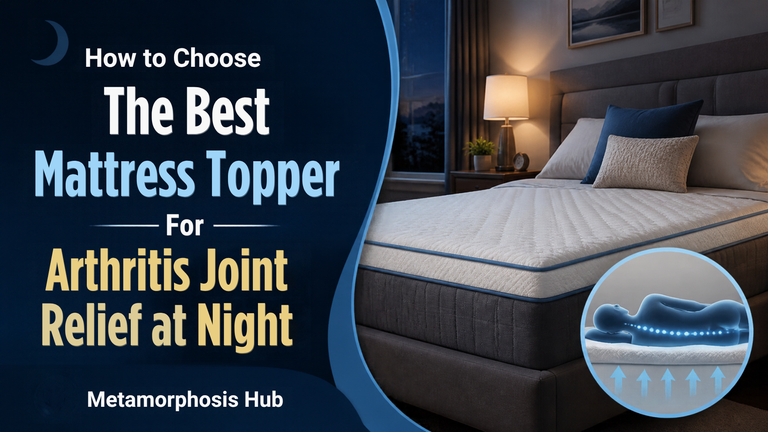
The best mattress topper for arthritis joint pain is the one that provides support and comfort by matching the joint that hurts and the way you sleep. A person with sore hips who sleeps on their side needs something quite different from someone with painful hands who sleeps on their back.
Most advice treats toppers as one product with different price tags, and that is why so many people buy one, sleep badly on it, and buy another.
This guide goes through the main materials and thicknesses, then matches them to hips, knees, shoulders and hands. It is written for seniors with arthritis and for the family members who shop for them.
It cannot replace advice from a doctor or physical therapist, who know your diagnosis, but it should let you narrow the choice before you spend anything.
Before buying a topper, first decide whether the problem is the surface feel of your mattress—or the mattress itself.
This post contains Amazon Associates links, so I may earn a small commission if you buy through them, at no extra cost to you.
Before You Buy: Mattress or Topper?
If you consistently experience arthritic joint aches at night it can be tempting to want to try out different solutions.
Without understanding the benefits of the typical best mattress for older adults with arthritis before you invest in any rated best mattress topper for arthritis pain, you may be spending money on a topper that you don’t really need.
Let’s consider the qualities of best mattresses for arthritic joint pain and review key decisions that guide you in selecting between a mattress or a mattress topper.
1. Best Mattress For Seniors With Arthritis: Check the Mattress First
No single mattress suits everyone with arthritis, because arthritis affects different joints in different ways.
Osteoarthritis can cause joint pain and stiffness, particularly in weight-bearing joints such as the hips and knees.
What most people with either condition need from a sleep surface is the same: even support for the spine, enough softness at the pressure points that the joints are not squeezed, and enough ease of movement that turning over or getting up does not take a struggle.
A very firm surface pushes back against the hips and shoulders. A very soft one lets the body sink into a hammock shape and makes turning harder.
Arthritis Society Canada says the right mattress is individual, with the goal being a balance of cushioning and support.
If your existing mattress is still structurally sound, there may be no need to change it.
Why a mattress can make arthritic joints hurt more overnight
Lying still for seven or eight hours is hard on inflamed joints. Stiffness builds when you stay in one position, and a surface that is too firm concentrates your weight on the hip, shoulder and knee bones. This can leave you waking with sharper pain in the places you lay on. Refer to our Back Pain in Seniors Guide.
A surface that is too soft causes a different problem. The hips sink lower than the shoulders and spine, the back bends out of line, and the muscles around the joints work through the night to hold you steady. You may wake with aching in the lower back as well as the joint you were worried about. If persistent back pain remains despite bedding changes refer to our Managing Chronic Back Pain Guide.
Three things in a mattress affect this most:
- Pressure relief: How well the surface spreads your weight, so the bony points are not carrying it.
- Support: Whether the spine stays in a fairly straight line, whether you are on your back or side.
- Ease of movement: How easily you can shift position without pushing hard through sore hands, wrists or shoulders.
A topper lets you adjust the top few inches of that feel without replacing the whole bed. That matters for the next decision.
2. Mattress Topper or New Mattress? How to Decide
A topper sits on top of your mattress and follows its shape.
If the mattress underneath is sagging, has body-shaped dips, or feels uneven from edge to edge, the topper will copy those dips and the pain will continue. In that case the mattress is the problem and should be changed.
A topper is usually enough when:
- The mattress is flat and supportive when you lie on it, but feels too hard on the hips or shoulders.
- The mattress is comfortable overall but has lost some of its surface cushioning.
- You share the bed and want to change the feel for one person only. (Some toppers come in split sizes for this.)
- You want to try a change at lower cost before deciding whether a new mattress is needed.
How to Choose the Best Mattress Topper for Arthritis
3. What Type of Mattress is Best for Arthritis Pain at Night? Compare Topper Materials
Different types of mattresses are available but how each one treats sore arthritic joints (knees or hips) is different and worth understanding before you make a choice.
Check Certifications. Labels help you check what the topper is made of and if certain standards were met. They do not tell you whether a topper will ease your hips or knees, so treat them as a filter and not a guarantee. Common ones include:
- CertiPUR-US for foam, which relates to content and emissions.
- OEKO-TEX for fabrics and materials tested for harmful substances.
- GOLS (Global Organic Latex Standard) for organic latex.
- Responsible Wool Standard or Responsible Down Standard for animal welfare in wool and feather products.
| Material | Main Advantage | Ease of Movement | Heat | Watch-outs |
|---|---|---|---|---|
| Memory Foam | – Softens with body heat. – Moulds around body, spreading weight across wider area. | – Bony points sink in a little with pressure relief. | – Holds heat more than other materials. – Denser foam contours more closely but sleeps warmer /and moves more slowly. | – Waking hot disturbs sleep and joints feel worse. – May be hard to turn over on thick memory foam; matters if hands, wrists or shoulders hurt when pushed. |
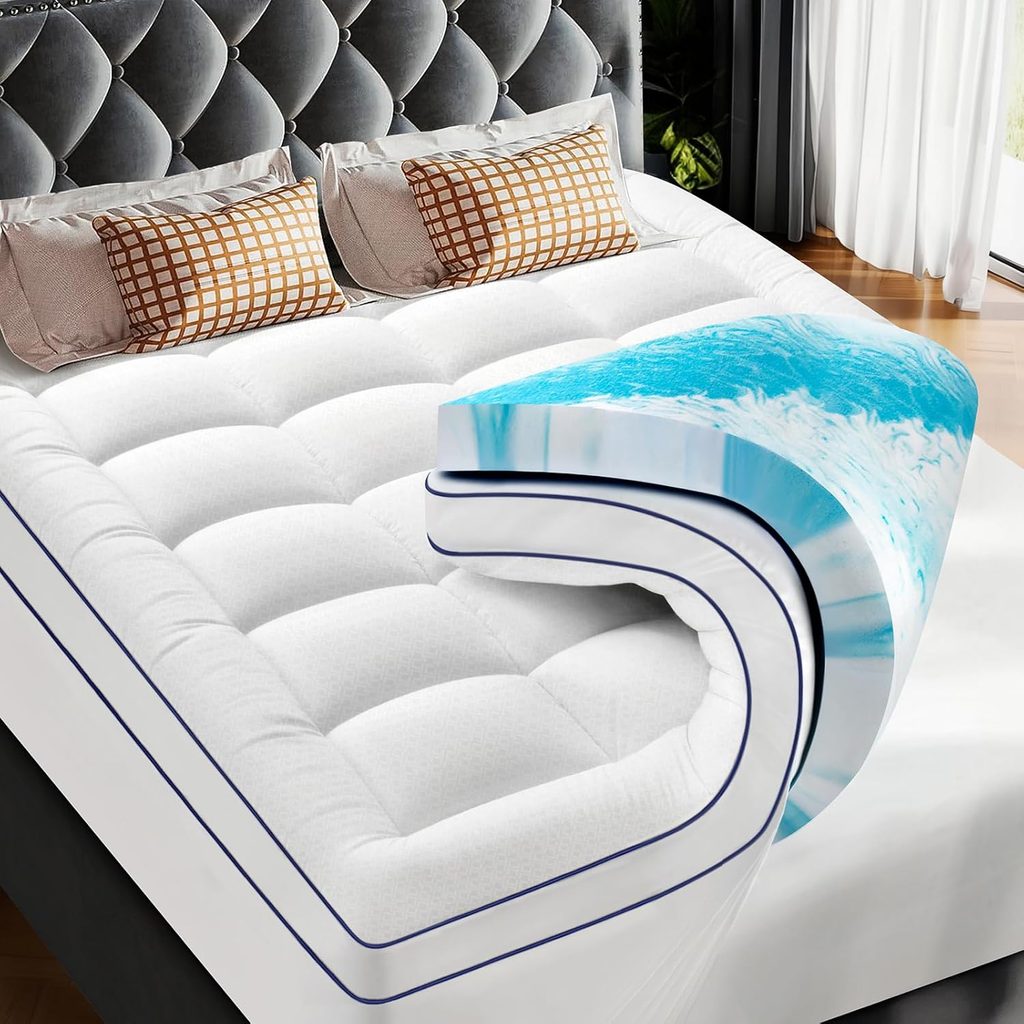
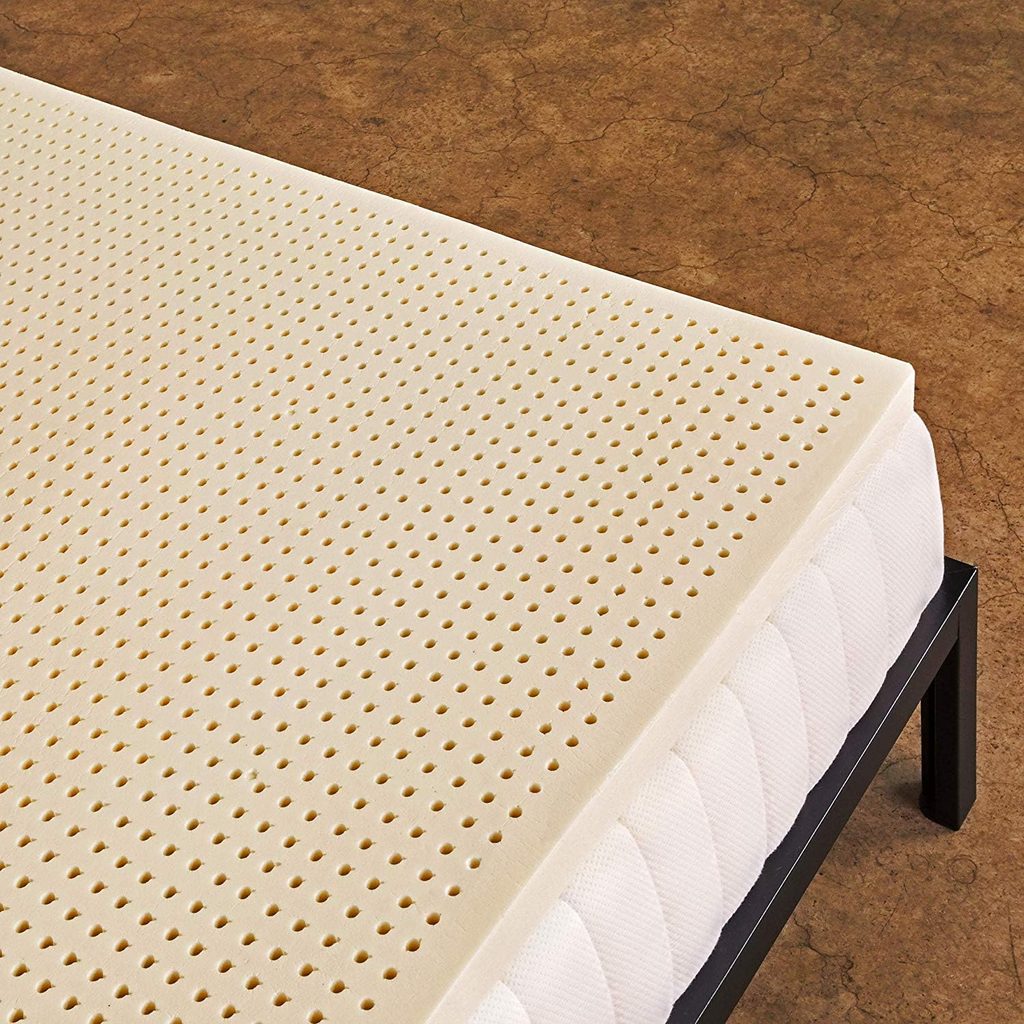
| Latex | – Springier than memory foam. – Cushions joints but pushes back slightly. – Softer latex suits side sleepers with sore hips – Firmer latex gives more support to heavier people or back sleepers. | – Turning easier, especially for stiff hands and shoulders. | – Sleeps cooler than memory foam. | – Generally heavier and often costs more. – Avoid if there is a latex allergy. |
| Gel-infused Foam | – Memory foam with gel beads / swirls or a top gel layer for cooling. | – Pressure relief comes from the foam; feel and thickness are most important. | – Reduces heat; not a different kind of cushioning. | – If heat is the main complaint, latex or wool toppers are better. |
| Wool | – Cushions lightly. | – Light pressure relief | – Draws moisture away from the skin, preventing getting too hot or too cold. | – No strong relief alone; needs a topper underneath. |
| Featherbed | – Weak support. | Easy to move on; helps hands and shoulders. | – Warming | – Feathers compress during the night leaving no cushioning at the hips. – Trouble lifting or shaking out for fluffing. – Avoid if there is feather or dust allergy. |
4. Mattress Topper Thickness and Firmness: Match Them to Your Needs
Toppers commonly come in thicknesses from about one inch to four inches. Thicker gives more pressure relief but also changes the height of the bed and the effort of moving on it. Firmness runs from soft to firm, and the right setting depends on which joint is the main trouble.
Hips and Shoulders
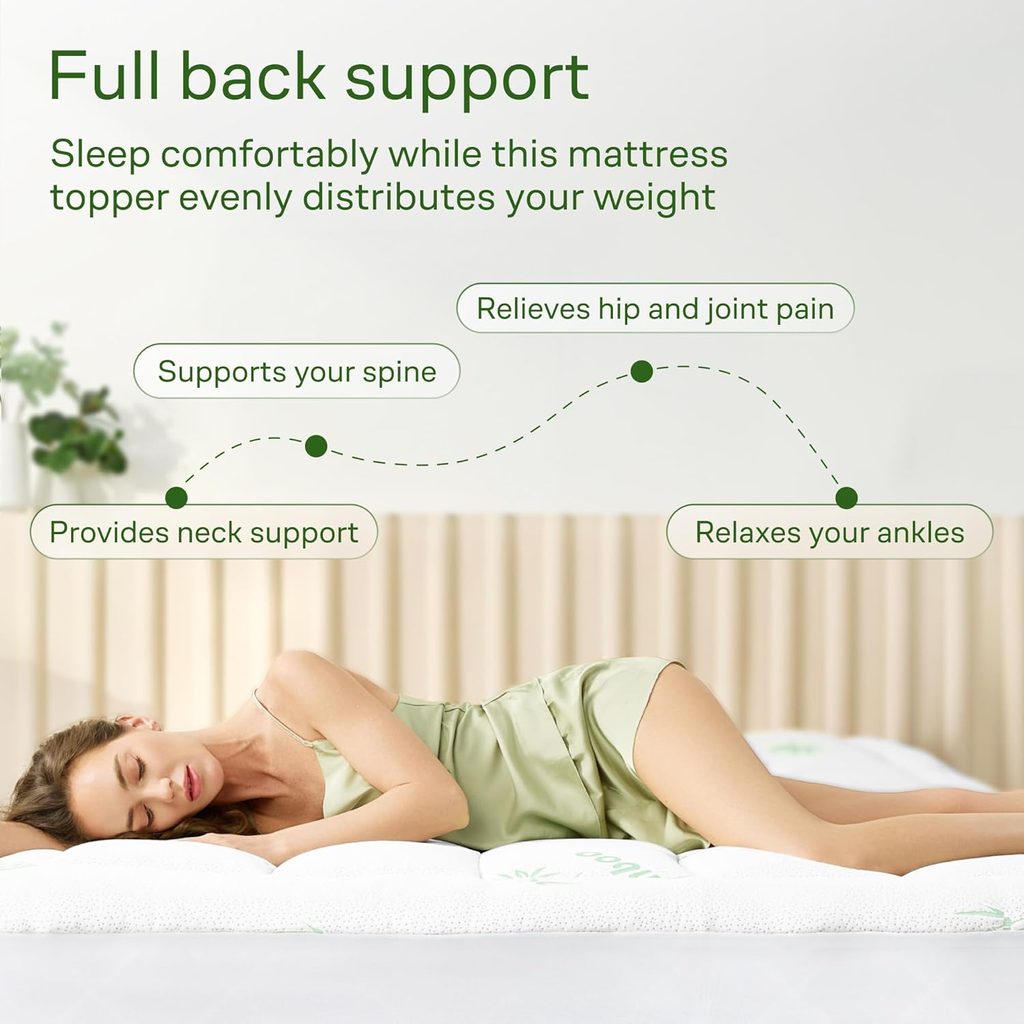
The hips carry a lot of weight when you lie on your side, and pain is common there. A practical starting range for a medium-soft topper of 2-3 inches, in memory foam or soft latex, lets the hip sink in while keeping the waist supported. If the hip sinks too far, go slightly firmer rather than thicker.
Side sleepers with sore shoulders need a surface soft enough for the shoulder to sink in slightly. A firm topper pushes the shoulder up and forward and can pinch the joint. A softer, contouring top layer, or a latex topper in a soft setting, is usually better. If the shoulder still hurts, a wool or featherbed layer on top adds a bit of give.
Knees
Knee pain at night is often less about the mattress and more about how the legs sit against each other or against the bed. A topper of medium firmness keeps the legs from twisting, while a pillow handles alignment.
Very thick memory foam can trap the legs and make them hard to move, so latex or a thinner foam layer often works better for knees.
Hands and Wrists
Hand pain relates to how much effort it takes to move. If your hands or wrists ache, you still push with them every time you roll over or sit up. A responsive surface such as latex, or a medium memory foam in a modest thickness, lets you shift without bracing.
Avoid very deep, slow foam. Hands also suffer if you sleep with them tucked under your body.
5. Match the Topper to Your Sleeping Position
How you sleep decides which of these recommendations matter most.
- Side sleepers put the most weight on the hip and shoulder, so they usually need the most cushioning. A softer, thicker topper tends to suit them, as long as the spine stays level.
- Back sleepers need support under the lower back and cushioning under the shoulder blades and hips. A medium topper is usually enough, and thick soft layers can let the hips sink out of line.
- Stomach sleepers are the hardest to fit, because a soft surface bends the back backward. A thinner, firmer topper is usually the safer choice, though it is worth asking a doctor whether this position is wise with painful joints.
- People who change position often should lean toward responsive materials like latex, since slow foam makes each turn harder.
If you share a bed with someone whose needs differ, ask about split toppers, which let each side have a different feel.
Practical Mattress Topper Checks Seniors Should Not Skip
6. Check Temperature Control
Warm sleep can interrupt rest, and while some people with arthritis find warmth soothing, overheating mostly wakes people up. If you run hot, favour latex, wool or a topper with a breathable cover. If you run cold, memory foam and wool both help.
7. Check Bed Height and Ease of Getting Up
Getting in and out of bed matters. A thick topper raises the mattress, which can put the bed at a height that is hard to climb on to or stand up from especially with sore knees and hips.
Measure the current height of the bed against the seat of a chair you rise from easily. A soft surface also makes pushing up harder, so a firmer edge helps. If you need to use the edge of the bed to stand, check the topper does not slide on the mattress.
8. Check Fit, Weight, Cover and Slip Resistance
- Size and thickness: Confirm the dimensions of the topper against your mattress and bed frame. A topper thicker than the frame’s depth can slide off, and one that is too thin to notice is wasted money.
- Weight: Toppers are heavy and awkward to move, especially latex. Think about how easy it will be to change bedsheets.
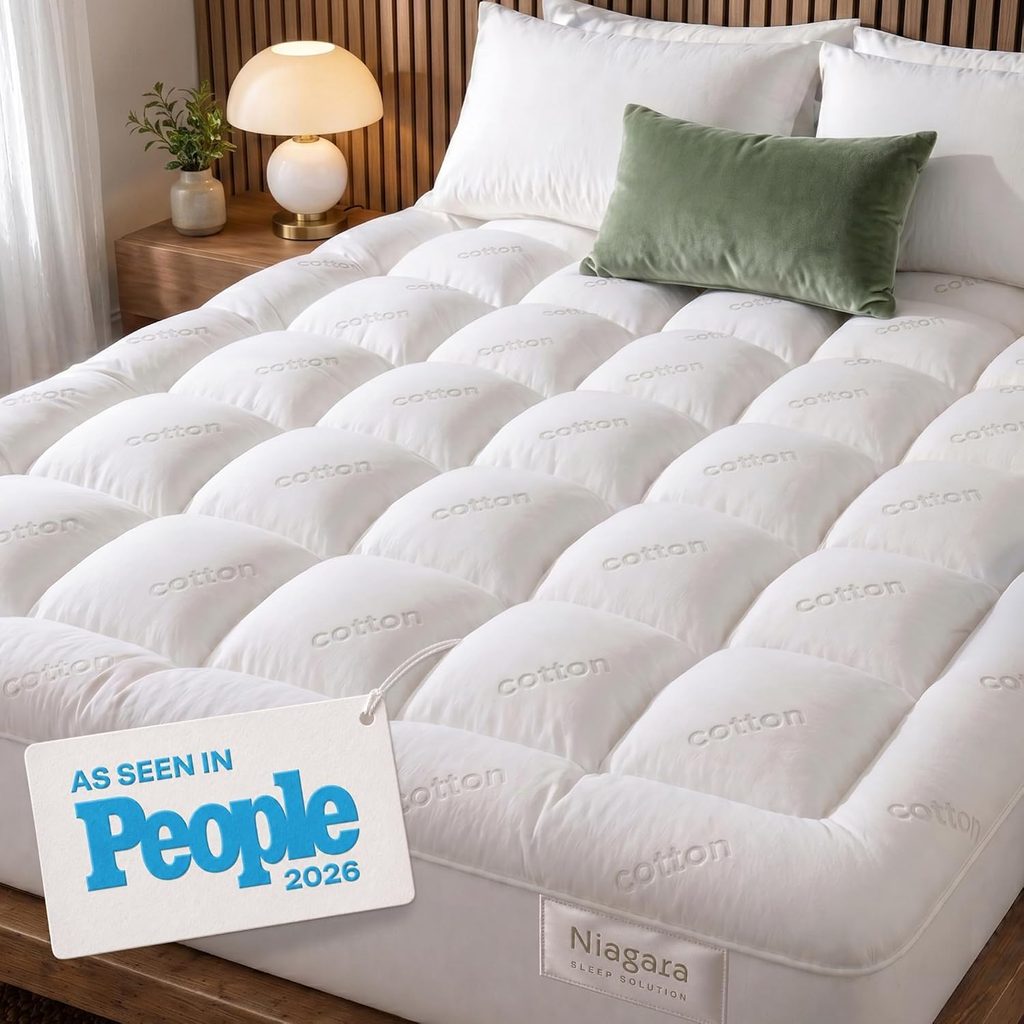
- Cover and care: A removable, washable cover is very useful for anyone with limited hand strength or bladder concerns. Check whether it can go in a washing machine, and whether the topper itself can be spot cleaned.
- Sheets: Thicker toppers need deep-pocket fitted sheets, and the wrong size makes the bed harder to make.
- Slipping: A topper that moves during the night makes turning harder. Look for straps, a non-slip base or elastic corners.
- Smell: New foam can have an odour at first. Let it air out before judging it.
9. Review the Trial Period and Return Policy
Return policy. A topper that looks right on paper may feel wrong at night, so you need to return. Read how returns work before ordering: whether returns are free, if the topper must be unused or tried, and who pays for shipping. Foam toppers can be difficult to repack.
Trial period. Joint pain often needs more than a night or two to judge, because your body has to adjust. Look for a trial of at least several weeks, and use the topper nightly through the whole period. Note how you feel in the morning, not only at bedtime.
10. Use Your Topper With The Right Pillows
A topper changes how your body sits on the bed, and pillows then fill the gaps it leaves. Side sleepers usually need a pillow between the knees to keep the hips and lower back level, and a head pillow thick enough to fill the space between the ear and shoulder.
When the topper is soft and the shoulder sinks in, that space gets bigger, so a pillow that worked before may now be too low. If neck pain is part of the picture, the guide to orthopedic pillows for neck pain covers the options in detail.
Back sleepers often feel relief from a pillow under the knees, which eases pressure on the lower back. With a firmer topper, a slightly thicker pillow may be needed, and with a soft topper a thinner one.
Change one thing at a time. Add the topper, sleep on it for a couple of weeks, and only then adjust the pillows, so you know which change helped.
To finish building a joint-friendly sleep setup, read the guide to knee and leg pillows for night relief, which covers positioning and options for the nights when knees and legs are the problem.
Conclusion
Choosing the best mattress topper for arthritis joint pain starts with one question: is your mattress still supportive enough to keep?
If it is flat and supportive but feels too firm or uncomfortable at pressure points, a topper may be a practical way to adjust the surface. If the mattress is sagging, uneven, or badly worn, replacing the mattress is usually the better investment.
Then compare topper material, thickness, sleeping position, temperature, ease of movement, and bed height.
The goal is not to find one universally “best” topper. It is to create a sleep surface that feels cushioned, supportive, and easy enough to move on for your particular joints and sleeping habits.
FAQs About the Best Mattress Topper for Arthritis Joint Relief At Night
What is the best mattress topper for arthritis?
The best mattress topper for arthritis should provide comfortable cushioning without making it difficult to turn or get out of bed. Memory foam contours closely, while latex is more responsive. The right choice depends on your joints and sleep position.
Is a mattress topper or new mattress better for arthritis?
Choose a topper when the mattress is still flat and supportive but feels too firm. If the mattress sags, has deep impressions, or no longer supports you evenly, a new mattress is usually the better option.
What type of mattress is best for arthritis?
The best mattress for seniors with arthritis usually balances cushioning with support. Medium-firm is a reasonable starting point for many people, but comfort, body size, painful joints, sleep position, and ease of movement should guide the final choice.
What mattress topper thickness is best for arthritis?
There is no single ideal mattress topper thickness. Two to three inches is often enough to noticeably change the feel of a supportive mattress, while thicker toppers create more cushioning but can make turning and getting out of bed harder.
Is memory foam or latex better for arthritis?
Memory foam offers deeper contouring and pressure relief, while latex feels springier and usually makes changing position easier. Seniors with painful hands, shoulders, or limited mobility may prefer the more responsive feel of latex.
References
Arthritis Society Canada (2026). Choosing an arthritis-friendly mattress – Healthy Living. https://arthritis.ca/healthy-living/choosing-an-arthritis-friendly-mattress/
Caggiari G, et al. (2026). Mattress impact on lifestyle and back pain: a 25-year orthopedic literature review guideline. Journal of Orthopaedics and Traumatology. 27(1):53.