
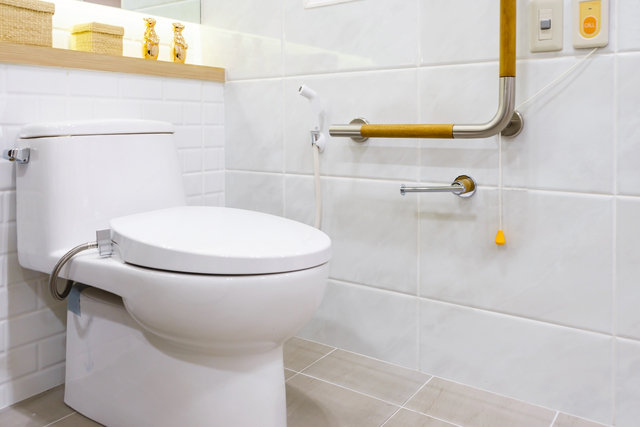
Discover 10 bathroom safety tips for seniors that may help prevent falls, improve lighting, and make daily routines safer.
The bathroom is one of the most accident-prone rooms in the home for older adults. Wet floors, tight layouts, nighttime bathroom trips, and the need to sit, stand, turn, and step over edges all create extra risk.
The National Institute on Aging recommends making bathrooms safer by installing grab bars near toilets and in tubs or showers, reducing slippery surfaces, and improving lighting.
The CDC’s fall-prevention guidance says many falls can be prevented by removing hazards and adding supports such as grab bars and better lighting.
The real causes of falls in the bathroom are slippery floors, low visibility, reduced balance, limited mobility, medication effects, and trouble stepping in and out of the bathtub or shower.
These risks become more serious with age-related changes in muscle strength, bone density, coordination, and vision.
A man I know brushed off the bathroom as “no big deal” because he had been using the same setup for years. Then one night he got up half asleep, shuffled into a dim bathroom, stepped onto a damp floor in socks, and nearly went down.
He caught the sink just in time. What shook him was not just the near-fall. It was realizing how small the margin had become.
That is why bathroom safety for seniors matter. Most bathroom falls do not start with one dramatic mistake. They start with a few ordinary risks that build up quietly.
Take a look around your bathroom and quickly spot the first 2 or 3 obvious risks.
Why Bathroom Safety Tips for Seniors Matter More With Age
As we get older, the bathroom becomes more demanding. Getting on and off the toilet may take more strength. Stepping into a tub may require better balance. Reaching for soap or turning quickly in the shower can feel less steady than it once did.
The National Institute on Aging notes that older adults are more likely to fall because of changes in balance, strength, vision, and medication use. The CDC also highlights that home hazards combined with health and mobility changes can sharply increase fall risk.
That is why a senior safe bathroom is not about making the room look clinical. It is about making everyday movements less risky.
Aging Changes and Common Bathroom Hazards for Seniors
Aside from the kitchen, the bathroom is another very hazardous area in the home, especially for seniors, due to slippery surfaces, limited space, reduced balance, poor vision, chronic health conditions, and medication effects that can cause dizziness or drowsiness.
The CDC’s bathroom injury data also supports this concern. Bathroom injuries are common, and environmental changes such as adding non-slip surfaces and grab bars are practical ways to reduce risk.
The most common bathroom hazards for seniors include:
- wet, slick floors
- poor lighting
- no stable support near the toilet or shower
- awkward tub entry
- low toilet height
- clutter or poorly placed items
- confusion from nighttime urgency
- medication-related dizziness
The point is not to fear the bathroom. It is to stop underestimating it.
Bathroom risks rarely exist in isolation, which is why senior safety in the bedroom also deserves attention.
Bathroom Safety Checklist for Aging Adults
If you are serious about senior safety in the bathroom, then you must have a strategy to check and implement changes. This all starts with a checklist. Without one, everything you do will just be a guessing game.
A safer bathroom is not only about what is inside it. It is also about the path to it and the space available to move. Your original draft points out that limited mobility makes bathroom tasks harder, especially stepping in and out of the tub and moving around tight spaces.
Clear the path, widen access where possible, and keep commonly used items within easy reach.
Senior safety in the bathroom can be enhanced through a combination of preventive measures Here are 10 top preventive areas on our checklist.
10 Bathroom Safety Tips for Seniors That Prevent Falls
1. Best Lighting for Senior Bathrooms Must be Adequate for Day and Night Visibility
Proper lighting is essential in any room, but is especially important in the bathroom to prevent accidents. Because many seniors may have decreased vision it is necessary to create a senior safe bathroom.
The first fix is often the easiest and the most overlooked. Good lighting reduces hesitation, missteps, and the chance of missing water on the floor or an object in the way. NIA recommends ensuring good lighting and using night lights to make navigation safer at night.
Use:
- bright overhead lighting
- glare-free bulbs where possible
- motion-sensor night lights
- a clear path from bed to bathroom
This is one of the best places to start if you are asking about the best lighting for senior bathrooms.
2. Use Non-Slip Mats and Flooring
Slips and falls are a leading cause of injuries among seniors, and the bathroom floor is well known for its potential to become slippery, especially when wet. Installing non-slip mats and flooring is a key step to ensuring a senior safe bathroom.
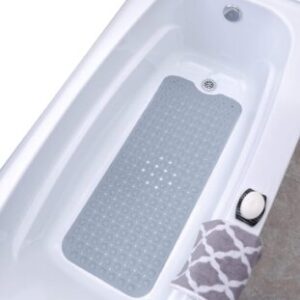
These mats provide traction and stability, reducing the risk of accidents when stepping in and out of the shower or getting in and out of the bathtub.
This is one of the most practical answers to preventing falls in the bathroom. The CDC specifically recommends non-slip rubber mats or self-stick strips inside the tub or shower.
Use:
- non-slip mats inside the tub or shower
- non-slip mats just outside the shower if they lie flat and stay secure
- flooring that is not overly slick when wet
Avoid:
- loose rugs
- curled mat edges
- anything that slides underfoot
3. Install Grab Bars for Senior Bathrooms
This is one of the most important of bathroom safety tips for seniors. Grab bars provide support where it is most needed: near the toilet, inside the shower, and at the tub entry to keep seniors safe and help with balance while standing, sitting, or moving around.
The CDC and NIA both recommend grab bars in these areas.
To ensure that these grab bars do not become a new form of hazard, ensure that they are securely installed according to the manufacturer’s instructions and preferably by a professional.
4. Make the Toilet Easier to Use
For seniors with mobility challenges, getting on and off the toilet can be difficult. A raised toilet seat can alleviate this issue by increasing the seat height, making it easier to sit down and stand up.
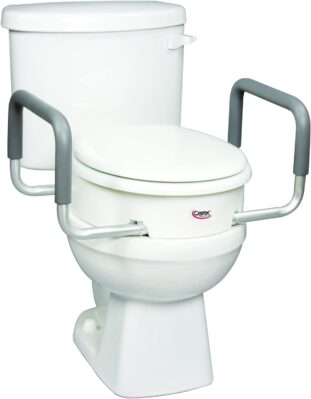
Some raised toilet seats also come with handles for additional support. This simple modification can significantly improve bathroom safety and accessibility for seniors.
A raised toilet seat or toilet frame can help when:
- knees are painful
- standing is harder
- balance is reduced
- the existing toilet feels too low
This is one of those changes that seems small until you realize how often it helps every day.
5. Add a Shower Chair or Bath Bench
Standing for extended periods in the shower can be tiring and risky for seniors. A shower chair or bench provides a comfortable and secure place to sit while bathing.
This reduces the chances of slipping or losing balance while showering. Look for a chair or bench with non-slip feet and drainage holes to prevent water accumulation.
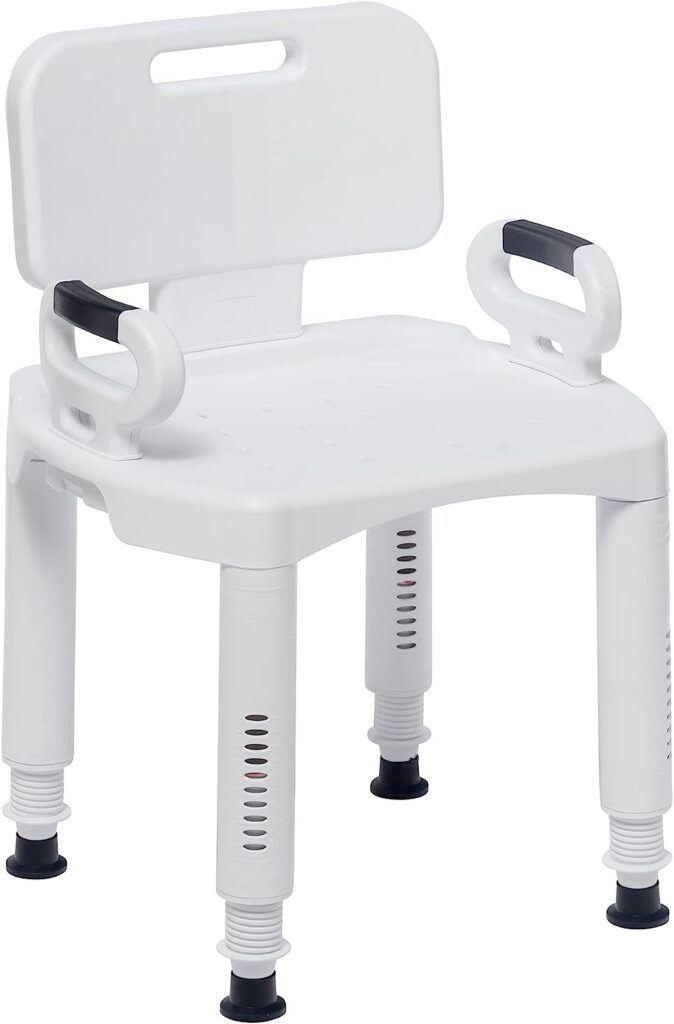
These bathroom aids are especially helpful for seniors with:
- fatigue
- arthritis
- weakness
- poor balance
- dizziness
A stable shower seat with non-slip feet is a much better option than trying to “tough it out.”
For seniors who have difficulty stepping over the edge of the bathtub, a bath transfer bench can be very helpful.
This bench extends over the edge of the bathtub. It allows seniors to sit down outside the tub, pivot their legs over the tub, and then slide into it.
It eliminates the need for lifting the legs and reduces the risk of slipping.
6. Use a Handheld Showerhead for Better Control
A handheld showerhead is not just a convenience item. It offers greater control over the water stream, allowing direction of the water where needed without having to move around excessively, while reducing awkward reaching and twisting, which can make bathing safer and less tiring.
This can be especially helpful for seniors who have difficulty reaching various parts of their bodies. It is also a useful upgrade when a senior needs to:
- sit while bathing
- wash with less movement
- reduce strain on shoulders and back
7. Easy-to-Use Faucets and Handles
Seniors with arthritis or limited hand strength may struggle with traditional faucet handles. Having lever-style faucets and easy-to-grasp handles can make turning on and off the water much easier and more comfortable for them.
8. Reduce Burn Risk With Anti-Scald Protection Devices
Seniors often have more sensitive skin and may not react as quickly to sudden heat changes. Installing anti-scald devices or adjusting the water heater temperature can help prevent accidental burns from water that is too hot.
These devices regulate the water temperature and can provide peace of mind for both seniors and caregivers.
This is often forgotten because people focus only on falls, but bathroom safety is also about avoiding preventable burns.
9. Keep Medications Organized and Out of the Way
Some seniors need to take medications daily, and the bathroom can sometimes be a convenient place for getting started on the daily regimen. However, medication mistakes are part of bathroom safety too.
Medication organizers with large, easy-to-read labels can help seniors keep track of their doses and reduce the risk of medication errors.
Use:
- large-label organizers
- one simple routine
- clear separation between daily medications and “as needed” items
And just as important, avoid cluttering counters with too many unrelated bottles. If bathroom counters are becoming cluttered with pill bottles, read how to organize medications for seniors for a safer routine
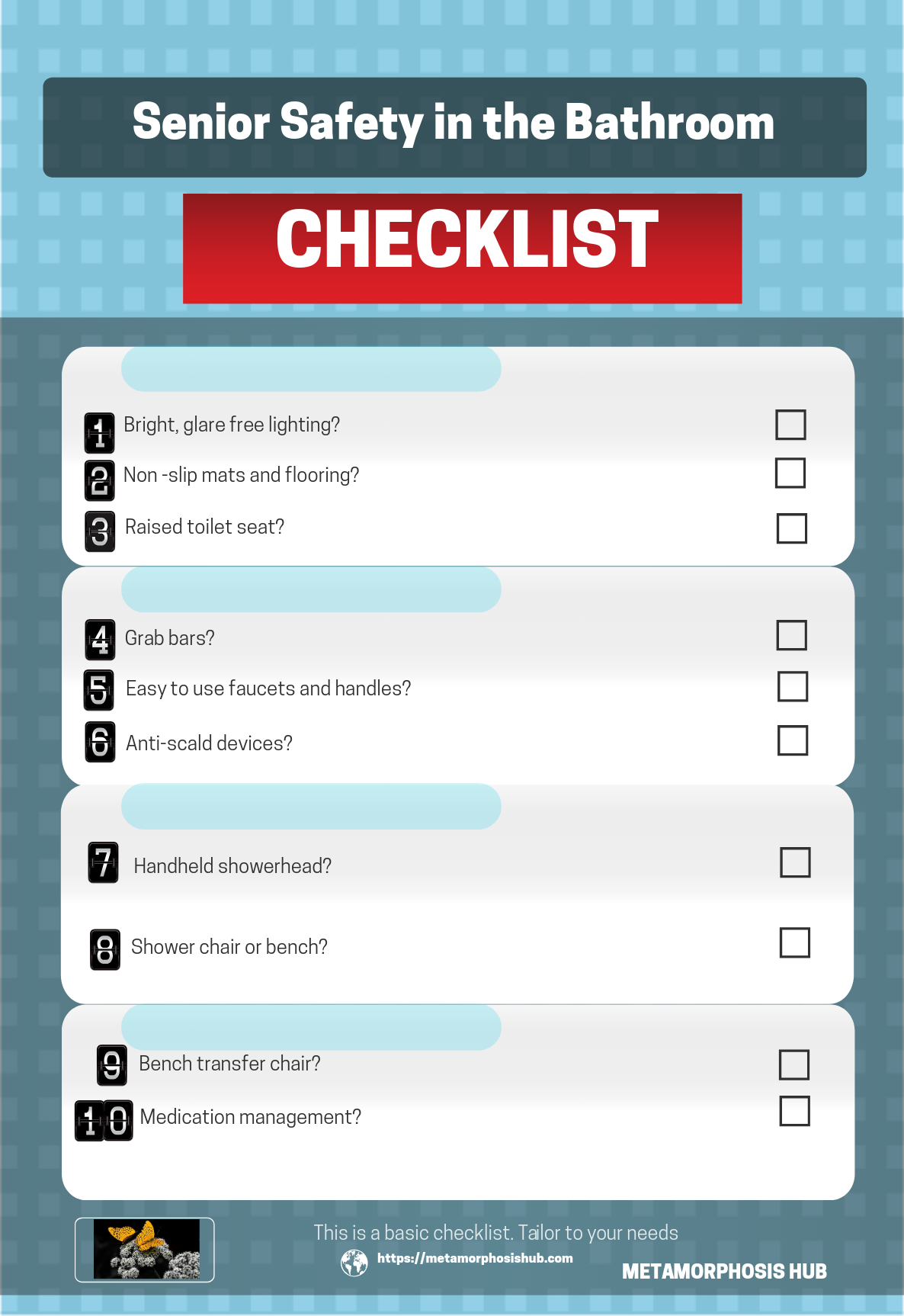
10. Use a Bathroom Safety Checklist for Aging Adults
A bathroom safety checklist for aging adults makes the process less like guessing and more like a proper review.
A good checklist should ask:
- Is the lighting bright enough?
- Are floors slippery?
- Are grab bars installed where needed?
- Is the toilet height manageable?
- Is bathing safer seated or standing?
- Are medications stored clearly?
- Is the route to the bathroom safe at night?
That checklist mindset is what turns good intentions into real prevention.
Print the checklist on this page and use it to get started reviewing your bathroom today.
How to Prevent Falls in the Bathroom Without Overcomplicating the Space
A lot of seniors do not want their bathroom to feel medical. That is understandable. The answer is not to overcrowd the room with gadgets. It is to choose the few changes that make the biggest difference.
Usually that means:
- better light
- better grip
- better support
- easier transfers
- less rushing
- fewer slippery surfaces
That is enough to change the room without changing the feeling of home. For a wider look at home hazards beyond the bathroom, read how to prevent falls in seniors.
Senior Safe Bathroom Upgrades That Help Most
If you want the most useful upgrades first, start with:
- non-slip tub or shower mat
- grab bars near the toilet and shower
- a raised toilet seat if transfers are difficult
- a shower chair or bath bench if standing is tiring
- motion-sensor lighting for nighttime bathroom trips
Those are the upgrades most likely to make the room safer without overcomplicating daily life. After the bathroom, the next room many families tackle is the kitchen, so it helps to review how to ensure senior safety in the kitchen too
Start with the one fix that would make the biggest difference tonight, not “someday!”
If the bathroom has started to feel less steady, that does not mean independence is over. It usually means the setup needs to catch up with current needs. A few smart changes can make daily routines feel safer, calmer, and much less stressful.
Additional Benefits of a Senior Safe Bathroom
Reduces Caregiver Burden
The safety of seniors in the bathroom also has an impact on caregivers, whether they are family members or professional ones. When the bathroom is designed to accommodate the needs of seniors, caregivers can have peace of mind from frequent accidents.
Promotes Mental and Emotional Well-being
A safe bathroom environment contributes to the overall mental and emotional well-being of seniors. Feeling secure in their ability to navigate the bathroom reduces anxiety and stress.
Conclusion – Small Bathroom Changes Can Prevent Bigger Injuries
The bathroom is one of the easiest places in the home to underestimate. It is used every day, often when people are tired, rushing, stiff, or half awake. That is exactly why it deserves attention.
These bathroom safety tips are not about fear. They are about preventing injuries before they happen. Better lighting, safer flooring, stronger support, and easier bathing routines can protect both safety and confidence.
That is what a senior safe bathroom is really about.
Related Articles
- How to Prevent Falls in Seniors – Home Safety
- How to Prevent Seniors Falling – The Effects of Osteoporosis
- How to Maintain Independence – Prevent Causes of Falls in Seniors
- Senior Safety in the Bedroom – What are the Risks?
- How to Ensure Senior Safety in the Kitchen – 11 Point Checklist
FAQs
Why are bathroom safety tips for seniors important?
Bathroom safety tips for seniors are important because wet floors, poor lighting, and difficult transfers can increase the risk of falls.
What are common bathroom hazards for seniors?
Common bathroom hazards for seniors include slippery floors, low toilet seats, poor lighting, and getting in or out of the tub safely.
How do you prevent falls in the bathroom for seniors?
To prevent falls in the bathroom, improve lighting, use grab bars, add non-slip mats, and choose easier bathing and toilet supports.
What should a bathroom safety checklist for aging adults include?
A bathroom safety checklist for aging adults should include lighting, flooring, grab bars, toilet height, shower access, and emergency help.
What are the best lighting choices for senior bathrooms?
The best lighting for senior bathrooms is bright, even, glare-free lighting with night lights or motion-sensor lighting for nighttime use.
References
The Importance of Bathroom Safety for Seniors. (n.d.). CLH Healthcare. Retrieved August 13, 2023, from https://clhgroup.co.uk/learning-centre/patient-care/the-importance-of-bathroom-safety-for-seniors#:~:text=According%20to%20NHS%20Choices%2C%20statistics
7 Bathroom Safety Tips for Seniors. (n.d.). Intrepid USA. Retrieved August 13, 2023, from https://www.intrepidusa.com/blog/7-bathroom-safety-tips-for-seniors/
CDC STEADI — Check for Safety: A Home Fall Prevention Checklist for Older Adults https://www.cdc.gov/steadi/pdf/steadi-brochure-checkforsafety/
National Institute on Aging — Preventing Falls at Home: Room by Room. https://www.nia.nih.gov/health/falls-and-falls-prevention/preventing-falls-home-room-room/
National Library of Medicine. MedlinePlus. Bathroom Safety for Adults https://medlineplus.gov/ency/patientinstructions/000021.htm