

Nutritional deficiencies causing restless leg syndrome may be one reason some seniors experience uncomfortable leg sensations, especially at night because the causes of restless leg syndrome are varied.
Understanding those nutritional deficiencies causing restless leg syndrome starts with knowing which nutrients have the strongest evidence and where to find them in everyday foods
Iron has the strongest connection with RLS, while magnesium, folate, and vitamin D may also be worth considering when a deficiency is suspected.
This guide looks at those four nutrients from a practical, food-first perspective. You’ll learn which foods can help increase your intake, which foods and drinks may worsen symptoms for some people, and when it may be time to ask your healthcare professional about testing rather than relying on supplements alone.
Nutritional Deficiencies Causing Restless Leg Syndrome? Why Food Sources Matter
Food choices can play two different roles when you are living with restless leg syndrome.
On one hand, nutrient-rich foods can help you get more of the vitamins and minerals your body needs for normal nerve, muscle, and blood function. Iron is especially important because low iron status is commonly associated with RLS, while magnesium, folate, and vitamin D may also be worth discussing if a deficiency is suspected.
To understand the link between magnesium / vitamin D or the difference between RLS and cramping refer to Vitamin Deficiency and Leg Cramps.
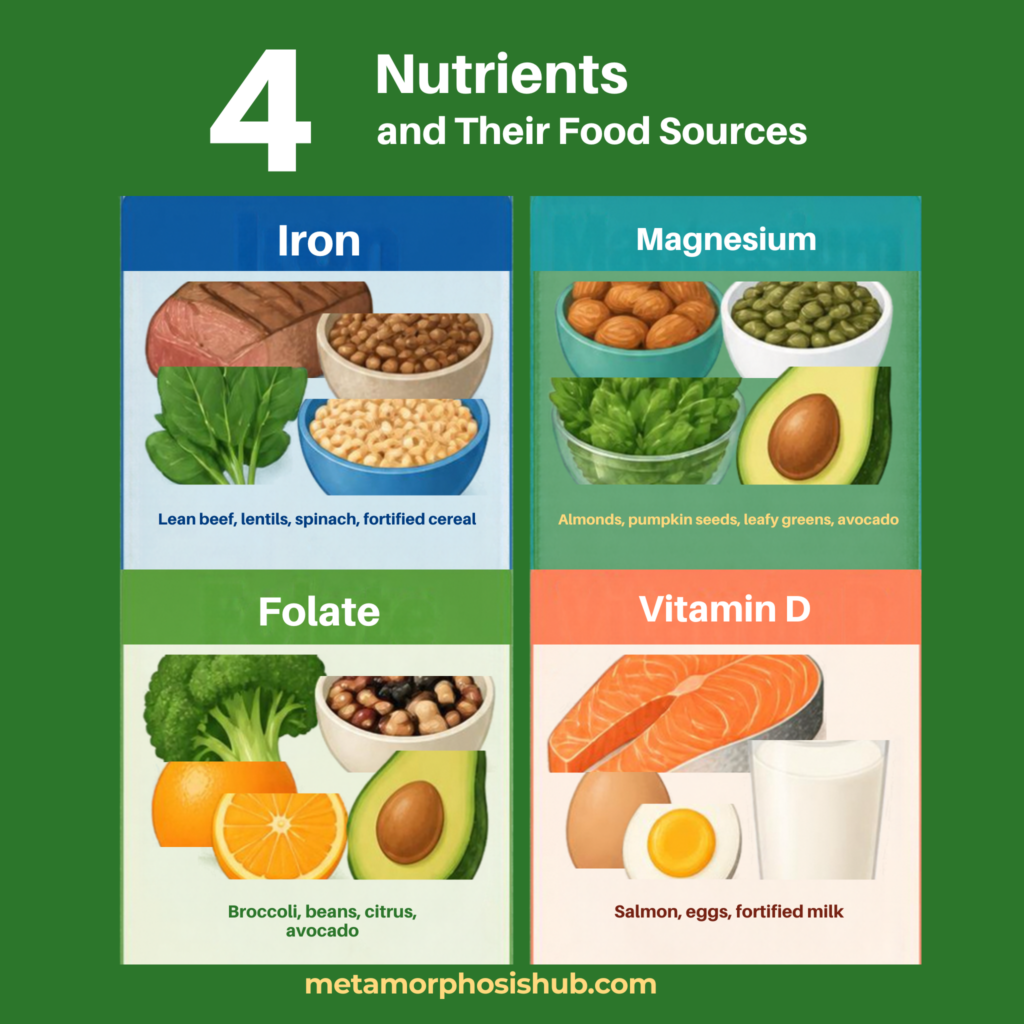
That is why this article puts the spotlight on food sources first. Instead of immediately reaching for supplements, it can be helpful to look at foods such as:
- lean meats, poultry, beans, and fortified cereals for iron;
- leafy greens, nuts, seeds, and whole grains for magnesium;
- broccoli, beans, avocados, and citrus fruits for folate; and
- fatty fish, eggs, and fortified foods for vitamin D.
Some of these foods may support better nutrient intake and may be soothing as part of a balanced diet. But food can work the other way too.
Certain foods and drinks may worsen symptoms for some people – caffeine and alcohol in particular, both of which may interfere with sleep or make nighttime restlessness more noticeable.
The important point is that there is no single “RLS diet” that works for everyone. What helps one person may not make much difference for another. That is why it can be useful to focus on nutrient-rich foods, watch for personal triggers, and keep a simple food-and-symptom journal rather than changing everything at once.
And if you suspect a true nutritional deficiency, especially iron deficiency, it is better to confirm it with your healthcare professional before starting supplements. Do not self-diagnose or start mega dosing nutrients on your own.
How Diet Affects Restless Leg Syndrome
Diet is not the only factor involved in restless leg syndrome, but it can influence how well your body receives the nutrients needed for normal nerve, muscle, and blood function. For seniors, this is especially relevant when a nutritional deficiency is suspected.
The clearest example is iron. Iron-rich foods, magnesium-rich foods, folate-rich foods, and vitamin D food sources are all useful parts of a balanced diet.
Best Foods for Restless Leg Syndrome
At the same time, some foods and drinks may make symptoms more noticeable for certain people. Caffeine and alcohol are two examples worth watching, especially later in the day. Rather than assuming that every food affects RLS the same way, it is more useful to pay attention to your own patterns.
A practical approach is to focus on nutrient-rich whole foods, make gradual changes, and keep a simple food-and-symptom journal. This can help you notice whether certain meals, drinks, or eating habits seem to coincide with better or worse nights.
If you suspect a true deficiency, especially iron deficiency, speak with your healthcare professional before starting supplements. Testing is the better way to confirm whether a deficiency is actually present.
Iron Rich Foods for Restless Leg Syndrome
Iron deserves special attention when discussing nutrition and restless leg syndrome because iron deficiency is one of the nutritional factors most often associated with RLS. Iron-rich foods include lean meats, poultry, beans, and fortified cereals, but seniors should be cautious of taking iron supplements without medical advice.
For many seniors, the safest place to begin is with everyday foods that naturally provide iron rather than immediately reaching for a supplement bottle!
Animal Sources of Iron
Animal foods can be useful sources of iron because they are generally easy to incorporate into familiar meals.
Good choices can include lean beef, poultry, and other iron-containing meats. These can be served in modest portions alongside vegetables, beans, or whole grains to create a balanced meal.
For example, a senior-friendly dinner might include grilled chicken with spinach and brown rice, or a small serving of lean beef with vegetables.
The goal is not to dramatically increase meat intake, but to include iron-containing foods regularly as part of an overall balanced diet.
Plant-Based Sources of Iron
You do not have to rely on meat to increase dietary iron.
Beans, lentils, leafy green vegetables, and fortified cereals are useful sources.
Plant-based options can be especially practical for seniors who prefer lighter meals. Lentil soup, bean salads, spinach added to eggs, or an iron-fortified breakfast cereal are simple ways to add more iron-containing foods.
These foods also provide other nutrients and fibre, making them useful additions to an everyday eating pattern.
Pair Iron-Rich Foods With Vitamin C
One simple way to get more value from plant-based iron foods is to pair them with a source of vitamin C.
Combining iron-rich foods with foods such as citrus fruits or strawberries help improve iron absorption.
For example, you might pair:
- lentils with tomatoes or peppers;
- spinach with citrus fruit;
- fortified cereal with strawberries; or
- beans with a side of fruit.
Small combinations like these can make an iron-rich meal more useful without requiring a complicated diet.
When Food Sources May Not Be Enough
Eating more iron-rich foods can support good nutrition, but food alone may not correct a true iron deficiency.
If you have persistent restless leg symptoms, your healthcare professional may recommend blood testing to see whether low iron stores are actually present and may require treatment.
Taking extra iron when you do not need it can be harmful. Excessive iron can create health problems and consulting a healthcare professional before using iron supplements is recommended.
Restless Leg Syndrome and Magnesium Deficiency: Best Food Sources
Magnesium is another nutrient commonly discussed in relation to muscle and nerve function. It is one of the four nutrients worth considering and includes several useful food sources, including leafy greens, nuts, seeds, avocados, bananas, and dark chocolate.
However, magnesium should not be treated as a guaranteed remedy for restless leg syndrome. A better approach is to make sure your diet includes a variety of magnesium-rich foods, especially if your overall intake has been low.
Leafy Greens
Dark leafy vegetables are among the easiest magnesium-rich foods to add to everyday meals.
Spinach and kale are useful sources.
For seniors who do not enjoy a large salad, leafy greens can still be easy to include. Try adding spinach to scrambled eggs, soups, pasta dishes, or sandwiches. Kale can be cooked into soups or served as a soft side dish.
The important thing is consistency rather than eating a large amount at once.
Nuts and Seeds
Nuts and seeds can provide magnesium in a convenient, small serving.
A small handful of almonds and pumpkin seeds can work well as a snack, or you can sprinkle chopped nuts or seeds over oatmeal, yogurt, or salads.
For seniors who have difficulty chewing whole nuts, nut butters or finely ground seeds may be easier alternatives.
Other Magnesium-Rich Foods
Magnesium is found in a wide variety of foods, so there is no need to rely on one source.
Avocados, bananas, whole grains, and dark chocolate are among foods that can contribute magnesium to the diet.
An easy day might include oatmeal or whole-grain cereal at breakfast, avocado with lunch, and vegetables or beans at dinner.
Dark chocolate can also provide magnesium, but moderation matters—especially because chocolate may contain caffeine, which some people with RLS find makes nighttime symptoms more noticeable.
The most practical approach is to build magnesium-rich foods into a varied diet rather than assuming that one food—or a magnesium supplement—will solve restless leg symptoms.
Foods for Restless Leg Syndrome: Folate and Vitamin D Sources
Folate and vitamin D are two additional nutrients worth including in a well-balanced diet. Their relationship with restless leg syndrome is not as well established as iron, so they should not be viewed as stand-alone RLS treatments.
Still, foods that provide these nutrients can support overall nutrition, especially for seniors whose diets may sometimes be limited or less varied.
Leafy greens, broccoli, avocados, citrus fruits, and beans are useful folate sources, while fatty fish, egg yolks, and fortified dairy products can provide vitamin D.
Leafy Green Vegetables
Dark leafy greens are among the easiest foods to use when you want to increase folate intake naturally.
Good choices include:
- spinach;
- broccoli;
- kale; and
- other dark green vegetables.
You do not have to eat a large bowl of raw greens every day. Spinach can be folded into scrambled eggs, added to soup, or mixed into pasta. Broccoli can be steamed until tender and served alongside fish, poultry, or beans.
These are simple ways to add folate-rich foods without making meals complicated.
Beans, Lentils, and Avocados
Beans and lentils are particularly useful because they fit into many senior-friendly meals and provide more than one important nutrient. They can contribute to an overall nutrient-rich diet rather than focusing on a single vitamin.
Try them in:
- soups;
- stews;
- salads;
- wraps; or
- simple bean-and-rice dishes.
Avocado is another convenient folate-containing food. It can be mashed onto whole-grain toast, added to salads, or served alongside eggs.
Citrus and Fortified Foods
Citrus fruits such as oranges can contribute folate while also providing vitamin C.
This makes them particularly useful alongside meals containing plant-based iron, since vitamin C can help the body absorb iron from foods such as beans, lentils, and leafy greens.
Some breakfast cereals and grain products are also fortified with folic acid. If you use fortified foods, check the nutrition label so you know what nutrients the product actually provides.
Fatty Fish
Fatty fish such as salmon and tuna are among the more useful natural food sources of vitamin D.
For seniors who enjoy fish, simple options might include baked salmon with vegetables, tuna added to a sandwich or salad, or fish served with whole grains and leafy greens.
These meals also make it easy to combine several of the nutrients discussed in this guide on one plate.
Eggs and Fortified Foods
Egg yolks contain some vitamin D and can be an easy addition to breakfast or lunch.
Vitamin D may also be added to certain foods, including:
- milk;
- some dairy alternatives;
- certain breakfast cereals; and
- other fortified products.
Because fortification varies by product, it is worth checking the nutrition label rather than assuming that every milk alternative or cereal contains vitamin D.
Why Vitamin D May Need More Than Diet Alone
Vitamin D can be harder to obtain from food alone because relatively few foods naturally contain substantial amounts.
That does not mean everyone with restless leg syndrome needs a vitamin D supplement. If you are concerned about your vitamin D status, especially if your diet contains few vitamin-D-rich foods, discussing testing with your healthcare professional may be more useful than guessing.
The same principle applies throughout this article: food can help support good nutrition, but a suspected deficiency is best confirmed rather than assumed.
Foods That Soothe Restless Leg Syndrome: What May Help
There is no single food proven to “soothe” restless leg syndrome for everyone. However, nutrient-rich meals may help support adequate intake of iron, magnesium, folate, vitamin D, and other nutrients that contribute to normal body function.
Foods such as leafy greens, lean meats, beans, lentils, nuts, seeds, whole grains, fatty fish, eggs, and fortified foods are strong candidates.
A more useful way to think about foods that soothe restless leg syndrome is to build balanced meals around those nutrient-rich choices rather than searching for one special food that will stop symptoms.
Breakfast Ideas
Breakfast offers several easy opportunities to combine nutrients.
You might try:
- iron-fortified cereal topped with strawberries;
- oatmeal with almonds or pumpkin seeds;
- scrambled eggs with spinach;
- whole-grain toast with avocado and an egg; or
- yogurt with fruit and seeds.
Pairing fortified cereal with berries is particularly useful because vitamin C from the fruit can support absorption of iron from plant-based or fortified foods.
Lunch Ideas
Lunch can be simple while still providing several of the nutrients covered in this article.
Options include:
- lentil soup with whole-grain bread;
- spinach salad with beans and citrus fruit;
- tuna on whole-grain bread;
- bean and avocado wraps; or
- leftover salmon served over leafy greens.
A meal does not need to contain every nutrient at once. Variety across the week is more realistic—and usually easier to maintain.
Dinner Ideas
Dinner is another opportunity to combine iron, magnesium, folate, and vitamin D food sources.
Examples include:
- baked salmon with broccoli and brown rice;
- lean beef with spinach and vegetables;
- chicken with lentils and leafy greens;
- bean stew with whole-grain bread; or
- fish with roasted vegetables and quinoa.
A simple plate built around a protein source, vegetables, and a whole grain can naturally provide several of the nutrients discussed in this guide.
Simple Snacks
Snacks can contribute useful nutrients too.
Senior-friendly options might include:
- a small handful of almonds or pumpkin seeds;
- fruit with yogurt;
- whole-grain crackers with avocado;
- hummus with soft vegetables; or
- a piece of fruit with nut butter.
Dark chocolate also contains magnesium, as your original article notes, but moderation is sensible because chocolate can contain caffeine—and caffeine may make RLS symptoms more noticeable for some people.
The overall goal is not to create a restrictive “RLS diet.” Instead, focus on regular, balanced meals built around nutrient-rich foods, then pay attention to how your own symptoms respond.
That individual response matters because a food that fits comfortably into one person’s routine may not suit another. Later in this guide, we will look more closely at what foods can trigger restless leg syndrome and how a simple food-and-symptom journal can help you identify your own patterns.
What Foods Can Trigger Restless Leg Syndrome?
Food does not trigger restless leg syndrome in the same way for everyone. However, some foods and drinks may make symptoms more noticeable, especially in the evening when RLS tends to be most troublesome.
Caffeine and alcohol are two of the main dietary factors worth watching.
Caffeine stimulates the nervous system and may interfere with sleep. It can be found in more places than just coffee, including:
- black and green tea;
- energy drinks;
- some soft drinks; and
- chocolate.
If restless legs tend to bother you at night, try paying attention to both how much caffeine you consume and what time of day you have it. Some people may find that moving caffeinated drinks earlier in the day is enough, while others may do better with a greater reduction.

Alcohol is another possible aggravating factor. Although an evening drink may initially make you feel relaxed, alcohol can disrupt normal sleep and may coincide with worse nighttime symptoms for some people.
Processed foods, sugary foods, and artificial sweeteners are possible triggers, but again, individual responses can vary considerably. Rather than assuming that all of these foods cause RLS symptoms, it is more useful to watch for repeated patterns in your own diet.
If symptoms seem worse after a particular food or drink, make a note of it and see whether the same pattern happens again.
Foods to Avoid With Restless Leg Syndrome
There is no universal list of foods to avoid with restless leg syndrome, and unnecessarily restricting your diet can make it harder to get the nutrients you need.
A better approach is to limit or experiment with reducing foods and drinks that repeatedly seem to worsen your own symptoms.
The main ones to watch include:
- Caffeinated drinks: Coffee, tea, energy drinks, and some soft drinks may be worth reducing, particularly later in the day.
- Chocolate: Chocolate contains some caffeine, so notice whether eating it in the evening affects your symptoms or sleep.
- Alcohol: Consider whether evening alcohol intake is followed by more restless nights.
- Highly processed or sugary foods: These are possible aggravators, but they should be treated as individual patterns rather than universal RLS triggers.
You do not have to remove several foods at once. In fact, doing so can make it difficult to determine what is actually affecting you.
Instead, change one thing at a time and keep a simple food-and-symptom journal. Record what you ate or drank, when you had it, and how your legs felt that evening. Over a few weeks, this may help you identify personal patterns without turning your diet into a long list of unnecessary restrictions.
Make food tracking easier: If you prefer writing things down rather than using an app, a simple food and wellness journal can help you record meals, drinks, activity, and nighttime symptoms in one place. This can make recurring patterns easier to spot over time.

The goal is not to create a perfect “RLS diet.” It is to keep the nutrient-rich foods that support your health while identifying the few foods or drinks that may make your own symptoms harder to manage.
Overall, nutrition is only one part of the picture. If you are still trying to understand [causes of restless leg syndrome], start with our main RLS guide. For practical day-to-day strategies, see [how to manage restless leg syndrome]. You can also explore [alternative therapies for restless leg syndrome] or compare different [restless legs treatment devices] if you want to learn about other approaches.
Conclusion: Improving RLS Nutrition One Meal at a Time
When considering nutritional deficiencies causing restless leg syndrome, testing and balanced food choices are more useful than guessing or automatically starting supplements. The goal is not a restrictive “RLS diet.
Iron deserves the most attention, while magnesium, folate, and vitamin D can also be considered as part of a varied, nutrient-rich diet.
Rather than searching for one miracle food, focus on simple combinations you can use regularly: iron-rich meats or legumes, leafy greens, nuts and seeds, fortified foods, eggs, fatty fish, fruits, and vegetables. Make small, informed food choices that support good nutrition while learning what works best for your own body.
At the same time, pay attention to foods and drinks that seem to make your symptoms more noticeable. Caffeine and alcohol are especially worth watching, particularly later in the day.
A simple food-and-symptom journal can help you spot patterns without unnecessarily cutting healthy foods from your diet. And if you suspect a genuine deficiency—especially iron deficiency—talk with your healthcare professional about testing before starting supplements.
FAQs About Nutrition and Restless Leg Syndrome
What nutritional deficiency is most closely linked with restless leg syndrome?
Iron deficiency is the nutritional factor most strongly associated with restless leg syndrome. If RLS symptoms are persistent, your healthcare professional may recommend testing your iron status rather than assuming a deficiency and starting supplements on your own.
What are the best iron-rich foods for restless leg syndrome?
Iron-rich foods include lean meats, poultry, beans, lentils, leafy green vegetables, and fortified cereals. Pairing plant-based iron foods with vitamin-C-rich foods such as citrus fruits or strawberries can also help improve iron absorption.
Are magnesium-rich foods helpful for restless legs?
Magnesium-rich foods can be part of a healthy diet, especially if your usual intake is low. Good sources include leafy greens, almonds, pumpkin seeds, avocados, whole grains, and dark chocolate in moderation. Magnesium should not be viewed as a guaranteed treatment for RLS.
What foods or drinks may worsen restless leg syndrome?
Caffeine and alcohol may worsen symptoms or interfere with sleep for some people. Coffee, tea, energy drinks, some soft drinks, and chocolate contain caffeine, so it may help to reduce them later in the day and track whether your symptoms change.
Should I take iron or magnesium supplements for restless leg syndrome?
Do not assume you need a supplement simply because you have restless leg symptoms, self-diagnose or take large doses of nutrients without professional guidance. Testing can help determine whether a true deficiency is present and whether supplementation is appropriate.
References
American Academy of Sleep Medicine (2024) Summary of new clinical practice guideline for RLS and PLMD. https://aasm.org/summary-of-new-clinical-practice-guideline-for-rls-and-plmd/
MedlinePlus (2025) Restless Legs Syndrome. https://medlineplus.gov/ency/article/000807.htm