

Compare 5 best pill organizers for dementia and learn which features help support safer medication routines for seniors and caregivers.
When dementia enters the picture, medication routines often get harder before anyone fully realizes it. A pill that used to be taken after breakfast may be forgotten.
A second dose may be repeated because the first one was not remembered, and a simple weekly routine can slowly turn into a source of stress for both the senior and the caregiver.
That is why finding the best pill organizers for dementia is not really about convenience. It is about safety!
The National Institute on Aging recommends asking whether a person with cognitive impairment takes medications as prescribed, uses a pill organizer, and has someone overseeing medication intake when needed to avoid underdosing or overdoses.
Alzheimer’s.gov also suggests using a weekly pillbox, a pillbox with reminders, or a medication dispenser to help manage medications.
A daughter I know once thought her mother’s old weekly pill box was “good enough.” It had worked for years. But dementia changed the situation. Her mother began opening the box just to check what was inside, then closing it again, then reopening it later and forgetting whether a dose had already been taken.
Nothing dramatic happened, thankfully, but it was a wake-up call. The lesson was simple: the medication system that worked before dementia may not be the one that works now.
Why Is It Challenging to Manage Medications for Dementia Patients?
If you have ever wondered why it is challenging to manage medications for dementia patients, the answer is not only memory loss. Dementia can affect:
- memory
- sequencing
- judgment
- attention
- understanding instructions
- time awareness
That means the person may forget a dose, take it twice, open the wrong compartment, or become anxious about whether they took it at all.
For a broader look at the bigger medication picture, read how to manage multiple prescriptions.
Alzheimer’s Society notes that reminders may become less effective as dementia progresses and that, over time, the person will usually need more support from a carer to take medication regularly and safely.
So the organizer is important, but the larger goal is medication safety and a routine that matches the person’s current abilities.
What Makes the Best Pill Organizers for Dementia Different?
The best pill organizers for dementia are not just larger versions of ordinary pill boxes. They need to reduce confusion, reduce access to the wrong doses, and make the schedule easier to follow.
Useful features often include:
- clear day and time labels
- alarms or reminders
- locked compartments
- caregiver control
- large, easy-to-open sections when appropriate
- simple visual design
- support for multiple daily doses
For early-stage dementia, a clear weekly organizer may still work well. If you need help building a safer daily system first, start with how to organize medications for seniors.
For more advanced memory problems, a locked automatic dispenser is often safer because it only releases the correct dose at the correct time. Alzheimer’s.gov and NIA both point to reminder pillboxes and medication dispensers as useful tools, especially when routines become harder to manage safely.
Pill Box Solutions for Dementia: Types, Features, and What They Help With
There is no single perfect type for everyone. Different pill box solutions for dementia suit different stages and needs.
1. Simple Weekly Pill Boxes
These are best for seniors in earlier stages who still manage most of their own routine and need a simple visual cue.
Helpful features:
- large labels
- clear compartments
- easy-open lids
- enough space for larger tablets
Best for: mild forgetfulness, one or two daily dose times, caregiver check-ins
2. AM/PM Pill Organizers
These add a second layer of structure by separating morning and evening medications.
Helpful features:
- morning/evening labels
- detachable daily pods
- color coding
- bigger compartments for multiple pills
Best for: twice-daily routines, seniors who still manage some independence but need clearer separation
3. Locked Pill Dispensers
These are designed to prevent early access, double dosing, or mixing up compartments.
Helpful features:
- locked lid
- single-dose access
- caregiver loading
- reduced chance of “checking” multiple compartments
Best for: moderate cognitive decline or situations where repeated opening is a risk
4. Automatic Pill Dispensers With Alarms
These are often the safest option when medication timing is complicated. They can sound an alarm, light up, and present only the correct dose.
Helpful features:
- audible alarms
- flashing reminders
- locked or restricted access
- multiple daily reminders
- caregiver setup
Best for: seniors who need clear prompts or who are at real risk of missed or repeated doses
5. Caregiver-Controlled Medication Systems
These go one step further by putting most of the control in caregiver hands.
Helpful features:
- locked access
- dose release only at specific times
- easy refill process for caregivers
- visual confirmation that the dose was taken
Best for: later-stage dementia or cases where self-management is no longer safe
How to Choose Pill Boxes for Dementia Safely
If you are asking how to choose pill boxes for dementia, start with the person’s current level of independence, not the product’s marketing.
Ask:
- Can the person still follow a basic routine independently?
- Are double doses or missed doses already happening?
- Do they take medicine once, twice, or many times a day?
- Will a simple weekly box still work, or is restricted access needed?
- Does a caregiver fill the organizer?
- Would alarms help, or would they increase confusion?
A useful rule is this:
The more confusion there is around timing and access, the more helpful a locked or automatic solution becomes.
A Guide to Selecting Pill Boxes for Dementia Based on Daily Needs
Here is a simple comparison table you can use.
| Type | Best for | Main advantage | Main drawback |
|---|---|---|---|
| Weekly pill box | Early-stage dementia | Simple and familiar | Easy to reopen and recheck |
| AM/PM organizer | Twice-daily meds | Clear time separation | Still leaves access open |
| XL organizer | Large pills or many meds | More space | Not necessarily safer |
| Locked dispenser | Moderate dementia | Reduces access to wrong doses | More setup needed |
| Automatic dispenser with alarm | Ongoing supervision needs | Best medication timing support | Higher cost |
This guide to selecting pill boxes for dementia should really come down to one question:
Will this system reduce confusion, or just organize it more neatly?
Medication Safety Tips for Seniors With Dementia
Practical medication safety tips for seniors with dementia include:
- keep one complete medication list
- use one consistent medication station
- avoid leaving bottles in multiple rooms
- have one person fill the organizer if possible
- use reminders only if they are actually helpful
- review medications regularly with the doctor or pharmacist
- move to a more secure system if double dosing becomes a risk
One especially important caution: Alzheimer’s Society notes that professional carers in the UK are not allowed to help with medication from a pill box if it was filled by someone other than a pharmacist.
Rules differ by location, but the takeaway is the same: once outside caregivers are involved, the setup should be carefully reviewed.
Best Practices for Medication Management in Dementia
The best practices for medication management in dementia are not complicated, but they do need consistency.
Good practices include:
- using the same system every day
- reviewing whether the current organizer is still appropriate
- checking for missed or repeated doses
- involving caregivers early, not only after a scare
- choosing systems that fit the stage of dementia
The NIA and Alzheimer’s.gov both emphasize adapting supports as cognition changes. A system that worked six months ago may no longer be the safest one now.
5 Smart Pill Organizer Picks for Dementia
These four Amazon.ca options plus one category-based pick stand out as strong options for this topic.
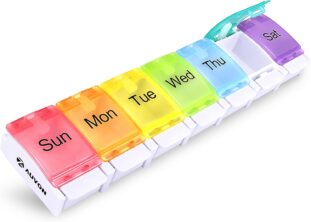
1. AUVON Weekly Pill Organizer – Arthritis Friendly
Best for simple daily routines
The AUVON Weekly Pill Organizer is best suited to earlier-stage dementia when the routine is still fairly simple and stable. A caregiver can easily review the setup.
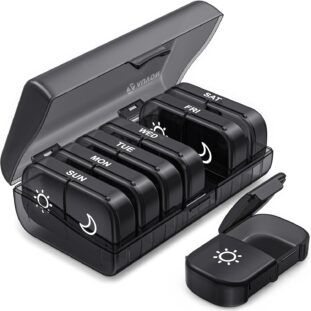
2. AUVON XL Weekly Pill Organizer
Best for morning and evening doses or larger tablets
The AUVON XL Weekly Pill Organizer is helpful when pills are larger or when there are several tablets in one dose slot.
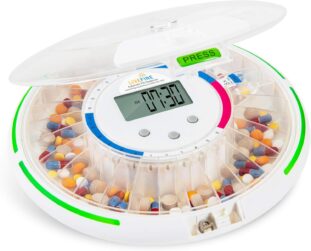
3. LiveFine 28-Day Automatic Pill Dispenser
Best for reducing missed doses
The LiveFine 28-Day Automatic Pill Dispenser is one of the better options when alarms and timed dispensing are needed. There are 4 models to choose from. It boasts 9 interchangeable dosage rings.
While most pill dispensers have only (1) preset option, the new improved model has [3] beeping patterns & [3] volume controls. The interface lights up and will sound for up to 30 minutes until the user inverts the box to dispense the pills for that time.
EZIMEDPIL Automatic Pill Dspenser with 6 Dosage Templates, 6 Alarms and Light

DAVIKY Electronic Automatic Pill Dispenser for Elderly with Alarm & Light
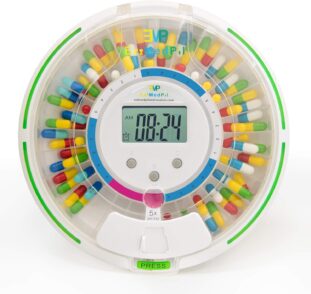
4. EziMedPil Automatic Pill Dispenser with Alarm Sound & Light
Best for caregiver oversight
The EziMedPil Automatic Pill Dispenser with Alarm Sound & Light is listed as an alarm-based option. It is a stronger fit when a caregiver wants more control over access and timing.
5. Automatic Pill Dispensers With Alarm / Locked Smart Dispenser Category
Best automatic options for extra support
Amazon.ca currently shows several alarmed and locked automatic dispenser options in the more affordable range of $75–$120 CAD, including reminder-equipped and smart dispenser styles.
These are often the best fit when an open weekly box is no longer safe. Other smart dispensers with premium features can range up to $250 CAD. Check Details.
These better rated automatic dispensers include Live Fine, Fullicon, Daviky, Julos, TBSoon, Windtrace and Wooswen.
If a basic pill box is no longer enough, that does not mean the situation is hopeless. It usually means the routine needs more structure. Selecting the right organizer or dispenser can reduce guesswork, lower stress, and make medication use safer for both the senior and the caregiver.
Warning Signs a Pill Organizer Is No Longer Enough
Watch for these signs:
- repeated missed doses
- double dosing
- opening multiple compartments “just to check”
- confusion about the day or time
- frequent caregiver corrections
- pills found outside the organizer
- growing anxiety around medication time
These are signs to move up to a more secure system, not signs to keep hoping the old one will somehow start working again.
Conclusion: The Right Pill Organizer Can Make Medication Safer
The best pill organizers for dementia are the ones that match the person’s real needs right now, not the ones that look the nicest on a product page.
For some people, that means a simple weekly pill box with caregiver support. For others, the safer choice is a locked automatic dispenser with alarms and tighter control.
The goal is not perfection. The goal is safer medication use, fewer mix-ups, and a routine that causes less stress for everyone involved.
If the current medication routine is starting to feel uncertain, do not wait for a serious mistake to happen. Review the system now and choose a pill organizer or dispenser that matches the level of support actually needed.
FAQs
What are the best pill organizers for dementia?
The best pill organizers for dementia are usually the ones that reduce confusion, limit wrong-dose access, and make medication timing easier to follow.
Why is it challenging to manage medications for dementia patients?
It is challenging because dementia can affect memory, judgment, sequencing, and time awareness, which increases the risk of missed or repeated doses.
How do I choose pill boxes for dementia safely?
Choose based on the stage of dementia, dose frequency, need for alarms, and whether access should be limited or caregiver-controlled.
What medication safety tips help seniors with dementia?
Use one clear system, keep an updated medication list, involve caregivers early, and move to a more secure organizer if mix-ups begin.
When is an automatic pill dispenser better than a weekly pill box?
An automatic pill dispenser is usually better when the person is forgetting doses, repeating doses, or becoming confused by open-access pill boxes.
References
- National Institute on Aging (NIH). Caring for Older Patients With Cognitive Impairment https://www.nia.nih.gov/health/health-care-professionals-information/caring-older-patients-cognitive-impairment
- Alzheimer’s.gov. Tips for People With Dementia https://www.alzheimers.gov/life-with-dementia/tips-dementia
- Alzheimer’s Society. Taking Medications With Dementia https://www.alzheimers.org.uk/about-dementia/treatments/dementia-medication/taking-dementia-medications