

Compare 7 best magnesium supplements for leg cramps, including practical picks for nighttime cramps, muscle support, and easier daily use.
Leg cramps can hit out of nowhere and ruin an otherwise peaceful night. One minute you are asleep, and the next you are wide awake, hopping around the bedroom trying to stretch out a muscle that feels like it has tied itself in a knot.
That is why so many people start looking into magnesium supplements for leg cramps. When cramps keep happening, especially at night, it is natural to wonder whether magnesium could help, which form is best, and whether supplements are even safe to take in the first place.
This guide walks through the basics in a practical way. We will look at what causes severe leg cramps, whether chronic leg cramps are the same thing, the health benefits of magnesium supplements, whether magnesium supplements are safe, common side effects of magnesium supplements, the recommended magnesium dosage, and how to compare 7 popular products more confidently.
What Causes Severe Leg Cramps?
Understanding what causes severe leg cramps is often the first step before deciding whether magnesium is even the right fix.
Before we go down the magnesium rabbit hole, let’s talk about why your legs might be acting up. Severe leg cramps can happen for several reasons, and magnesium deficiency is only one possible cause.
Some of the most common triggers include:
- Dehydration: If you’re not drinking enough water, your muscles can start throwing tantrums.
- Electrolyte Imbalance: This is where magnesium, calcium, potassium, and sodium come into play. Without enough electrolytes, muscles can go rogue.
- Overused Muscles: Did you hit the gym too hard or go on a hike you weren’t ready for? Overdoing it can leave you with sore and cramping muscles.
- Poor Circulation: Sometimes, the way you sit or lie down can pinch blood flow to your muscles, leading to cramps.
- Mineral Deficiency: This is where magnesium really plays a role. If your body is low on certain minerals, especially magnesium, your muscles wil not function as they should.
What causes severe leg cramps is often not one single issue, but a combination of hydration, electrolyte balance, circulation, muscle use, and mineral status.
That matters because magnesium may help some people, but not every cramp automatically means magnesium is the answer.
If you want to compare a wider range of options, this guide on what supplements help leg cramps may help you narrow things down.
Are Severe and Chronic Leg Cramps the Same?
Not quite.
Some people dealing with chronic leg cramps may need to look beyond hydration and consider recurring triggers like mineral balance, circulation, or medication effects.
Chronic and severe leg cramps are not the same. Chronic leg cramps are cramps that happen repeatedly over time. They may come and go, but they keep returning and can interfere with sleep or daily life, often with an underlying cause like nerve issues, dehydration, or mineral deficiencies.
Severe leg cramps, on the other hand, describe the intensity of the pain. They may happen only occasionally, or as part of chronic cramping, but when they do, the pain is strong and sudden. What defines them is their high level of pain rather than frequency.
Chronic cramps can sometimes be severe, but they don’t always have to be.
Why Magnesium Matters for Muscle Cramps
Magnesium plays an important role in muscle contraction and relaxation. When magnesium levels are low, muscles may not function as smoothly as they should.
That is one reason magnesium supplements for leg cramps get so much attention. Magnesium helps support:
- muscle function
- nerve function
- blood pressure regulation
- normal biochemical reactions throughout the body
Magnesium often works alongside potassium for muscle support, which is why some people also look at broader electrolyte balance when cramps keep happening.
Still, not all magnesium products are the same. Different forms absorb differently, feel different on the stomach, and may suit different people better.
Because magnesium often works alongside other electrolytes, it may also help to compare the best potassium supplement for leg cramps if cramps keep coming back.
Are Magnesium Supplements Safe?
A common question is whether magnesium supplements are safe, especially for older adults or people already taking medication
In general, yes — these supplements are safe for many adults when taken in appropriate amounts.
But “safe” does not mean “take as much as you want.”
Too much magnesium can lead to side effects such as:
- diarrhea
- nausea
- stomach upset
And if someone has underlying health conditions or takes certain medications, checking with a healthcare professional first is the smarter move.
Recommended Magnesium Dosage for Adults and Seniors
The recommended magnesium dosage depends on age, sex, diet, and health needs.
These broad ranges are:
- women: roughly 280–300 mg in the U.S.
- men: roughly 270–400 mg in the U.S.
- women: roughly 135–210 mg in Canada.
- men: roughly 135–250 mg in Canada
For seniors, the same dosage applies, but they may need slightly more due to reduced absorption with age. It’s always best to consult a healthcare provider to adjust based on individual needs and conditions.
The best takeaway for dosage is simple: do not assume more is better. Start with a sensible amount, especially if you are new to magnesium, and adjust carefully.
The Health Benefits of Magnesium Supplements and Best Forms
The health benefits of magnesium supplements go beyond cramps alone and may also include muscle, nerve, and sleep support.
Magnesium may help support:
- muscle relaxation
- nerve function
- sleep quality
- electrolyte balance
- general muscle and bone health
That is why some people find magnesium especially helpful when nighttime cramps come with restlessness, muscle tightness, or poor sleep.
Side Effects of Magnesium Supplements?
Even though magnesium can be helpful, the possible side effects of magnesium supplements still matter when choosing a product and dosage
Yes, there can be side effects, especially if the dose is too high or the form does not suit your stomach well.
The most common side effects include:
- diarrhea
- nausea
- stomach cramps
In rare situations, excessive intake may create more serious issues. So if someone already has medical concerns, it is best not to treat magnesium like a casual wellness extra.
This is also why the type of magnesium matters.
Different Forms of Magnesium Supplements for Leg Cramps
Not all magnesium supplements for leg cramps are created equal, which is why the form of magnesium is important.
There are several different forms, and many buyers do not realize that choosing the right type can matter just as much as choosing a brand.
Magnesium Citrate
Magnesium citrate is popular because it is often well absorbed. It is also known for helping with digestion, which can be a plus for some people and a downside for others if the dose is too high.
Best for:
- people who want a more common, well-known form
- people who do not mind a form that may affect digestion more noticeably
Always start off with a lower dose. Too much can lead to diarrhea, and trust me, nobody wants that.
Magnesium Glycinate
Magnesium glycinate is often one of the best-loved forms for leg cramps because it is usually gentle on the stomach and associated with relaxation.
Best for:
- nighttime cramps
- people who want a gentler form
- people who also want sleep support
Magnesium Oxide
Magnesium oxide is more concentrated, but often less absorbable than glycinate or citrate.
Best for:
- people who want a stronger dose in a smaller pill
- buyers who understand it may not be the first choice for absorption
Magnesium Malate
Magnesium malate is linked with energy support because it is bound to malic acid.
Best for:
- people dealing with fatigue along with cramps
- readers interested in muscle support plus energy-related benefits
Magnesium Chloride
Magnesium chloride often shows up in topical products, flakes, oils, or soaking formulas. It’s highly absorbable through the skin.
Best for:
- people who prefer topical support
- people who want to try soaks, sprays, or skin-based application instead of capsules
Quick Comparison Table: Magnesium Supplements for Leg Cramps
The table below gives a quick side-by-side view of the magnesium supplements for leg cramps covered in this guide.
| Product | Magnesium Form | Best For | Strength | Main Advantage | Main Watch-Out |
|---|---|---|---|---|---|
| CanPrev Magnesium Bis-Glycinate 200 Gentle | Bis-glycinate | Gentle daily use | 200 mg | Highly absorbable and easier on the stomach | May be pricier |
| PlantVital Magnesium Bisglycinate | Bisglycinate | Daily muscle support | 200 mg | Vegan capsules and simple formula | Less established brand familiarity |
| Nutratology Magnesium Bisglycinate + Oxide | Mixed form | Sleep + muscle support | 250 mg | Higher dose blend | Oxide may be less absorbable or appealing for sensitive stomachs |
| Naturelo Magnesium Glycinate Chelate Complex | Glycinate blend | Sleep, calm, stress support | 200 mg | Broader wellness positioning | Less narrowly targeted |
| Nutritionn Magnesium Glycinate | Glycinate | Simple daily use | 212.5 mg | Once-daily style convenience | Brand awareness may vary |
| Thorne Magnesium Citramate | Citrate-malate blend | Energy and metabolism support | varies by serving | Quality-focused formula | May not be the first choice for sensitive stomachs |
| Bio Absorb Magnesium Bisglycinate | Bisglycinate | Value and larger supply | 200 mg | Vegan large capsules – 260 count | Not everyone wants a bulk-size bottle |
7 Best Magnesium Supplements for Leg Cramps Compared
Seven popular and highly rated magnesium supplements, lotions and sprays on Amazon.ca are summarized in this section.
CanPrev Magnesium Bis-Glycinate 200 Gentle
This is a strong option for people who want a gentler, more absorbable form.
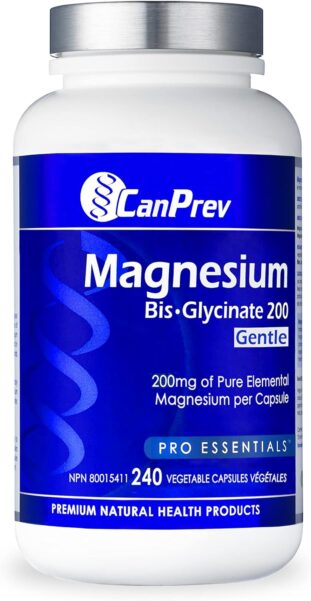
Best for: gentle daily support
Form: bis-glycinate
Why it stands out: it is a preferred highly absorbable form that supports muscle function, relaxation, and bone health.
Watch-out: may be better for steady daily use than for someone looking for the cheapest option.
PLANTVITAL Magnesium Bisglycinate 200mg Capsules
This is another bisglycinate option aimed at muscle, heart, and bone support.
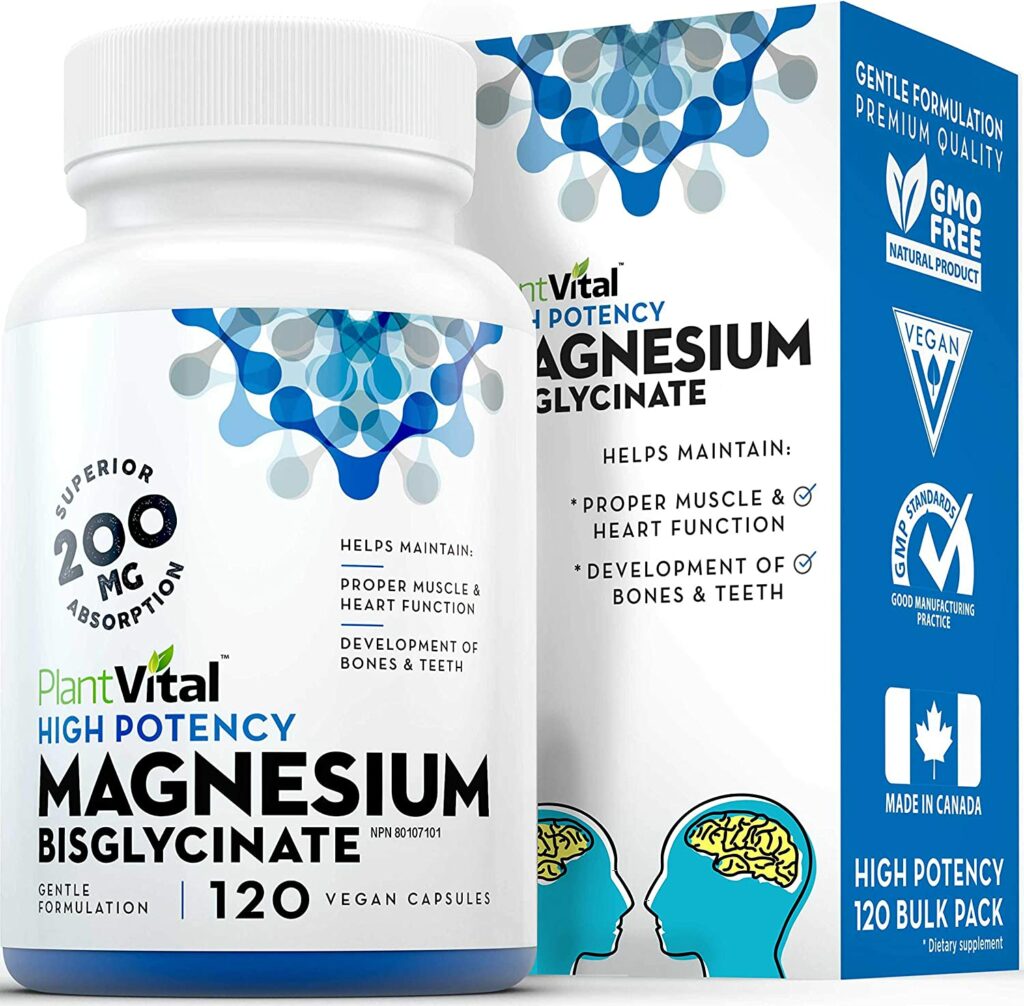
Best for: simple daily muscle support
Form: bisglycinate
Why it stands out: vegan capsule format and a broad general wellness support is its highlight.
Watch-out: less distinctive positioning than some of the more established brands.
NUTRATOLOGY Magnesium Bisglycinate + Oxide 250mg
This product combines bisglycinate with oxide and is framed as supporting muscle relaxation, sleep quality, electrolyte balance, and bone density.
Best for: people who want a stronger mixed formula
Form: bisglycinate + oxide
Why it stands out: higher dose and broader support angle
Watch-out: oxide is not always the first choice for people focused on gentler absorption.
NATURELO Magnesium Glycinate Chelate Complex – 200 mg
This one leans into relaxation and broader wellness support.
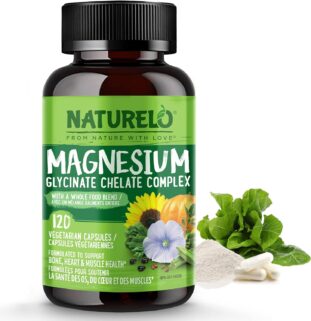
Best for: sleep, calm, and muscle support
Form: glycinate chelate complex
Why it stands out: connected with sleep, calm, muscle cramp support, and stress relief.
Watch-out: may feel broader than necessary if the reader only wants cramp relief.
NUTRITIONN Magnesium Glycinate Supplement – 212.5 mg
This is another glycinate option with a straightforward formula.
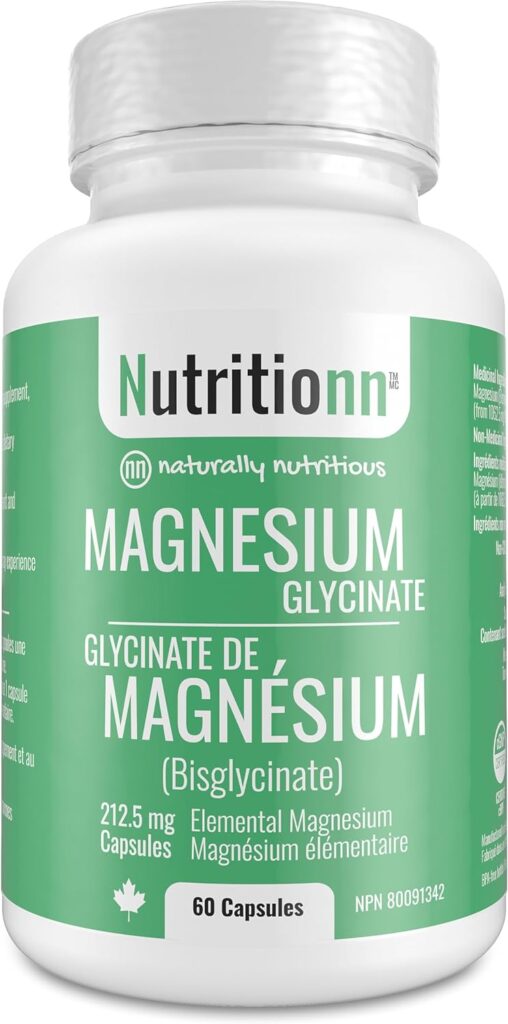
Best for: simple once-daily use
Form: glycinate
Why it stands out: good health and sleep positioning, plus a clean daily format
Watch-out: less brand recognition than some other choices.
THORNE Magnesium Citramate Supplement
This one uses a citrate-malate approach.
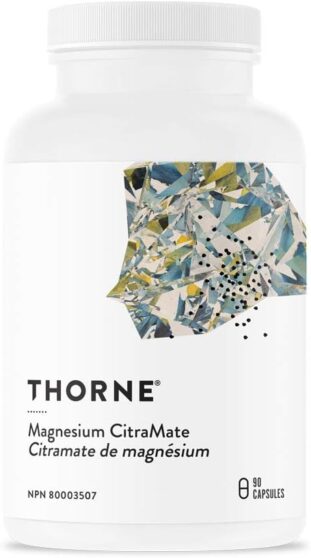
Best for: people who want a more premium-feeling formula with a broader energy and metabolism angle
Form: citrate-malate
Why it stands out: supports energy production, heart and lung function, and metabolism.
Watch-out: not necessarily the first pick for people who mainly want a gentle nighttime cramp formula.
BIO ABSORB NUTRACEUTICALS Magnesium Bisglycinate/Glycinate Supplement
This product is a value-style larger supply option.
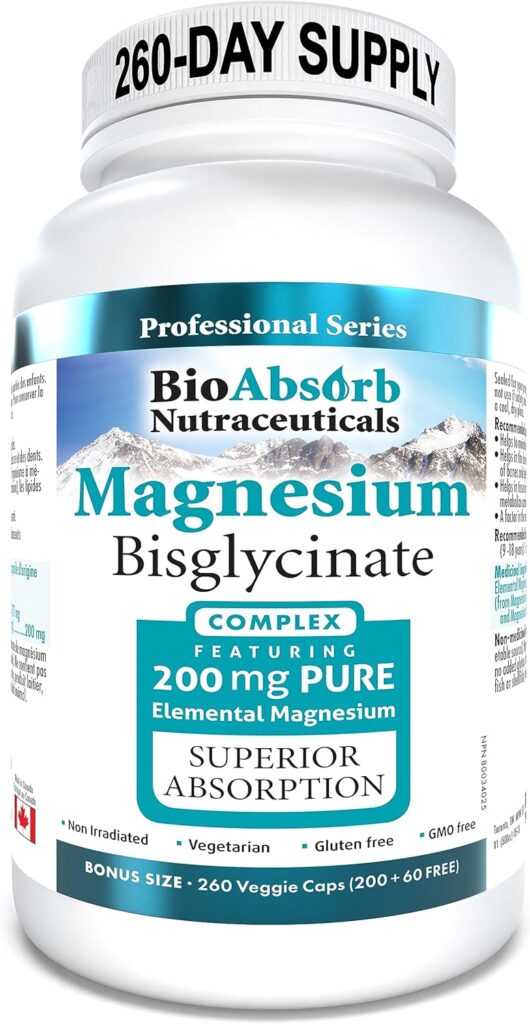
Best for: buyers who want a longer-lasting supply bottle
Form: bisglycinate
Why it stands out: larger capsule count and familiar glycinate direction
Watch-out: absorbable and gentle on the stomach
How to Choose the Right Magnesium Supplement for Leg Cramps
Alright, so you’ve got options—lots of them. But how do you pick the one that will actually stop those cramps? Here’s a little trial-and-error process I’ve found helpful over the years:
Start With a Lower Dose
If you’re new to magnesium supplements, start with a lower dose. You can always increase it as your body adjusts. Many people make the mistake of diving in with a high dose and end up with unwanted side effects like diarrhea and nausea.
Consider Timing for Night Cramps
If cramps happen mostly at night, taking magnesium later in the day may make more sense. The draft specifically noted that taking magnesium before bed may help with nighttime cramps and also support relaxation.
Test Different Magnesium Forms
If one form is not helping, do not assume magnesium itself is useless. Sometimes the issue is just the form.
Pay Attention to How Your Body Responds
Notice:
- whether cramps ease
- whether sleep improves
- whether digestion changes
- whether the supplement feels sustainable
That is often more useful than chasing whatever looks most impressive on the label.
Practical Tips for Reducing Leg Cramps
Here’s where the “experience” part comes in. Over the years, I’ve picked up a few tricks to keep leg cramps at bay:

- Stay Hydrated: This one’s a no-brainer. Drink enough water throughout the day to avoid dehydration. If plain water bores you, throw in a slice of lemon or cucumber for a little pizzazz.
- Stretch Before Bed: A simple calf stretch or foot flex before bed can do wonders. Try standing on the edge of a stair, heels hanging off, and gently stretch your calves.
- Use a Foam Roller: After a workout or long day, rolling out your legs can help prevent muscle knots and cramps.
- Eat More Electrolyte-Rich Foods: Bananas, avocados, spinach—get those electrolytes naturally through food. If you need a quick fix, coconut water is a great option.
Looking for Alternatives to Magnesium Supplements for Leg Cramps?
Some people do not want capsules at all. That is where alternatives come in.
Magnesium Oils, Creams, Sprays, and Lotions
Magnesium oils, creams, lotions, and oils may work better for seniors who want topical support.
- magnesium creams and magnesium lotions are more hydrating and gentler on skin. They contain added ingredients like shea butter or aloe vera, making them ideal for people with sensitive skin or dryness. They often provide a moderate dose of magnesium and are slowly absorbed, which is soothing but may be less intense for targeted relief.
- sprays are water based, often delivering a higher concentration of magnesium that can be absorbed quickly through the skin. They are easy to apply over larger areas but can sometimes cause tingling especially on sensitive skin.
- magnesium oils are more concentrated and often preferred for targeted relief. Despite the name, oils are actually magnesium chloride dissolved in water, forming a concentrated solution. They are fast-acting and provide a high dose, but can feel slightly sticky or itchy.
Applying magnesium topically helps relax muscle fibers by delivering magnesium directly to the area, which helps in muscle relaxation and relieves cramping.
Heat, Cooling Gels, CBD Creams, and Essential Oils
Other non-pill options include:
- Heat or Cooling Gels: Gels containing menthol or capsaicin provide warmth or cooling sensations that can soothe tense muscles, easing cramps.
- CBD Creams or Balms: CBD may reduce inflammation and muscle tension, making it a popular option for cramp relief.
- Diluted Essential Oils like lavender or eucalyptus oils, massaged into the affected area, can help calm spasms and reduce cramp pain due to their relaxing properties.
Each of these are more about fast soothing support than fixing a long-term deficiency.
Which is better? It depends on preference and need. For intense, quick relief, magnesium oil or spray may be better; for daily use on sensitive skin, lotions and creams offer gentler hydration and consistent absorption.
Check out each of these alternatives in seperate articles on the website.
Conclusion – Choosing the Best Magnesium Supplement for Leg Cramps
The best magnesium supplements for leg cramps are usually the ones that match your body, your stomach tolerance, and when your cramps tend to happen.
Magnesium supplements are not a magic cure, but they can be a practical option for people whose cramps are linked to magnesium intake, muscle tension, or nighttime discomfort.
The best choice depends on the person.
If your main goal is:
- gentler support, glycinate may be the better place to start
- digestion plus cramps, citrate may be worth considering
- quick topical relief, oils or sprays may be more appealing
The smartest approach is usually simple: choose a form that fits your body, start with a sensible dose, and give it enough time to see whether it is actually helping
Related Articles
What Supplements Help Leg Cramps – The Best Ones
FAQs for Magnesium Supplements for Leg Cramps
How long does it take for magnesium supplements for leg cramps to work?
It can take anywhere from a few days to a couple of weeks. Consistency matters, and switching forms may help if one does not seem effective.
Can I get enough magnesium from food to stop leg cramps?
Sometimes, yes. But for people with frequent cramps, food alone may not always be enough, which is why some turn to magnesium supplements.
Are there side effects of taking magnesium supplements?
Yes. Common side effects include diarrhea, nausea, and stomach cramps, especially if the dose is too high.
Which form of magnesium is best for nighttime leg cramps?
Many people prefer magnesium glycinate because it is often well absorbed and linked with relaxation and sleep support
Can I take magnesium every day?
Many adults do, but it is best to stay within appropriate intake levels unless a healthcare professional advises otherwise.
References
Mayo Clinic (2024) Magnesium supplement (oral route) https://www.mayoclinic.org/drugs-supplements/magnesium-supplement-oral-route/description/drg-20070730